data-centric-ai
(13)
Tammy Le Makes Difficult Technology Easier to Believe
A onetime writing instructor and professionally trained baker became a translator for increasingly complicated technology. At Snorkel AI, Tammy Le is still working the same problem: how to make a difficult product clear without sanding away what makes it true.

Michael Malyuk Is Building the Judgment Layer AI Forgot
The HumanSignal co-founder turned a shared frustration with bad training data into Label Studio. His next wager is that smarter AI will need better human judgment, not less of it.

The Company Betting That AI Still Needs a Human in the Loop
Label Studio put data labeling in the hands of a million AI practitioners. Now HumanSignal is wagering that the harder generative-AI models get, the more they need human judgment behind them.
The Startup Teaching Cameras to Catch What Tired Human Eyes Miss on the Assembly Line
Akridata spent years fixing AI's boring, expensive data problem - then pointed the same tools at factory defects and got acquired by DIMAAG in 2026.

Stardust AI
Stardust AI is a San Francisco-founded, data-centric AI company that helps enterprises turn raw, messy, multimodal data into the high-quality datasets that machine-learning models actually need. Through its Rosetta auto-labeling platform, its MorningStar data engine and its COSMO dataset offerings, Stardust annotates and manages 2D/3D/4D data spanning images, video, point clouds, audio and text - with heavy expertise in autonomous driving and large language models. The company works with names like SAIC Motor, BYD, Geely, Bosch, ZF, Xiaomi and JD.com, and pitches a simple thesis for the AI era: whoever controls the data controls the model.
Corvic AI
Corvic AI is a Mountain View startup building an Intelligence Composition Platform - the logic layer that turns messy, multi-structured enterprise data (PDFs, tables, sensor logs, images, time series) into reliable, production-ready AI outcomes without bespoke pipeline engineering. Founded in 2023 by engineers from Intel, Katana Graph, and Determined AI, it uses proprietary techniques like Mixture of Spaces embeddings and agentic, auditable orchestration to deliver explainable enterprise intelligence for manufacturing, industrial, financial services, and life sciences customers.
Abhishek Jha
Abhishek Jha is the Co-Founder and CEO of Elucidata, a San Francisco-based AI company making biomedical data AI-ready for drug discovery and pharmaceutical R&D. A trained physical chemist with a PhD from the University of Chicago and postdoctoral work at MIT, he spent years at Agios Pharmaceuticals contributing to four FDA-approved first-in-class therapies before co-founding Elucidata in 2015. Under his leadership, the company has raised over $22.7M in funding, grown to 170 employees, and achieved $22.2M ARR, while evolving from a data-curation platform into an AI company solving out-of-distribution (OOD) problems in biomedical research - work that earned Elucidata recognition as one of Fast Company's Most Innovative Companies in 2024.

Henry Ehrenberg
Henry Ehrenberg is Co-Founder and Head of Engineering at Snorkel AI, the data-centric AI company he helped build out of Stanford's AI Lab in 2019. With a background in applied mathematics (Yale) and computational engineering (Stanford), Ehrenberg co-developed the Snorkel system — a paradigm-shifting framework for training machine learning models using programmatic weak supervision rather than hand-labeled data. Snorkel AI has raised $338M total, including a $100M Series D in May 2025 at a $1.3B valuation, and counts five of the top ten US banks, Fortune 500 companies, and leading research labs like Google, OpenAI, and Anthropic among its clients.
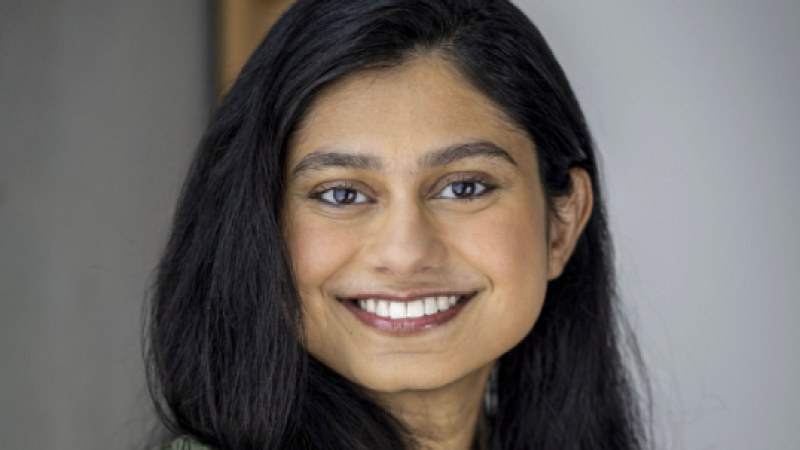
Paroma Varma
Paroma Varma is a co-founder and Head of Solutions at Snorkel AI, the $1.3B data-centric AI platform she helped build from a Stanford AI Lab research project into a unicorn serving Fortune 500 enterprises. Holding a Ph.D. in Electrical Engineering from Stanford, she pioneered weak supervision techniques that reduce AI training data preparation from months to days, enabling domain experts in healthcare, finance, and government to build state-of-the-art ML models without massive labeled datasets.

Snorkel AI
Snorkel AI is a Redwood City-based enterprise AI company spun out of the Stanford AI Lab in 2019. Its Data Development Platform lets enterprises programmatically label, curate, and evaluate the training and evaluation data that powers custom LLMs, RAG systems, and AI agents - turning expensive manual annotation into a software-engineering discipline.

Charles Wong
Charles Wong is the CEO and Co-Founder of Bifrost AI, a San Francisco-based generative 3D data platform that lets robotics, aerospace, maritime, and industrial teams train and test AI models in hours instead of months. A Forbes 30 Under 30 honoree from Singapore, Wong built Bifrost after working on AI perception models for autonomous vehicles at NuTonomy (an MIT spinout). Bifrost has raised $13.7M in total funding, counts NASA JPL and the U.S. Air Force among its clients, and generates synthetic datasets for some of the world's most demanding physical-world AI challenges - from Mars rover navigation to maritime collision avoidance.
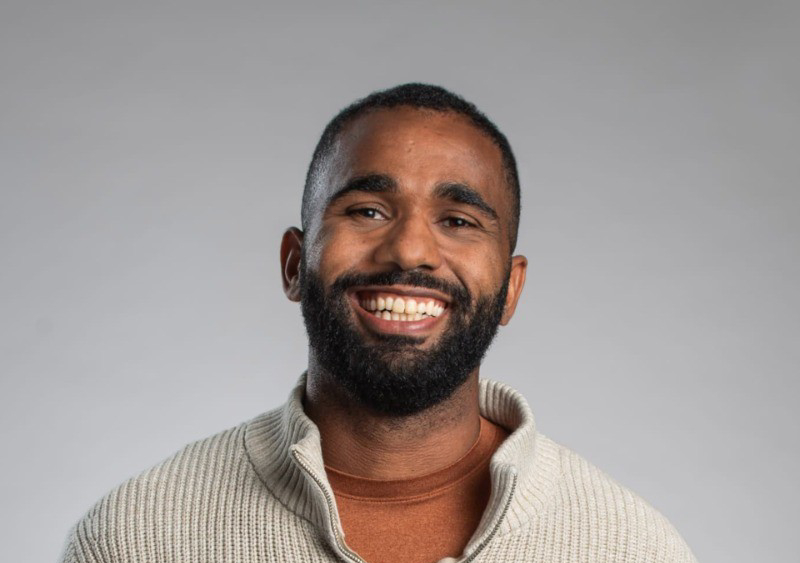
Cody Coleman
Cody Coleman is the CEO and Co-Founder of Coactive AI, a San Jose-based enterprise AI platform that brings structure to unstructured visual content - images and video - using multimodal AI. Born in prison and raised by grandparents on Social Security, he earned a BS from MIT and a PhD from Stanford, where he co-created DAWNBench and MLPerf, the industry-standard ML benchmarking suite. Today he leads a 63-person company backed by $44M in funding from Emerson Collective, Bessemer Venture Partners, and Andreessen Horowitz, with a mission to make AI accessible regardless of background.

Alexander Ratner
Alexander Ratner is the co-founder and CEO of Snorkel AI, the company he spun out of Stanford's AI lab in 2019 after building the Snorkel open-source project during his PhD. A Harvard physics graduate turned Stanford computer scientist, Ratner pioneered the field of data-centric AI and weak supervision - the idea that better data, not just better models, is the key unlock for enterprise AI. Under his leadership, Snorkel AI reached a $1.3 billion valuation in 2025 following a $100 million Series D, with $148M in annual revenue and customers including some of the world's largest enterprises and LLM developers.