co2-removal
(7)
Sustaera Scrapped Years of Work to Build a Cheaper Carbon-Capture Machine
Direct air capture has a brutal math problem: too much machinery chasing too little CO2. The North Carolina startup’s answer was to kill its first product, shrink the team and redesign the machine around electricity, ceramics and a cost target the market might actually buy.
280 Earth
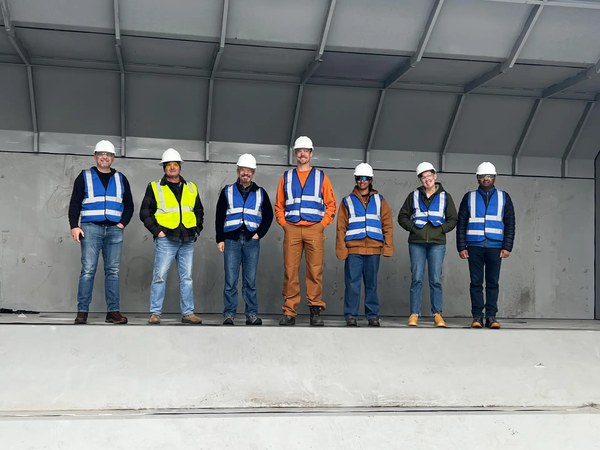
280 Earth is a climate-tech company that removes carbon dioxide permanently from the ambient air using a modular Direct Air Capture (DAC) system spun out of Alphabet's X, The Moonshot Factory. Its continuous-flow process uses a proprietary sorbent, off-the-shelf industrial equipment and low-grade waste heat or clean electricity to pull CO2 - and fresh water - out of the atmosphere at low energy cost. Its first plant in The Dalles, Oregon began operating in May 2024 and is designed to scale from hundreds to more than 20,000 tons of CO2 removed per year. The company's name references 280 parts per million, the pre-industrial atmospheric CO2 concentration it aims to help restore.
AirMyne
AirMyne is a Berkeley, California climate-tech company building liquid-based direct air capture (DAC) systems that pull carbon dioxide out of the atmosphere at industrial scale. Founded in 2022 by chemical-industry veterans Sudip Mukhopadhyay and Mark Cyffka, the company designs a low-temperature, energy-flexible capture process - regenerating its solvent at roughly 100-130 C so it can run on waste heat, geothermal energy, or electricity rather than the high-temperature furnaces most DAC rivals require. Backed by Y Combinator and, more recently, a strategic investment from Japanese energy giant ENEOS, AirMyne is moving from kilogram-per-day prototypes toward a commercial pilot and demonstration plant.

Remora
Remora is a Detroit-area climate-tech company that bolts carbon capture onto the things already burning fuel - semi-trucks and freight locomotives - instead of building giant plants to pull CO2 back out of the sky. Its zero-backpressure device threads exhaust through proprietary adsorbents, captures up to 90% of the CO2, reduces soot and NOx to Tier 4 levels, then liquefies the gas to be sold into a supply-constrained industrial CO2 market. Operators share the revenue, so cutting emissions becomes a line item that pays rather than one that costs.
Terradot
Terradot is a San Francisco and Stanford-born climate company turning Enhanced Rock Weathering (ERW) - one of nature's slowest permanent carbon-removal processes - into a measurable, global-scale climate solution. By spreading finely crushed basalt across tropical farmland, Terradot accelerates the natural reaction in which silicate rock binds atmospheric CO2 and locks it away for thousands of years, while improving soil health for farmers. The company pairs field deployment with rigorous biogeochemical measurement, and has signed landmark carbon-removal agreements with Google, Microsoft and Frontier totaling nearly 300,000 tonnes of CO2.
CREW Carbon
CREW Carbon is a Yale-spinout water and climate technology company based in Hamden, Connecticut. It retrofits municipal and industrial wastewater treatment plants with a closed-system enhanced-weathering process: dosing alkaline minerals into wastewater to convert dissolved CO2 into stable bicarbonate. The approach lowers operating costs and improves treatment performance for utilities while permanently and measurably removing atmospheric carbon, which it sells to corporate buyers as durable carbon removal credits.

Heirloom Carbon
Heirloom Carbon Technologies is a San Francisco-based direct air capture company that uses limestone's natural CO2-absorbing properties to pull carbon dioxide permanently out of the atmosphere. Their process accelerates a geological phenomenon that normally takes thousands of years into a 3-day cycle: calcium oxide powder absorbs CO2 from ambient air, becomes limestone, gets heated in a renewable-energy-powered electric kiln to release the captured CO2, and repeats. The captured CO2 is then stored permanently underground or embedded in concrete. Founded in 2020, Heirloom opened America's first commercial DAC facility in Tracy, California in November 2023 and has raised over $354 million to expand capacity toward their goal of removing 1 billion tons of CO2 by 2035.