ci/cd
(25)
Canary
Canary is an AI QA engineer that reads your source code to understand developer intent, then automatically generates and runs end-to-end tests on every pull request. Instead of flaky DOM scraping or screenshot analysis, it reads the diff, works out what a change is meant to do, and tests the real user flows it touches - catching broken checkout, auth, and billing before code reaches production. Founded in 2026 by ex-Windsurf, Cognition, and Google engineers, the two-person San Francisco team is part of Y Combinator's Winter 2026 batch.
Docket
Docket is a San Francisco AI QA testing platform that lets teams write end-to-end tests in plain English and keeps them running as the app changes. Instead of brittle CSS selectors, its multimodal agents look at the screen and click where a human would, recording pixel coordinates and self-healing when the UI shifts. Founded in 2025 by ex-Stripe and ex-Citadel engineers Nishant Hooda and Boris Skurikhin, Docket went through Y Combinator's Spring 2025 batch and covers web, mobile, and desktop apps.

TesterArmy
TesterArmy is a Y Combinator-backed (P26) startup building AI agents that test web and mobile apps the way a human would. Teams describe tests in plain English; the agent launches a real browser or device, clicks and types through user flows, handles logins, OAuth and OTP, then returns screenshots, recordings and actionable bug reports. It runs on every GitHub pull request and on a schedule against production, aiming to catch broken flows before customers do.
Cloudsmith
Cloudsmith is a Belfast-founded, cloud-native artifact management platform that gives engineering teams a single place to store, secure, and distribute software packages and containers across 30+ formats. It acts as a private, fully managed registry with built-in supply chain controls - vulnerability and malware scanning, policy enforcement, quarantine, and global distribution - increasingly positioned around governing the flood of code produced by AI coding agents.
Liquibase
Liquibase is an Austin-based software company behind the widely used open-source database change management tool of the same name. It automates, versions, and governs how database schema changes move from a developer's laptop into production, bringing the same CI/CD discipline that software code enjoys to the database. Its commercial platform, now sold as Liquibase Secure, adds policy checks, drift detection, and compliance reporting for enterprises in regulated industries like banking and insurance.
Qovery
Qovery is an internal developer platform and agentic Kubernetes management solution that lets engineering teams deploy and run production-grade infrastructure inside their own cloud accounts. Founded in 2020 and headquartered in New York with a remote team, it layers a Heroku-like developer experience on top of AWS, GCP, Azure and Scaleway - automating environment provisioning, ephemeral pull-request environments, and day-2 Kubernetes operations so developers can ship without becoming DevOps experts. The company raised a $13M Series A in 2025 and is used by tens of thousands of developers across more than 100 countries.
Synthesized
Synthesized is a London- and New York-based enterprise software company that automates the creation of production-realistic test data. Its AI-driven platform generates, masks, and subsets data from sensitive systems so teams can validate software, database migrations, and AI agents before they reach production - all while preserving privacy and meeting regulations such as GDPR. Founded in 2020 by Cambridge machine-learning PhD Nicolai Baldin, the company counts Deutsche Bank and UBS among its customers and raised a $20M Series A in September 2025.

Blacksmith
Blacksmith is a San Francisco-based developer-tools startup building a high-performance CI cloud. Its drop-in replacement for GitHub Actions runners boots each job into a Firecracker microVM on bare-metal gaming CPUs, letting engineering teams run their pipelines up to 2x faster at roughly half the cost. Backed by Y Combinator and Google Ventures, Blacksmith serves thousands of engineering teams - including Vercel, Supabase, Mercury, Clerk and Ashby - and pairs raw compute with observability and security tooling built specifically for CI workloads.
CircleCI
CircleCI is a continuous integration and continuous delivery (CI/CD) platform that automates the build, test, and deployment of software. Founded in San Francisco in 2011, it runs tens of millions of workflows for engineering teams who want faster, more reliable pipelines without maintaining their own build infrastructure. It does not host code or track tickets - it focuses on being a fast, dependable runner of builds and, increasingly, on validating AI-generated code at scale.

Katalon
Katalon is an Atlanta-based software company that builds an AI-augmented, all-in-one quality management platform for software testing. Its flagship products - Katalon Studio, TestOps, TestCloud, and the newer TrueTest - let QA and DevOps teams create, run, and analyze automated tests across web, mobile, API, and desktop applications with both low-code and full-code approaches. Spun out of KMS Technology, Katalon is used by more than 30,000 teams across 80+ countries and has repeatedly been named a G2 Leader in software testing.
Okteto
Okteto is a developer platform that moves Kubernetes development, preview, and testing environments into the cloud. Founded in 2018 by three former Atlassian, Docker, and Google engineers and backed by Y Combinator, Okteto lets developers spin up production-like environments with a single command, sync code changes live in seconds, and automatically create preview environments for every pull request. In 2025 the company extended the same infrastructure to AI coding agents, giving each agent its own isolated, production-like environment to build, test, and verify code at scale.
ONES.com
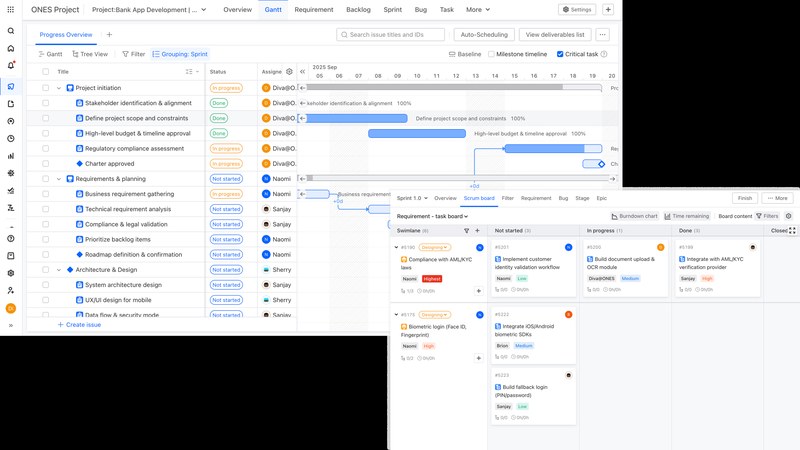
ONES.com is an all-in-one project and knowledge management platform built for software teams. It bundles project tracking, a Confluence-style wiki, test management, and CI/CD pipeline integration into one workspace, with AI woven into every plan and a strong emphasis on on-premises and air-gapped deployment. Founded in 2015 and backed by investors including GIC and Source Code Capital, ONES positions itself as a unified, self-hostable replacement for Atlassian's Jira and Confluence for enterprise teams that need data sovereignty.
Provar
Provar is a UK-founded software company that builds test automation and quality management tools purpose-built for the Salesforce ecosystem. Its low-code platform - anchored by Provar Automation and Provar Manager - lets both manual testers and developers create resilient, metadata-aware tests across UI, APIs and data layers that survive Salesforce's three-times-a-year release cadence. Founded in 2014 by veterans of highly regulated banking projects, Provar has grown into the category leader for Salesforce QA, and was first to market with automated end-to-end testing for Salesforce's Agentforce AI agents.
Serverless Inc.
Serverless Inc. is a San Francisco software company that builds the Serverless Framework, one of the most widely used open-source tools for deploying applications to AWS Lambda and other cloud functions. Founded in 2015 by Austen Collins, it turned a solo open-source project called JAWS into a de facto standard for infrastructure-as-code in the function-as-a-service era, then layered commercial products - a dashboard, observability, and a subscription license - on top for larger teams.
Sleuth
Sleuth is a San Francisco software company founded by former Atlassian engineers who helped build Jira and Bitbucket. It began as a 'mission control' platform for continuous delivery, giving engineering teams automated DORA metrics and deployment tracking, then expanded into governing AI inside organizations. Its current product, Sleuth Skills, lets companies define agent skills, rules, prompts and MCP servers once and distribute them - with approval workflows, audit trails and access controls - across AI clients like Claude Code, Cursor, GitHub Copilot, Gemini and Codex. Sleuth has raised roughly $25M, including a $22M Series A led by Felicis in 2022.
Speakeasy
Speakeasy is a San Francisco developer-infrastructure company that turns an OpenAPI specification into production-grade, type-safe SDKs across ten-plus languages, then keeps them in sync automatically as the API changes. Founded in 2022 by Sagar Batchu and Simon Yu, it has expanded from SDK and Terraform-provider generation into an AI control plane for the Model Context Protocol - products like Gram and the MCP Gateway let companies expose their APIs as governed tools for AI agents. Speakeasy has raised roughly $26 million, including a $15M Series A led by FPV Ventures in 2024, and counts Vercel, Mistral AI, Clerk, Kong, Fivetran, Airbyte, and SolarWinds among its customers.
Checksum.ai
Checksum.ai is an AI software-testing company that automatically writes and maintains end-to-end tests for web applications. Its AI agents learn from real user sessions to generate production-ready Playwright and Cypress tests, then auto-heal them when the app changes - so engineering teams get broad test coverage in days instead of months and stop babysitting flaky test suites. Founded in 2022 and built inside the super{set} startup studio, the San Francisco company serves developers and QA teams who want to ship fast without breaking things.

Reflex
Reflex is an open-source, full-stack Python framework and cloud platform that lets developers build and deploy production-grade web apps entirely in Python - no JavaScript required. Founded by ex-Apple and Ancestry engineers Nikhil Rao and Alek Petuskey, the company (originally Pynecone, a Y Combinator W23 startup) wraps React components in Python so data scientists, analysts, and engineers can ship UI, backend, and deployment from a single codebase. It has grown to over a million apps built, 25k+ GitHub stars, and adoption inside Fortune 500 companies.
Shuttle
Shuttle is a Rust-native cloud platform that lets developers ship backends without writing infrastructure files. You annotate what you need in code - a database, secrets, a web server - and Shuttle provisions it and deploys to the cloud. Founded in 2019 and shaped by Y Combinator's Summer 2020 batch, the company is now repositioning as an 'AI platform engineer' that handles the deployment step where AI coding tools like Cursor, Copilot and Lovable leave off. It has drawn more than 20,000 developers and over 120,000 deployments, and raised a $6M seed round in October 2025.

Perforce Software
Perforce Software builds the version control, DevOps, and quality tools that large engineering teams lean on when their codebases and binary assets grow too big for ordinary tools. Its flagship - Helix Core, rebranded P4 in 2025 - moves enormous game studios, semiconductor designers, automakers, and defense programs along, while a portfolio gathered through acquisitions (Puppet, Perfecto, Delphix, Klocwork, Gliffy and more) extends from source control into static analysis, test automation, infrastructure automation, and test data management. Founded in 1995 and now backed by Clearlake Capital and Francisco Partners, Perforce powers more than half of the Global 500.
Copado
Copado is the leading AI-powered DevOps platform built natively for Salesforce and other low-code business applications. Founded in Madrid in 2013 by two Salesforce release engineers tired of brittle, manual deployments, Copado unifies planning, building, testing, and releasing with built-in automation, governance, and trust. More than 1,750 global brands - including Coca-Cola, T-Mobile, Medtronic, and Volkswagen - use Copado to ship Salesforce changes faster and more safely, and the company reached unicorn status after a $140M Series C in 2021.
Chromatic
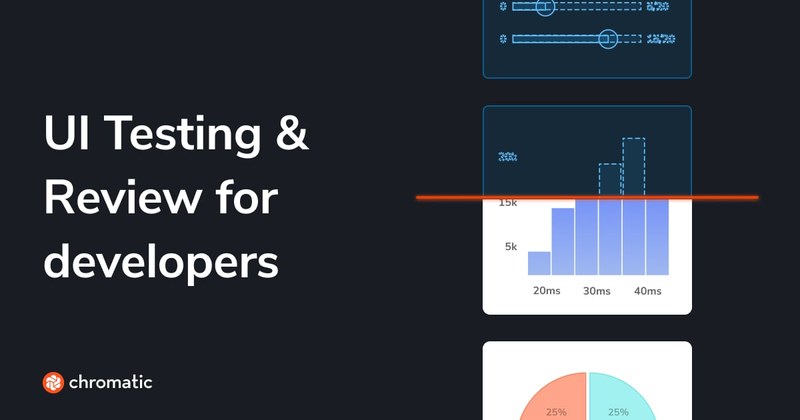
Chromatic is a cloud platform for frontend UI testing and review, built by the team behind the open-source tool Storybook. It runs visual, interaction, and accessibility tests across real browsers to catch UI regressions before they ship, then layers on a team review workflow so designers, PMs, and engineers can sign off on changes. Used by teams at GitHub, Adobe, the BBC, Square, and Monday.com, Chromatic turns the messy, manual job of UI QA into an automated step in the CI pipeline.

Infisical
Infisical is an open-source security platform that helps engineering teams manage secrets, certificates, and machine identities in one place. Born out of Y Combinator's W23 batch, it replaces scattered .env files and hardcoded API keys with a unified, MIT-licensed stack covering secrets management, dynamic secrets, rotation, secret scanning, PKI, KMS, SSH, and privileged access. Used by companies like Hugging Face, LG, and Lucid, it secures billions of secrets and is backed by Elad Gil, Google's Gradient Ventures, and Y Combinator.

Testkube
Testkube is a Kubernetes-native test orchestration and execution platform that lets engineering teams run any testing tool or script at scale, directly inside their own clusters. By decoupling testing from CI/CD pipelines, it centralizes test triggering, execution, results, artifacts and logs into a single platform - with AI-powered troubleshooting on top. Spun out of Kubeshop in 2023 and led by SoapUI creator Ole Lensmar, Testkube raised an $8M Series A in September 2025 and has powered over 100 million automated tests for companies including Cloudflare, Siemens, Adobe and Volvo.
Gradle Technologies
Gradle Technologies (Gradle Inc.) is the company behind the open-source Gradle Build Tool - one of the world's most widely used build systems - and Develocity, the commercial Developer Productivity Engineering platform used by Airbnb, LinkedIn, Microsoft, Netflix and many others to accelerate builds, troubleshoot failures, and tame flaky tests at scale.