biotech-software
(8)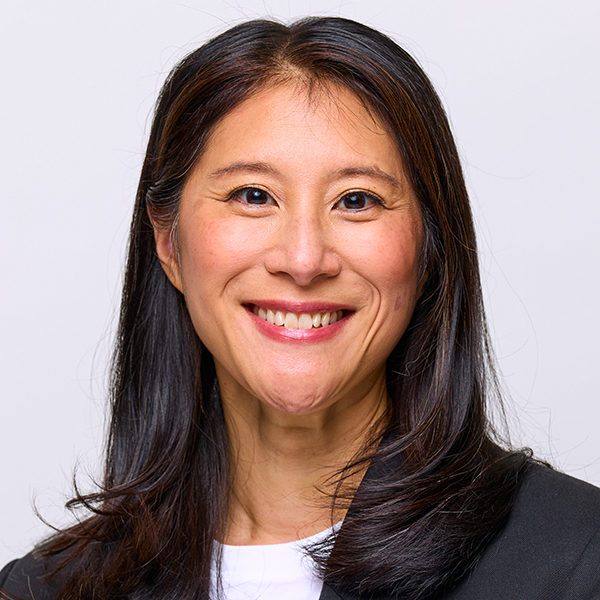
Yvonne Chen Is Teaching Biotech to Speak AI
After two decades selling change at AT&T, Google, Facebook, Udemy and Calm, Yvonne Chen has arrived at a harder assignment: making artificial intelligence useful at the laboratory bench.
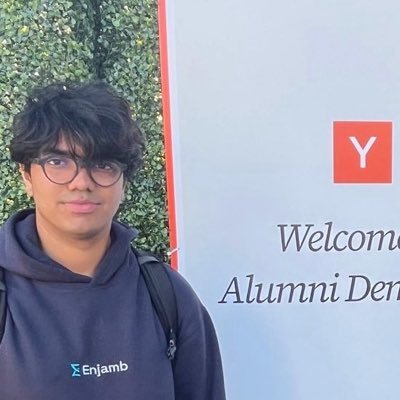
Rayan Mubarak Is Teaching AI to Carry the Clipboard
At 19, the Enjamb founder has moved from publishing computational-biology research to rebuilding the paperwork around science. His bet is simple: useful AI should do the work, keep the context, and leave people with the decisions that matter.

Andrew Busey Keeps Finding the Missing Layer
From Mosaic and web chat to social games and computational biology, Andrew Busey has spent three decades asking an unfashionably useful question: what essential piece is everyone else overlooking?

Brian Gilman Has Spent 25 Years Making Science Easier to Search
Before AI promised to read all of biology, Brian Gilman was already trying to make scientific information usable. At Plex Research, his old obsession has acquired a new engine - and a stricter test: show the evidence.
Omphalos Lifesciences Inc
Omphalos Lifesciences is a Dallas-based biotech software company building a programmable virtual cell platform. Founded by computational biologist Daehwan Kim - creator of the widely used HISAT and TopHat sequencing tools - the company created L++, a high-level programming language that lets biologists describe, simulate, and visualize living systems the way software engineers write code. Its Life Designer platform aims to accelerate drug discovery, precision medicine, and biomanufacturing by running experiments in silico before they hit the lab bench.

Weave Bio
Weave Bio is a San Francisco-based, AI-native software company that automates the regulatory paperwork behind drug development. Its platform ingests preclinical and clinical study data and drafts submission-ready documents - INDs, investigator's brochures, clinical study reports and health-authority responses - in eCTD-ready format, cutting timelines that once took months down to hours while keeping human reviewers in the loop. Founded in 2022, Weave serves biotech, pharma, CROs and regulatory consultants, and raised a $20M Series A in October 2025 to bring total funding to roughly $36M.
TeselaGen Biotechnology
TeselaGen Biotechnology builds an AI-powered, cloud-based operating system for biological R&D. Spun out of the Department of Energy's Joint BioEnergy Institute and founded by Stanford and Berkeley scientists, its platform - organized around the Design-Build-Test-Learn cycle with DESIGN, BUILD, TEST and DISCOVER modules - lets researchers design DNA libraries, generate lab-robot assembly protocols, capture experimental data and apply machine learning to converge on better biological products faster. Customers span industrial biotech, biopharma and academia, including Amgen, LanzaTech, Twist Bioscience, Arzeda and Stanford.
QbDVision
QbDVision is an Austin-based software company building the first cloud platform for Digital CMC (Chemistry, Manufacturing, and Controls), giving pharmaceutical and biotech teams a structured, single source of truth for product and process knowledge. By operationalizing Quality by Design principles, the platform replaces scattered documents and spreadsheets with connected, machine-readable data that accelerates drug development, tech transfer, and regulatory submissions. Founded in 2015 as CherryCircle Software, QbDVision now serves several of the world's largest biopharma organizations and CDMOs.