battery-materials
(9)
The Factory Closed. The Chemistry Traveled.
OneD spent years making silicon behave inside ordinary battery graphite. Then its Washington pilot plant reportedly closed. Its next move says as much about the economics of EV batteries as the nanowires do.
6K
6K is a North Andover, Massachusetts advanced materials company that uses its proprietary UniMelt microwave plasma technology - which reaches roughly 6,000 degrees, hence the name - to produce battery cathode materials and additive-manufacturing metal powders faster, cleaner, and with fewer processing steps than conventional methods. Spun out of research at MIT and the University of Connecticut, the company operates through two divisions, 6K Energy (battery cathode active materials) and 6K Additive (sustainably sourced metal powders), and is building a domestic U.S. supply chain for critical materials backed by federal grants and more than $348 million in venture funding.
NobleAI
NobleAI is a San Francisco software company that builds 'Science-Based AI' for chemical, materials and energy R&D. Its cloud VIP platform (Visualizations, Insights and Predictions) bakes physical laws and chemical properties into machine-learning models so they can make useful predictions from the sparse, messy datasets that industrial labs actually have - compressing R&D cycles from months to minutes. Founded in 2017 by physicist Matthew C. Levy, the company has raised roughly $40M from backers including Microsoft's M12, Chevron Technology Ventures, Sway Ventures and Dorilton, and counts chemical giants such as Solvay among its early partners.
ACT-ion Battery Technologies
ACT-ion Battery Technologies is a Dallas-based advanced materials startup building a cleaner, faster way to make cathode active materials (CAM) - the single most expensive ingredient in a lithium-ion battery. Spun out of Hunt Energy Enterprises in 2019 and led by CEO/CTO Jin-Myoung Lim, ACT-ion uses a continuous, chemistry-agnostic manufacturing process to produce surface-engineered single crystal cathode powders in a fraction of the time and cost of incumbents, with less energy, water and waste. The company is scaling its process at a pilot plant in Carrollton, Texas, with the goal of anchoring a domestic battery-materials supply chain.

BANIQL
BANIQL is a Santa Clara / San Jose-based climate-tech startup building a low-acid, low-energy chemical process to extract nickel and cobalt from laterite ore for lithium-ion batteries. Its patented method runs at atmospheric pressure and lower temperatures, cutting energy use and CO2 emissions by roughly 80%, lowering costs by about 30% versus conventional high-pressure acid leaching (HPAL), and generating virtually zero waste. Founded in 2021, the company runs R&D and pilot production in the U.S. and ton-scale prototype production in Indonesia, targeting the EV and battery-materials supply chain.
Electroflow Technologies
Electroflow Technologies is a San Bruno, California startup building an electrochemical direct lithium extraction (DLE) process that turns low-grade, dilute North American brines into battery-grade lithium and lithium iron phosphate (LFP) powder. By collapsing a conventional 10-step brine-to-LFP process down to three steps and using lithium-selective electrodes, the company aims to produce LFP cathode material domestically at under $2,500 per metric ton - roughly 40% below current Chinese producers - while using minimal water, chemicals, and electricity.

Group14 Technologies
Group14 Technologies is a Woodinville, Washington battery materials company that makes SCC55, a silicon-carbon composite anode material that replaces graphite in lithium-ion batteries to deliver higher energy density and faster charging. Spun out of EnerG2 in 2015 by Rick Luebbe and Dr. Rick Costantino, the company operates commercial factories in Washington State and South Korea and supplies more than 100 EV, consumer electronics, and energy-storage cell makers worldwide. It has raised over $1 billion in equity, including a $463M Series D in 2025 led by SK, Inc.

Molten Industries
Molten Industries is an Oakland, California climate-hardware startup that uses methane pyrolysis to crack natural gas into clean hydrogen and high-value synthetic graphite, with no carbon dioxide emitted in the process. Founded in 2021 by Dr. Caleb Boyd and Dr. Kevin Bush, the company aims to onshore battery supply chains and decarbonize heavy industry by producing battery-grade graphite for lithium-ion cells and low-cost clean hydrogen for fuels, ammonia, plastics, and green steel. It raised a $25M Series A in June 2024 led by Breakthrough Energy Ventures to build its first modular commercial reactor.
Lilac Solutions
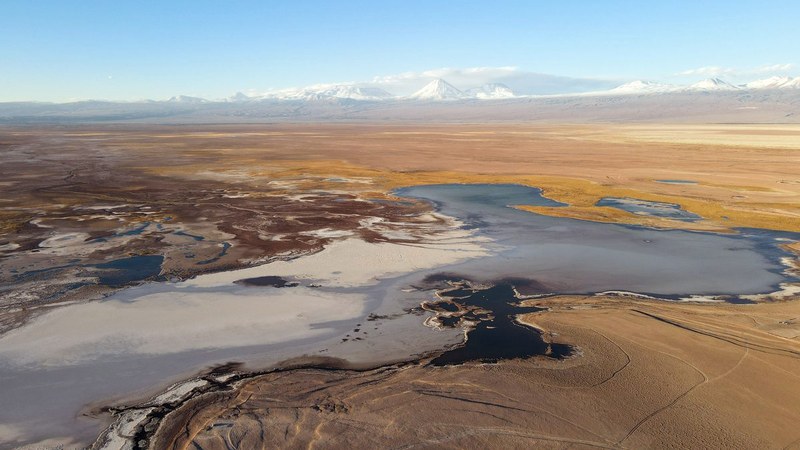
Lilac Solutions is an Oakland-based cleantech company commercializing a patented ion-exchange technology that pulls lithium directly out of brine - using ceramic beads instead of evaporation ponds. The process is faster, uses up to 90% less freshwater, and is designed to unlock low-grade brine resources around the world to feed the electric-vehicle battery supply chain.