Who they are, right nowA bead, a brine, a bet.
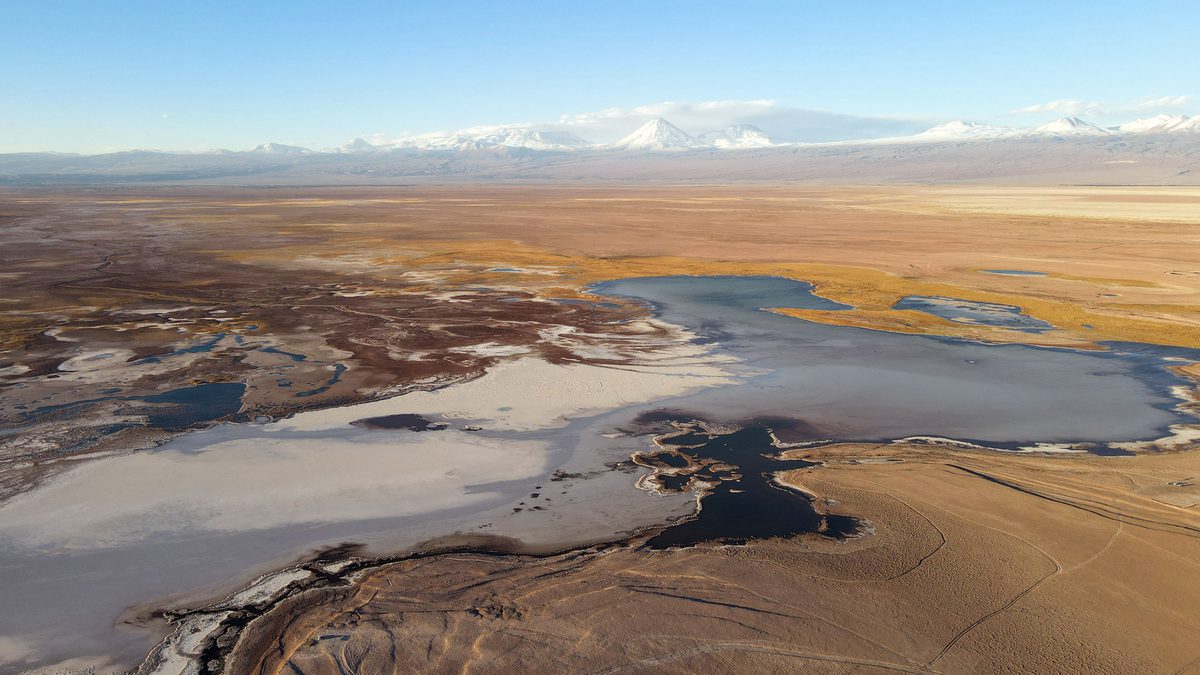
Walk past a column of ceramic beads in a Lilac facility and you'd be forgiven for thinking nothing is happening. No pit. No tailings pond. No moonscape. Just brine moving through media, and lithium - the metal that powers every EV battery and grid storage cell on the way - moving out the other side.
That quiet is the entire pitch. Lilac Solutions, headquartered in Oakland, California, has spent the better part of a decade arguing that the world's most strategic metal should not be harvested by digging up landscapes or boiling off square miles of water under the sun. It should be ion-exchanged - selectively grabbed from low-grade brines by an engineered bead, then handed off as a clean stream of lithium chloride.
That is the company in 2026: roughly 200 people, a commercial-scale media plant freshly opened in Fernley, Nevada, a fifth-generation IX technology in the field, and a cap table that reads like a who's who of climate capital - BMW i Ventures, Breakthrough Energy Ventures, Mercuria, Mitsubishi, Sumitomo, T. Rowe Price, Lowercarbon Capital. Total raised: about $368 million.
It is also a company that is, finally, no longer just promising.
The problem they sawThe world needs more lithium. The world dislikes how it gets it.
Here is the awkward fact that polite climate decks tend to flatten into a single hopeful slide: the energy transition runs on lithium, and the dominant ways of producing it are not particularly clean. Hard-rock mining in Australia chews through landscape and energy. Evaporation-pond brine projects in the Lithium Triangle wait twelve to eighteen months while water bakes off in the sun, sometimes in regions where freshwater is already scarce.
Meanwhile, demand keeps lining up at the door. EV fleets, grid batteries, consumer electronics - all asking for lithium carbonate and lithium hydroxide on a schedule the old supply chain was never built to keep.
Then there is the resource problem. Plenty of brines hold lithium. Most of them hold it at concentrations that are too dilute, too cold, or too impurity-laden for evaporation ponds to bother with. Geothermal brines. Oilfield brines. Cold-climate salars. Industry has known about these resources for years and politely passed.
The bottleneck, in one line
The world is rich in lithium - and poor in fast, cheap, low-impact ways to get it out of the brines where it sits.
The founders' betFrom a Northwestern PhD to a chemistry that travels.
Lilac was founded in 2016 by David Snydacker, a battery-materials researcher who had finished his PhD at Northwestern University and went looking, not for the next anode chemistry, but for the bottleneck upstream of it. If batteries were going to scale into the trillions of cells, the constraint was going to be the metals feeding them. Lithium, in particular.
Snydacker's bet was that ion exchange - a chemistry already familiar to the water-treatment industry - could be re-engineered into a specialty material that selectively pulled lithium out of brine. Build the right ceramic bead, deploy it in modular columns, and the entire ugly middle of conventional brine mining (evaporation, waiting, weather) could be cut out.
The company spent the first few years quietly doing what hard-tech companies have to do and rarely get applauded for: making the chemistry survive the move from beaker to bench to pilot. Investors who like a fast SaaS curve hated this part. Investors who like physical things showed up early - Breakthrough Energy Ventures, The Engine, Lowercarbon - and stayed.
In 2023, the company brought in Raef Sully as CEO, a leader with deep experience across mining, chemicals, and oil and gas. The implication was unsubtle: the chemistry worked. Now make it ship.
The productA column of beads, doing a thing that used to take a year.
Lilac's core technology is, mercifully, easy to describe.
A patented ceramic bead is engineered to be selective for lithium ions. Brine flows through a column packed with these beads. The beads absorb the lithium. The depleted brine is sent back where it came from. The lithium is then eluted off the beads as a concentrated lithium chloride stream, which is processed into battery-grade lithium carbonate or lithium hydroxide.
The whole loop happens in hours instead of months. It does not need a square mile of desert. It does not, importantly, need to like the brine very much. Lilac's beads are designed to be tolerant of impurities - the kind that make low-grade brines look uneconomic to the legacy industry.
IX Lithium Extraction
Direct lithium extraction system built on patented ceramic ion-exchange beads. Modular columns, fast cycles, brine returned to the resource.
Fifth-Gen IX Media (Oct 2025)
Higher media productivity, longer life, cleaner eluate, simpler brine pretreatment - translation: less capex, less opex per tonne of lithium.
Fernley, NV Manufacturing
Commercial IX media plant completed Jan 2026. Initial capacity ~200 tonnes/year - enough to enable up to 100,000 tonnes/year of LCE globally.
Project Development
End-to-end engineering, field piloting, and deployment support for lithium brine project developers from feasibility through commercial systems.
Above: the product line, minus the part where chemical engineers stare at a column and refuse to go home until the eluate looks right.
MilestonesTen years, abridged.
The proofThe numbers that matter to grown-ups.
* Versus conventional evaporation-pond brine mining, per Lilac.
Funding by round (USD, approx.)
Source: Lilac Solutions press releases, CNBC, FinSMEs. Pre-A round undisclosed and omitted from chart.
The cap table is its own kind of proof. When BMW i Ventures, Mercuria, Sumitomo and Mitsubishi all write checks, you are not selling them a science project. You are selling them a place in a future lithium supply chain they would like to insure.
The missionExpand the supply. Shrink the footprint. Don't take a victory lap.
Lilac's stated mission is straightforward: dramatically expand the world's lithium supply for the EV and energy-storage era while shrinking the industry's environmental footprint. The unstated mission is harder - prove that a hard-tech climate company can ship at industrial scale without quietly drifting into the same compromises it was founded to avoid.
The Fernley plant is the most concrete answer Lilac has given to that test so far. A factory making the beads that make the lithium is the kind of unglamorous middle-of-the-stack infrastructure that climate tech tends to skip past in pitch decks. Building it is what separates a thesis from a company.
The culture, in one observation
Lilac is heavy on PhDs and process engineers - the kind of people who would rather get the eluate spec exactly right than tweet about it. The pitch is mission-driven cleantech, with a workshop and a wet lab attached.
Why it matters tomorrowThe brines nobody wanted are about to be the ones everyone needs.
If Lilac is right, the map of lithium production stops looking like a small number of evaporation projects in a couple of South American salars and starts looking like a much longer list: geothermal brines in California and Germany, oilfield brines across the United States, cold-climate salars where evaporation never made sense, even saltwater deposits that the legacy industry filed under "not for us."
None of that happens because of one press release or one Series C. It happens because the chemistry survives the move to industrial scale and the unit economics keep improving with each generation of media. The fifth generation matters not because five is a magic number, but because each generation is a quiet vote of confidence that the curve is bending in the right direction.
And then, the closing image. Back to the bead, the column, the brine moving through. The metal that will sit in millions of EV battery packs and grid storage cells passes through that column without much drama. No pit. No tailings pond. No year-long wait under the sun. Just chemistry, finally allowed to do its job.
That is the company in 2026. The quiet, it turns out, was the point.