antibody-engineering
(12)
The Second Handshake Changes Everything
Dualitas is betting that the most useful thing an antibody can do is not merely bind twice, but force the right two proteins into the same conversation. Roche just paid $36.5 million upfront to test that idea at industrial scale.

Vir Biotechnology’s Second Act Comes With a Mask
After COVID antibodies and a failed flu trial, Vir is betting on hepatitis delta and cancer drugs designed to switch on inside tumors. Its comeback has partners and cash. The decisive clinical tests are still ahead.
Invenra Built an Antibody Factory. Then One of Its Molecules Reached Humans.
The Madison biotech spent years making two-target antibodies easier to build, screen and manufacture. Now a partner-discovered molecule is in a Phase 1 trial - and the operating lesson may be more reusable than the science.

Merida Biosciences
Merida Biosciences is a Cambridge, Massachusetts biotechnology company developing a new class of engineered Fc biotherapeutics that selectively bind and eliminate the disease-causing antibodies behind autoimmune and allergic diseases, while sparing the protective antibodies the immune system needs. Launched publicly in April 2025 with a $121 million Series A, the company aims to treat conditions such as Graves' disease, IgE-mediated allergy and primary membranous nephropathy by clearing pathogenic antibodies and suppressing the B cells that make them - without the broad immunosuppression that limits many existing therapies.

EpiBiologics
EpiBiologics is a San Mateo biotech building bispecific antibodies that grab disease-driving proteins on the outside of cells and drag them into the trash. Its EpiTAC platform - spun out of Jim Wells' lab at UCSF - taps a library of more than 270 internalizing receptors so degradation happens in the right tissue and nowhere else. With $280M raised across Seed, Series A and a 2026 Series B led by GV and Johnson & Johnson, the company has pushed its lead EGFR degrader, EPI-326, into a Phase 1 trial for lung and head-and-neck cancers.

Bonum Therapeutics
Bonum Therapeutics is a Seattle biotechnology company building conditionally active biologics - drugs that switch on only where they are needed and switch off everywhere else. Spun out of Good Therapeutics after Roche's $250M acquisition in 2022, Bonum kept the platform blueprint and its founding team, then raised a $93M Series A to extend the approach. Its patented dual-binding antibody (DBA) technology uses a single domain that binds either an effector cytokine or a marker protein, but only one at a time, creating fully reversible medicines aimed at cancer, autoimmunity, metabolic disease and pain.

Salubris Biotherapeutics
Salubris Biotherapeutics (SalubrisBio) is a clinical-stage biotechnology company in Gaithersburg, Maryland that engineers complex biologics for diseases with few good options - chiefly heart failure and cancer. Founded in 2016 as the US arm of China's Shenzhen Salubris Pharmaceuticals, its lead candidate JK07 is an antibody-fusion protein designed to harness the regenerative NRG-1/ErbB4 pathway in failing hearts while dialing out the side effects, and its oncology programs JK08 and JK06 pursue solid tumors through immune engagement and a 5T4-targeted biparatopic antibody-drug conjugate.

Tamarind Bio
Tamarind Bio is a San Francisco software company building cloud infrastructure that lets bench scientists run 250+ AI and physics-based models for drug discovery - tools like AlphaFold, RFdiffusion, ProteinMPNN and GROMACS - through a no-code web interface and API, without managing GPUs, data pipelines or DevOps. Founded in 2023 by Stanford computer scientist Deniz Kavi and Sherry Liu, the company serves over 10,000 scientists, including 8 of the top 20 pharmaceutical companies, and raised a $13.6M Series A in February 2026.

Triveni Bio
Triveni Bio is a clinical-stage biotechnology company in Watertown, Massachusetts building first-in-class antibody therapeutics for immunological and inflammatory (I&I) diseases. Born from the 2023 merger of Amagma Therapeutics and Modify Therapeutics, the company pairs a genetics-informed approach with advanced antibody engineering to target root-cause biology rather than just downstream inflammation. Its lead program, TRIV-509, is a half-life-extended monoclonal antibody that inhibits active kallikreins 5 and 7 (KLK5/7) and is in a global Phase 2 proof-of-concept study for moderate-to-severe atopic dermatitis. Backed by roughly $223M across Series A and Series B rounds, Triveni aims to repair the skin barrier and break what it calls efficacy ceilings in dermatology and beyond.
Ampersand Biomedicines
Ampersand Biomedicines is a Boston-area biotech founded by Flagship Pioneering that builds programmable biologic medicines designed to act only where disease lives. Its computational Address, Navigate, Determine (AND) Platform maps the body for ideal localization targets and designs AND-Body Therapeutics that anchor at a disease site and conditionally switch on biology there, aiming to widen the therapeutic window and cut the off-tissue side effects that limit conventional drugs.
Crossbow Therapeutics, Inc.
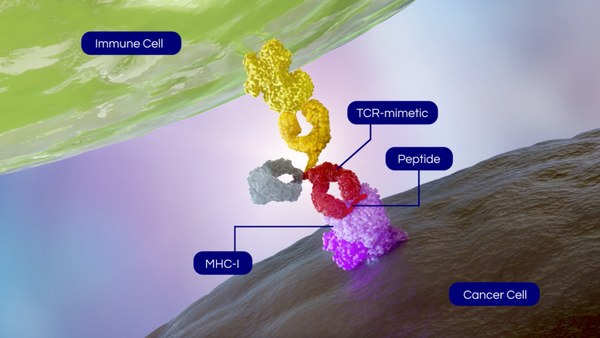
Crossbow Therapeutics is a Cambridge, Massachusetts biotechnology company building a new class of cancer immunotherapies. Its T-Bolt platform engineers TCR-mimetic antibodies - T-cell engagers that recognize tiny peptide fragments displayed on a cancer cell's surface (peptide-HLA complexes), opening up intracellular proteins that conventional antibodies cannot reach. The lead program, CBX-250, is a first-in-class T-cell engager in a Phase 1 trial for relapsed or refractory myeloid malignancies. Backed by more than $157M in venture funding, Crossbow aims to expand the universe of targetable cancer antigens.

Abdera Therapeutics
Abdera Therapeutics is a precision oncology biotech engineering antibody-based radiopharmaceuticals that deliver therapeutic radioisotopes directly to tumor cells while sparing healthy tissue. Built around its proprietary ROVEr platform, the company is advancing ABD-147 in Phase 1 trials for small cell lung cancer and large cell neuroendocrine carcinoma, with a second program, ABD-320, on deck.