antibody-drug-conjugates
(16)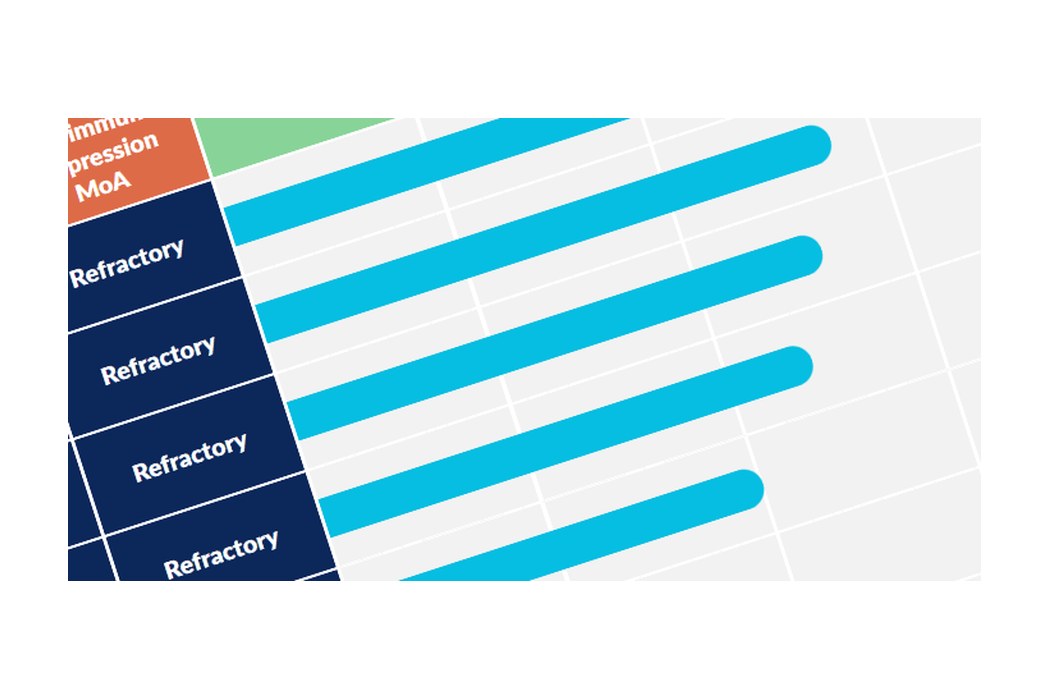
The Cancer Drug Isn’t Broken. Navrogen Thinks the Tumor Is Blocking the Signal
A tiny Pennsylvania biotech is betting that some antibody therapies fail for a surprisingly fixable reason: tumors throw molecular sand in the gears. Its answer is to redesign the antibody - or remove the sand.
Callio Put Two Cancer Drugs on One Guided Missile
Most antibody-drug conjugates carry one weapon. Callio is testing whether two coordinated payloads on the same HER2-targeted carrier can make resistant tumors run out of exits.
Genmab
A Danish antibody specialist turned one licensed molecule into a multibillion-dollar royalty engine. Now Genmab is spending that advantage on a harder act: becoming the company that carries more of its own cancer medicines from lab bench to patient.

CytomX Therapeutics
CytomX Therapeutics is a clinical-stage, oncology-focused biopharmaceutical company in South San Francisco that engineers conditionally activated antibody therapeutics through its proprietary PROBODY platform. By masking a drug's binding site and unmasking it only in the tumor microenvironment - where specific proteases cut a cleavable linker - CytomX aims to hit cancer targets that are otherwise too toxic to drug, widening the therapeutic window for antibody-drug conjugates, T-cell engagers and cytokines. Its wholly owned pipeline is led by CX-2051, an EpCAM-targeting PROBODY ADC for metastatic colorectal cancer, alongside masked interferon CX-801 and T-cell engager CX-904, and it partners its technology with Amgen, Astellas, Bristol Myers Squibb, Moderna and Regeneron.
Kivu Bioscience
Kivu Bioscience is a clinical-stage biotechnology company in San Mateo, California, building next-generation antibody-drug conjugates (ADCs) for solid tumors. Founded by BioGeneration Ventures and led by ADC veteran Mohit Trikha, the company licenses Synaffix's GlycoConnect and HydraSpace site-specific conjugation technology to engineer more homogeneous, stable ADCs that aim to widen the therapeutic window - hitting tumors harder while sparing healthy tissue. Backed by a $92 million Series A led by Novo Holdings, Kivu has moved its lead candidates KIVU-107 (PTK7) and KIVU-305 (CEACAM5) into Phase 1 clinical trials.
MBrace Therapeutics
MBrace Therapeutics is a clinical-stage oncology company building antibody-drug conjugates (ADCs) against hard-to-drug cancer targets. Its proprietary SPARTA platform screens antibodies directly inside living tumors to surface antigens that are cancer-specific, accessible, and internalizing - the traits an ADC needs to deliver its toxic payload where it counts. Founded in 2020 and headquartered in San Diego, the company raised an $85M Series B in 2023 (led by TPG) to advance a pipeline led by MBRC-101, a first-in-class ADC targeting the EphA5 receptor now in Phase 1/2 clinical trials.
NEOK Bio
NEOK Bio is a Palo Alto-based clinical-stage biotechnology company developing bispecific antibody drug conjugates (ADCs) for solid tumors. Founded and led by physician-executive Mayank Gandhi and backed by Korean antibody specialist ABL Bio, NEOK launched from stealth in November 2025 with a $75 million Series A. Its dual-targeting approach binds two complementary tumor antigens at once, aiming to widen the therapeutic window and overcome the resistance and toxicity limits of conventional single-target ADCs. The company's two lead programs, NEOK001 (ROR1/B7-H3) and NEOK002 (EGFR/MUC1), both cleared FDA IND review in early 2026 and are headed into Phase 1 studies.

CatenaBio
CatenaBio is a UC Berkeley spinout building a next-generation bioconjugation platform for targeted cancer therapies. Its proprietary CysTyr platform uses an engineered enzyme, Catenase, to forge a site-specific bond between cysteine and tyrosine residues (the C-Y Bond) using only native amino acids. This lets the company attach multiple different drug payloads to a single antibody, producing Multi-Payload Conjugates (MPCs) designed to overcome tumor resistance where conventional single-payload ADCs fall short.

Myris Therapeutics
Myris Therapeutics is a Pittsburgh-based precision oncology company building the next generation of antibody drug conjugates (ADCs). Formerly BioHybrid Solutions, Myris uses proprietary polymer chemistry rooted in Carnegie Mellon's ATRP (atom transfer radical polymerization) technology to grow polymer bottlebrushes on antibodies, achieving ultra-high drug-to-antibody ratios (DAR) of 50-300 - roughly 10 to 100 times higher than conventional ADCs. That capability opens up new chemical space for cancer payloads that were previously unusable, aiming to deliver more potent, precisely targeted therapies.
Ridge Bio
Ridge Biotechnologies is a Bay Area startup using AI-driven enzyme and targeted drug design to build the next generation of precision medicines. Its platform pairs proprietary machine learning models with high-throughput, cell-free wet-lab experimentation to design enzymes and delivery systems for applications spanning antibody-drug conjugates, in vivo CAR-T, targeted nucleic acid delivery, biocatalysis and radiotherapies. The company emerged from stealth in September 2025 with an oversubscribed $25 million seed round led by Sutter Hill Ventures.

Alentis Therapeutics
Alentis Therapeutics is a Swiss clinical-stage biotech built around a single, unusual biological target: Claudin-1 (CLDN1), a tight-junction protein that becomes exposed in both fibrotic tissue and solid tumors. Founded in 2019 on the discovery of physician-scientist Professor Thomas Baumert, the company develops first-in-class monoclonal antibodies and antibody-drug conjugates that bind exposed CLDN1 to reverse organ fibrosis and treat CLDN1-positive cancers. Headquartered in Allschwil near Basel with R&D roots in Strasbourg, Alentis has raised roughly $365 million across rounds, including a $181.4 million Series D in November 2024, and is running clinical trials for its lead antibody lixudebart (ALE.F02) and two ADCs, ALE.P02 and ALE.P03.

Hexagon Bio
Hexagon Bio is a Menlo Park biotech that mines the genomes of fungi and other microbes to discover new medicines. Its platform pairs machine learning, genomics, and synthetic biology to read DNA sequences, predict the small molecules they encode, and connect those molecules to the human proteins they act on - skipping the random trial-and-error that has long defined natural-product drug discovery. The company is focused on novel cytotoxic payloads for antibody-drug conjugates (ADCs) in oncology, and in late 2025 extended its approach to agriculture through a joint venture with Corteva.

MaveriX Oncology, Inc.
MaveriX Oncology is a Palo Alto biotech developing conditionally activated small molecule drug conjugates (CA-SMDCs) that exploit tumor-associated hydroxylase biology to deliver cytotoxic and immunomodulatory payloads selectively to solid tumors. Its IMPACT-2X platform aims to widen the therapeutic window of chemotherapy and immunotherapy, killing cancer cells while turning 'cold' immunosuppressive tumors 'hot.' Founded by veteran oncology drug developers and backed by PPF Group and SOTIO, the company's lead program is MVX-5005.

Salubris Biotherapeutics
Salubris Biotherapeutics (SalubrisBio) is a clinical-stage biotechnology company in Gaithersburg, Maryland that engineers complex biologics for diseases with few good options - chiefly heart failure and cancer. Founded in 2016 as the US arm of China's Shenzhen Salubris Pharmaceuticals, its lead candidate JK07 is an antibody-fusion protein designed to harness the regenerative NRG-1/ErbB4 pathway in failing hearts while dialing out the side effects, and its oncology programs JK08 and JK06 pursue solid tumors through immune engagement and a 5T4-targeted biparatopic antibody-drug conjugate.

Solu Therapeutics
Solu Therapeutics is a Boston-based clinical-stage biotech building a new class of medicines that selectively kill disease-driving cells. Its proprietary CyTAC (Cytotoxicity Targeting Chimera) and TicTAC (Therapeutic Index Control Targeting Chimera) platforms fuse the precise binding of small molecules with the cell-killing power of antibodies, reaching cell-surface targets - like GPCRs and ion channels - that traditional antibodies cannot. Its lead program, STX-0712, is a CCR2-targeting candidate in a Phase 1 trial for chronic myelomonocytic leukemia and other advanced blood cancers.
Myricx Bio
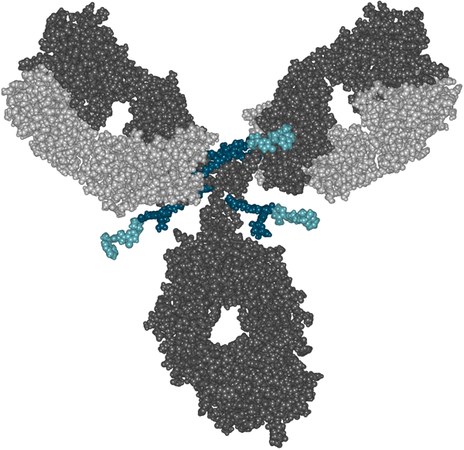
Myricx Bio is a London-based oncology biotech developing a completely new class of payloads for antibody-drug conjugates (ADCs), built on inhibitors of N-myristoyltransferase (NMT). Spun out of Imperial College London and the Francis Crick Institute, the company aims to give ADCs a fresh way to kill cancer cells that resist today's standard payloads. In July 2024 it closed a £90m ($114m) Series A, one of Europe's largest biotech rounds that year, to push its NMTi-ADC pipeline toward clinical trials.