3d-sensing
(5)
Realtime Robotics, Inc.
Realtime Robotics is a Boston-based deep-tech company that gives industrial and collaborative robots the ability to plan collision-free motion in real time. Spun out of DARPA-funded research at Duke University in 2016, its RapidPlan software and RapidSense perception system let robots generate and adjust their own paths in microseconds, cutting the time and cost of programming, deploying, and coordinating multiple robots in a shared workspace. Its technology is used by manufacturers including the BMW Group, and the company is backed by strategic investors such as Mitsubishi Electric, HAHN Automation, and SAIC Capital.

Lumotive
Lumotive is a Redmond, Washington optical-semiconductor company that turns beam steering into a chip. Its patented Light Control Metasurface (LCM) technology uses thousands of tunable liquid-crystal optical resonators etched into a CMOS die to steer light electronically - no moving parts - powering solid-state LiDAR, 3D sensing, and, soon, optical switching for AI data centers. Spun out of Intellectual Ventures and Bill Gates-backed metamaterials research, the company sells programmable beamforming chips like the LM10 to sensor and systems makers rather than building full LiDAR units itself.
MicroVision, Inc.
MicroVision, Inc. (NASDAQ: MVIS) is a Redmond, Washington-based developer of lidar and perception technology built on more than three decades of MEMS laser beam scanning. Once known for pico-projection and its PicoP scanning engine used in consumer displays, the company has pivoted to become a supplier of automotive-grade and industrial lidar sensors - the MAVIN and MOVIA lines - plus perception software, targeting ADAS, autonomous vehicles, robotics, and a fast-growing security and defense business.

Metalenz
Metalenz is a Boston-based deep-tech company that replaces stacks of curved glass lenses with a single flat, nanostructured semiconductor chip called a metasurface. Spun out of Harvard's Capasso Lab, it is the first company to mass-produce meta-optics, shrinking cameras and sensors for smartphones, biometrics, and 3D sensing. Its flagship Polar ID brings polarization-based, payment-grade face authentication to devices at a fraction of the size and cost of existing systems.
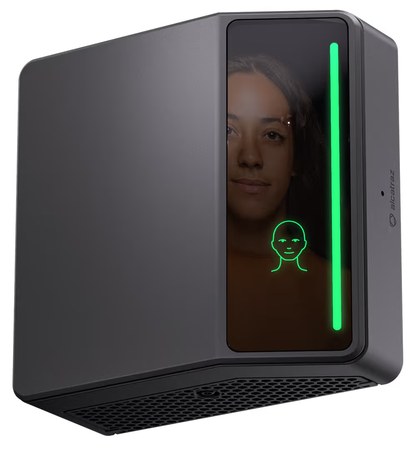
Alcatraz AI
Alcatraz AI builds the Rock and Rock X - AI-powered facial authentication devices that replace badges, fobs and PINs at the door. The Cupertino-based company combines edge computer vision, 3D depth sensing, and privacy-by-design encryption to authenticate people without storing their faces in the cloud, and is used by Fortune 100 firms, hyperscale AI data centers, major U.S. airports, and NFL teams.