There is a sentence that every IT administrator has heard, hated, and eventually believed: the cloud is not a backup. Move your files into Google Workspace or Microsoft 365 and you assume they are safe forever. They are not. Delete an employee’s account, get hit by ransomware, or let an intern drag the wrong folder to the trash, and the platform that hosts your data will, more often than not, shrug. SysCloud is the company built entirely inside that shrug.
Founded in 2013 by Vijay Krishna, a former storage executive who once ran marketing for the RAID division at LSI Logic in Japan, SysCloud started life doing something unglamorous: migrating data into Google Workspace. Then customers kept losing that data, and Google’s own tools could not always bring it back. So the company built the second copy - an automated, immutable backup of everything living inside a business’s cloud apps. That pivot, from mover to protector, is the whole story.
01What SysCloud actually does
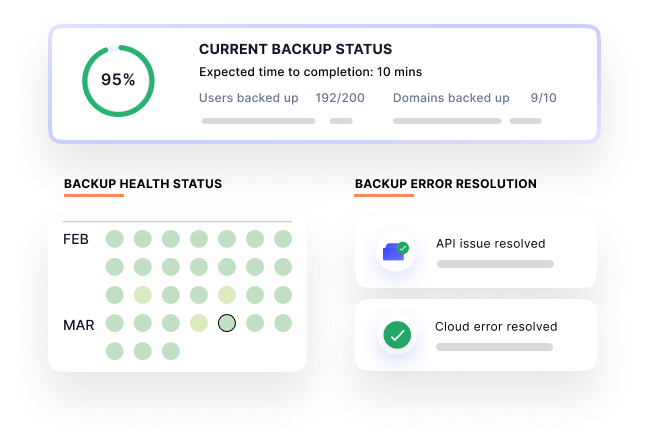
Strip away the marketing and SysCloud is a backup-as-a-service platform for SaaS applications. It connects to the software a business already runs - Google Workspace, Microsoft 365, Salesforce, Slack, HubSpot, QuickBooks Online, Box, Xero - and makes automatic, point-in-time copies of the data inside them, 365 days a year. The copies are immutable, meaning nobody, not even an attacker with admin credentials, can quietly alter or erase them. When something goes wrong, you restore to the exact moment before it did.
The reason this is a business at all is that SaaS providers protect their own infrastructure, not your decisions. Their servers are redundant; your Tuesday-afternoon mistake is not their problem. SysCloud sells the recovery button the platforms decline to give you.
The cloud is not a backup.The four words SysCloud built a company on
02The part that got weird - in a good way
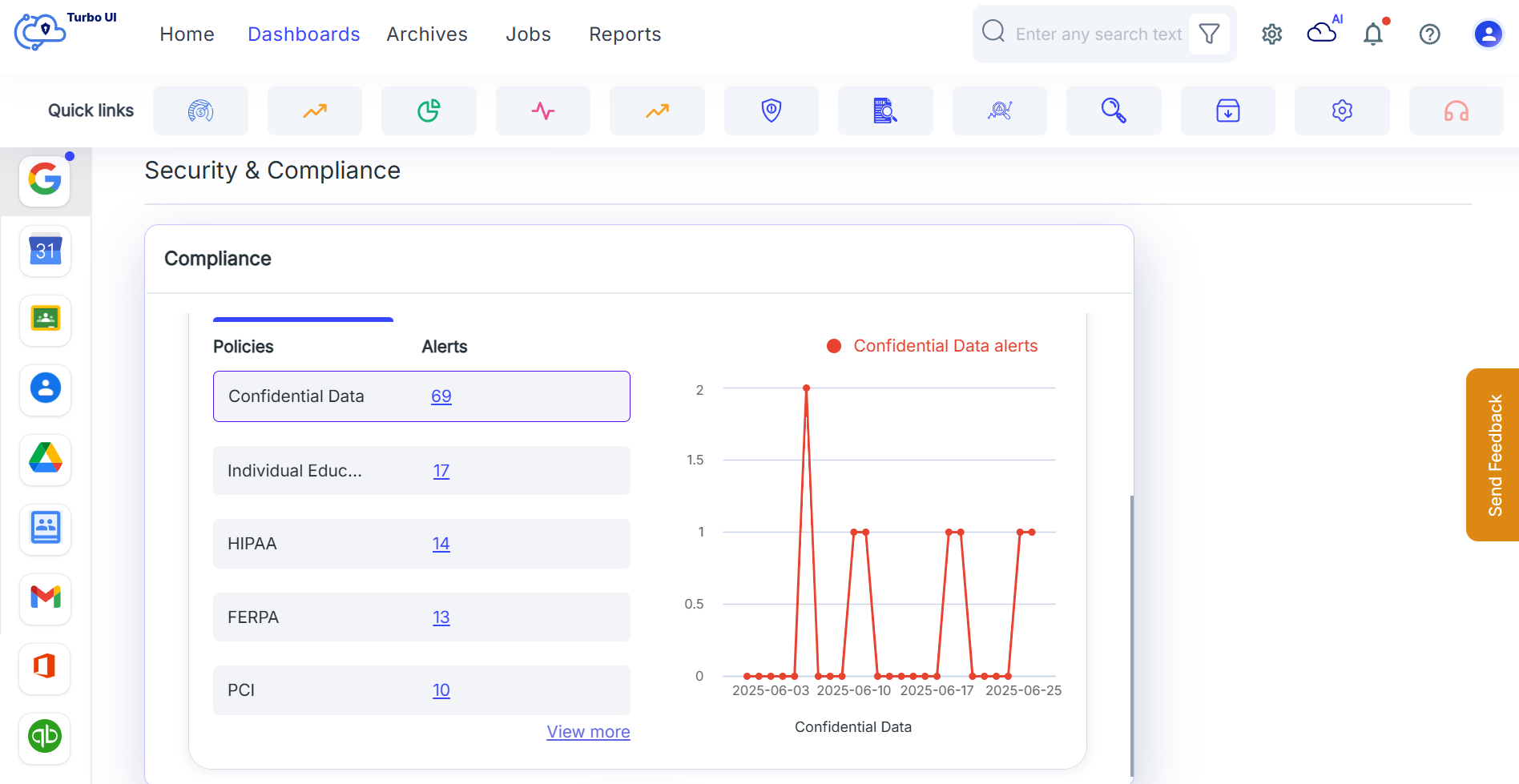
Somewhere along the way, SysCloud realized it was already reading everything. If your machine-learning is scanning backup snapshots for corrupted or malicious files, it can just as easily scan them for other things: a phishing pattern, a compliance violation, an insider quietly exfiltrating records. And in schools - which became a huge slice of the customer base - it could scan student writing for something far heavier.
That reframe matters because it turned a cost center into a reason to buy. Backup is a grudge purchase; nobody feels good writing the check. Safety and compliance are different - they show up in board meetings, parent emails, and audit letters. By running both off the same data it was already storing, SysCloud gave a school administrator a way to justify the line item in language the superintendent actually cares about.
SysCloud’s K-12 Student Safety models flag signs of cyberbullying, violence, and self-harm inside a school’s Google Workspace for Education. In one documented case reported by EdTech Magazine, content monitoring in Florida’s Putnam County School District flagged four students making suicide-related searches. A backup product had, in effect, become an early-warning system. That is not a feature you find on a Datto spec sheet.
The same pipeline that inspects data for ransomware can inspect it for risk, compliance, and safety. Build the boring infrastructure first; the high-value insight is a query away.
03Ransomware, but for your Google Drive
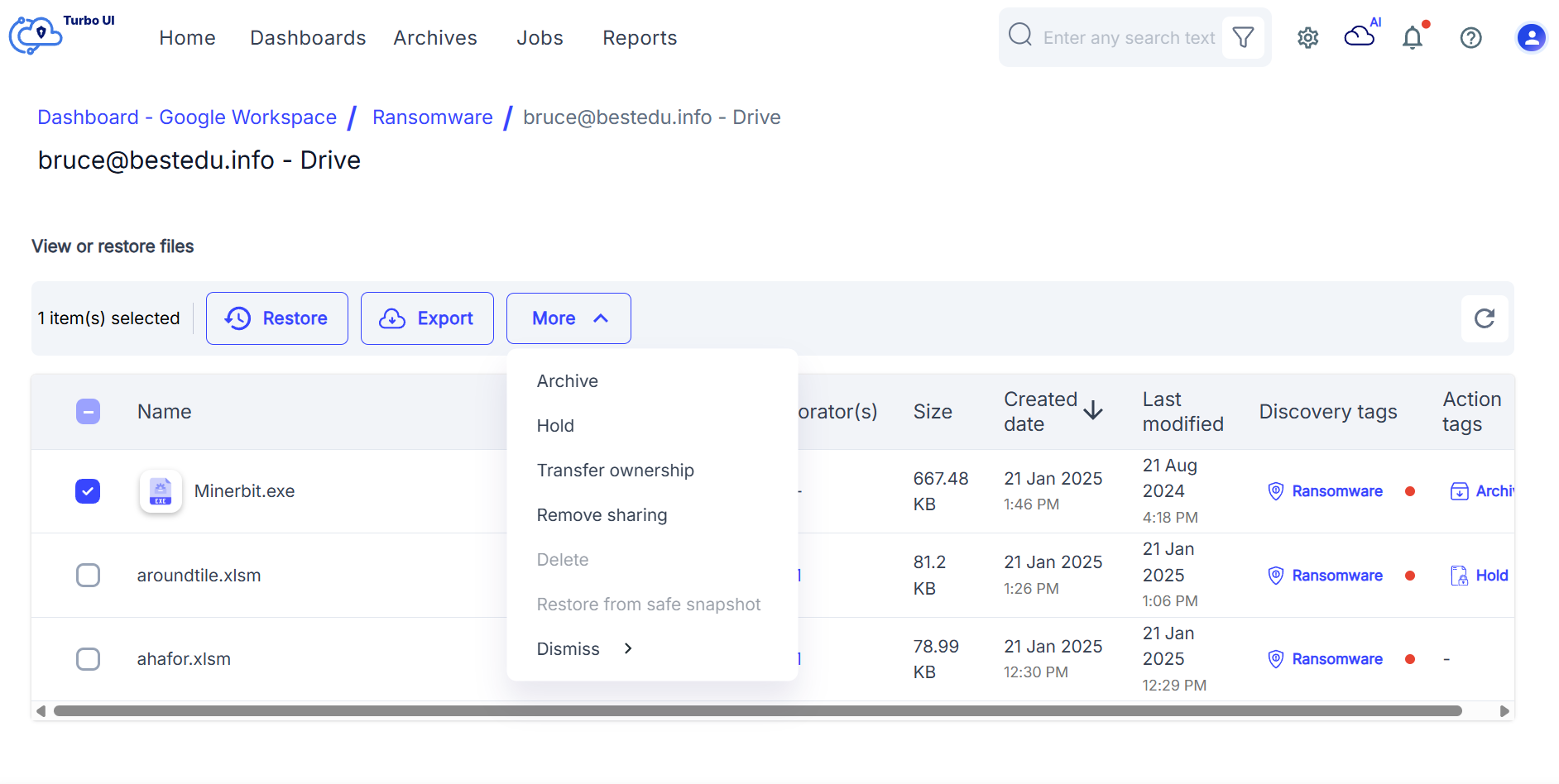
Ransomware stopped being a server problem years ago. It now rides straight into cloud drives through synced folders and compromised accounts, encrypting the files you assumed were safe because they were “in the cloud.” SysCloud’s ransomware add-on inspects backup snapshots for encrypted and malicious files, tells you the threat type and which account owns it, and - critically - recommends a clean version from before the attack to restore. Automated action flows handle the remediation so a single overwhelmed admin does not have to.
How data actually disappears
The pitch lands because the failure modes are mundane and constant. It is rarely a dramatic breach. It is a departing employee, a fat-fingered bulk action, a sync gone wrong.
Relative frequency of SaaS data-loss causes SysCloud is built to reverse. Illustrative.
04Who buys this - and why schools love it
SysCloud protects more than 7 million users across 37 countries, but its center of gravity is education. More than 1,200 school districts and 2,000-plus schools across the US and Canada run it. The reason is structural: schools live in Google Workspace, they are legally bound by rules like FERPA and CIPA, they hold sensitive records on minors, and they are staffed by tiny IT teams with no margin for a bad day. SysCloud bundles the backup they need, the compliance scanning they are required to do, and the student-safety monitoring they increasingly want - into one dashboard and one login.
On the business side, the customer is the cloud-native SMB and the occasional heavyweight. Reference deployments include Sacramento City Unified School District (130,000-plus users) and GlobalLogic (a reported 630 terabytes and 468 million files), alongside names like Verizon Media, DrFirst, and Boston Market.
The buyer, in almost every case, is a person who is one incident away from a very bad week. In a district, it is a single technology coordinator responsible for tens of thousands of student and staff accounts. In an SMB, it is the office manager who also happens to be “the computer person.” SysCloud’s pitch is aimed squarely at that person: set it up once, let it run, and stop lying awake about the day someone deletes the wrong thing. The product does not try to be exciting. It tries to be the reason a bad Tuesday stays small.
05Sky, the copilot that restores by chat
In 2025 SysCloud leaned into the obvious next move: an AI copilot named Sky. Instead of clicking through consoles, an admin can type what they want - run a global search, start a restore, export a mailbox, check licenses, pull a report - and Sky does it conversationally. It is a sensible use of AI in enterprise software: not a chatbot bolted onto a homepage, but the tedious operational task turned into a sentence.
At SysCloud, we’re focused on providing the highest level of data security.Vijay Krishna, Founder & CEO
06The business behind the backups
Here is the quietly interesting part for anyone who follows companies rather than headlines. SysCloud has raised only about $2.7 million in its life - a $2.5 million Series A led by Inventus Capital Partners with KAE Capital in 2014, plus a $200,000 debt round from Lighter Capital in 2018. No mega-rounds, no unicorn theatrics. It runs lean at roughly 140 people, split between Red Bank, New Jersey and an engineering office in Chennai, India, and reportedly does around $14.7 million in annual revenue (an estimate; public figures vary).
The model is classic B2B SaaS: per-seat subscriptions for the core backup, with paid add-ons for ransomware protection, Sky, eDiscovery, and archiving. It sells direct and through a channel of resellers and managed service providers, and lists on the Google, Microsoft, AWS, and Xero marketplaces. It is SOC 2 Type II and SOC 1 certified, GDPR compliant, encrypts at AES-256, and runs on AWS as an Advanced Technology Partner. Boring, in the way that durable software companies are boring.
Not every great software company needs a Series D. A capital-efficient team of ~140 quietly protecting 7 million users is a business model, not a consolation prize.
07Where it fits in the market
SaaS backup is a real and crowded category. SysCloud shares the field with better-funded names - Datto SaaS Protection, Druva, Acronis, Barratuda, Veeam for Microsoft 365, AvePoint, and Spanning. What separates SysCloud is less the core backup and more the surrounding layer: the compliance scanning, the multi-app breadth from one dashboard, and above all the K-12 student-safety monitoring, where it competes with a different set of names entirely - Gaggle, GoGuardian, Securly. Most rivals do backup or safety. SysCloud stitched them together, and schools bought the combination.
The 12-year arc
The thread that runs through all twelve years is unromantic and completely defensible: businesses now run on a dozen SaaS apps, none of the vendors will hold the recovery button for you, and somebody has to. SysCloud decided it would be the somebody, then quietly added the ability to notice when a student is in trouble. It is not the loudest company in its category. It may be one of the more useful ones.