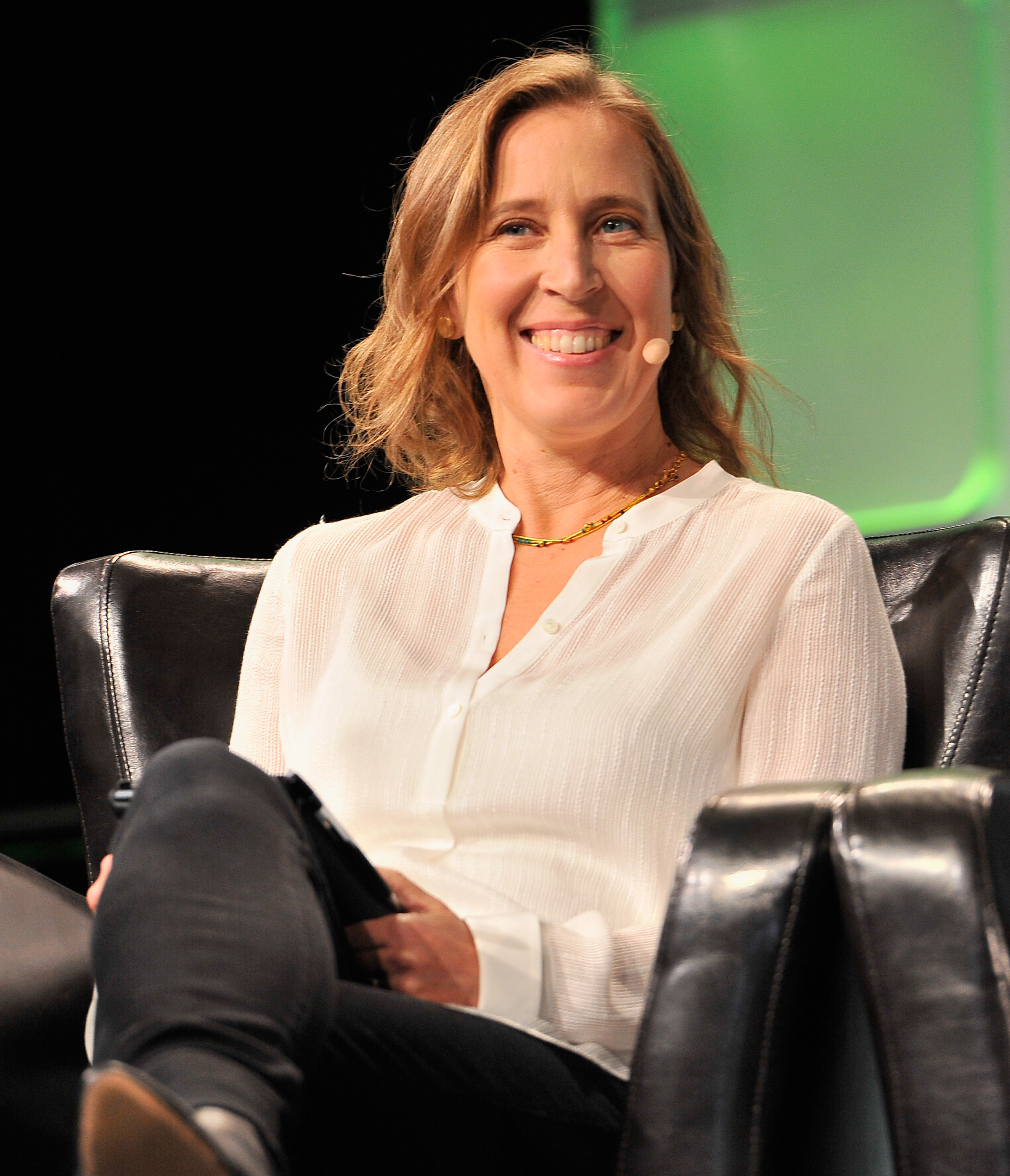
The mortgage was due. Susan Wojcicki was five months pregnant, working at Intel, and her husband had just bought a house near Stanford. They needed renters. Two graduate students showed up - nice enough guys, paid on time, seemed to be building something in the garage. "As long as you guys pay your rent on time, you guys can build your Googly thing here," she told them. The idea sounded kind of crazy. The name was odd.
That was 1998. The rent was $1,700 a month. The garage is now a California Historical Landmark. The two students were Larry Page and Sergey Brin. And Susan Wojcicki went from landlord to employee #16 to the architect of Google's entire revenue model to CEO of YouTube. Not bad for someone who studied history and literature at Harvard.
Here's the thing about Wojcicki that the "most powerful woman on the internet" headlines miss - she didn't join Google because she saw the future. She joined because the search engine went down one day while she was at work and she realized she couldn't do her job without it. That's not vision. That's pragmatism. That's noticing when the floor disappears beneath your feet.
The Garage Myth and the Real Story
Silicon Valley loves its garage stories. Jobs and Wozniak. Hewlett and Packard. Page and Brin. But Wojcicki's garage story runs backward. She wasn't building a company in that garage. She was collecting rent from the people who were. Then she looked at what they were building and thought: this is better than anything else. I should be part of this.
When she joined Google in 1999 as its first marketing manager, the company had fewer than 20 people. She was pregnant with her first child. The sensible move would have been to stay at Intel, take the maternity leave, keep the stable paycheck. Instead, she walked into a startup that was trying to figure out how to make money from a search engine.
Rarely are opportunities presented to you in a perfect way. In a nice little box with a yellow bow on top. Opportunities - the good ones - are messy, confusing and hard to recognize. They're risky. They challenge you.
- Susan Wojcicki
Building the Money Machine
AdWords launched in 2000. Simple text ads that appear next to search results. Click-through pricing. No banners, no flash, no pop-ups. Just words. It became Google's primary revenue engine - the thing that turned a clever algorithm into a business worth hundreds of billions. Wojcicki led that product.
Then came AdSense in 2003. Same concept, but now the ads could appear on any website. Publishers could monetize their content. Google could monetize the entire web. Wojcicki was the first product manager. She earned the Google Founders' Award for the work.
Two products. Two fundamental pieces of internet infrastructure. Both with Wojcicki's fingerprints all over them. And yet the biggest bet was still ahead.
The $1.65 Billion Bet
In 2006, YouTube was 18 months old, hemorrhaging money, and facing copyright lawsuits. It was messy. Risky. The kind of opportunity that doesn't come in a nice little box. Wojcicki told Google to buy it for $1.65 billion.
People thought she was crazy. Google had Google Video. Why spend that kind of money on a competitor filled with copyright problems and cat videos? Because Wojcicki saw what was actually happening - people were uploading and watching video at a scale no one had anticipated. The platform had network effects. The users were already there.
The deal went through. And for eight years, Wojcicki watched from Google while YouTube struggled to figure out its business model, its content policies, its relationship with traditional media. Then in 2014, she became CEO.
2B
Monthly Logged-in Users
Running YouTube
Wojcicki's tenure as YouTube CEO coincided with the platform becoming... everything. News source. Entertainment platform. Radicalization pipeline. Creator economy. Educational resource. Misinformation vector. Revenue giant. Cultural battleground.
She launched YouTube Premium, YouTube TV, Super Chat, channel memberships - ten different monetization methods for creators. She navigated advertiser boycotts, content moderation crises, and congressional hearings. She dealt with the impossible contradictions of running a platform with billions of users and wildly different ideas about what should be allowed.
The criticism was constant and contradictory. Too much moderation. Not enough moderation. Too friendly to advertisers. Not friendly enough to creators. Promoting conspiracy theories. Censoring legitimate speech. Being the arbiter of truth on the internet is a job nobody should want and somebody has to do.
Through it all, the platform grew. And grew. And grew. By the time Wojcicki stepped down in February 2023, YouTube wasn't just a video platform. It was infrastructure.
The Sister Act
Here's a detail that gets buried: Susan Wojcicki had two sisters. Janet became an epidemiologist and anthropologist. Anne founded 23andMe, the consumer genetics company. Their mother, Esther Wojcicki, taught journalism at Palo Alto High School for 36 years and is basically a legend in education circles.
Three daughters, three different fields, three different kinds of impact. And for a while, Anne was married to Sergey Brin, making Susan both Google's first landlord and Brin's sister-in-law. Silicon Valley is a small town dressed up as the future.
Career Timeline
1998
Rented garage to Google founders Larry Page and Sergey Brin for $1,700/month
1999
Joined Google as employee #16 and first marketing manager
2000
Led launch of AdWords, Google's primary revenue engine
2003
First product manager of AdSense - earned Google Founders' Award
2006
Convinced Google to acquire YouTube for $1.65 billion
2014
Became CEO of YouTube
2015
Named Time's 100 Most Influential People - "most powerful woman on the internet"
2023
Resigned as YouTube CEO to focus on family and health
2024
Passed away August 9 at age 56 after battling lung cancer
The Work-Life Balance Nobody Talks About
Wojcicki had five children. She was a vocal advocate for paid parental leave - not as corporate policy theater, but because she'd lived the math. She spoke openly about the challenges of balancing work and family, about the importance of flexible schedules, about the reality that "having it all" usually means having too much.
She also said: "If you are working 24/7, you're not going to have any interesting ideas." This from someone running one of the largest platforms on earth. The implication being that the always-on hustle culture isn't just bad for people - it's bad for the work.
In February 2024, her 19-year-old son Marco died at UC Berkeley. Four months later, she announced she was stepping down from her advisory role at Google. In August 2024, after a two-year battle with lung cancer, Susan Wojcicki died at age 56.
Three months after her death, YouTube published a letter she'd written in her final weeks. She wanted to use her remaining time and resources to fight for cancer research. To find cures. To turn her own dying into something useful for others.
That's the through-line in all of it - the garage, the ads, the video platform, the final message. Susan Wojcicki looked at what existed, saw what was missing, and built the infrastructure to fill the gap. Whether that gap was Google's revenue model or YouTube's creator economy or cancer research funding.
What Gets Remembered
The garage story is memorable because it's absurd - rent out your garage, become one of the most powerful people in tech. But that's not actually what happened. What happened is: notice when something works better than everything else. Join it. Build the boring infrastructure that makes it sustainable. Make big bets on messy opportunities. Navigate impossible trade-offs. Leave before you burn out.
Wojcicki didn't have a technical degree. She studied history at Harvard, economics at UC Santa Cruz, got her MBA at UCLA. She once said: "Though we do need more women to graduate with technical degrees, I always like to remind women that you don't need to have science or technology degrees to build a career in tech."
What you need, apparently, is the ability to recognize when the tools you rely on are better than the alternatives. The willingness to join something messy and small. The patience to build revenue models that scale. The judgment to know when to bet $1.65 billion on cat videos and copyright problems. The resilience to lead a platform through every cultural battle of the 2010s. And the wisdom to step away when family and health matter more than quarterly earnings.
The memorial tributes called her a pioneer, a visionary, a trailblazer. Which she was. But the more interesting description is the one implied by her own work - she was someone who built infrastructure. Not the flashy stuff. The boring, essential, revenue-generating, creator-enabling, billion-user-scaling infrastructure that makes everything else possible.
That garage in Menlo Park is a historical landmark now. Tourists take photos. The plaque doesn't mention Susan Wojcicki. But it should. Because renting out the garage was the easy part. What came after - building the ad models, buying YouTube, growing it to 2 billion users, navigating content moderation at planetary scale, advocating for paid leave and women in tech - that was the real work.
And in her final message, redirecting attention to cancer research, even that felt like infrastructure building. Leave the platform better than you found it. Leave the world better than you found it. Pay the rent on time. Build something that scales.
What You Might Not Know
- Her garage where Google started is now a registered California Historical Landmark
- All three Wojcicki sisters became leaders in their fields - Janet (epidemiologist), Susan (tech), Anne (CEO of 23andMe)
- She studied history and literature at Harvard, not computer science - proving you don't need a technical degree to succeed in tech
- She was pregnant with her first child when she joined Google - a startup with fewer than 20 people
- YouTube under her leadership reached 1 billion hours of content watched daily - equivalent to 114,000 years of video per day
- She advocated strongly for paid parental leave at Google after experiencing the challenges of balancing work and raising five children
- Her mother Esther Wojcicki taught journalism at Palo Alto High School for 36 years and is considered a pioneer in education
- She was briefly Sergey Brin's sister-in-law when her sister Anne married the Google co-founder (2007-2015)
"Even though it was a start-up with fewer than 20 people, and I was pregnant with my first child, the best decision I've ever made was to join Google in 1999."
"Whether it's salary or a promotion or a job, I think it's important for women to ask for what they think they deserve."
"Work smart. Get things done."
"From phones to cars to medicine, technology touches every part of our lives. If you can create technology, you can change the world."
Education & Background
- Born: July 5, 1968 in Santa Clara, California
- Parents: Esther Wojcicki (journalist, educator) and Stanley Wojcicki (Stanford physics professor)
- Harvard: BA in History and Literature (1990)
- UC Santa Cruz: MS in Economics (1993)
- UCLA Anderson: MBA (1998)
- Family: Married Dennis Troper (1998), five children
- Net Worth: Estimated $700-800 million (2024)
Major Achievements
- Google's 16th employee and first marketing manager
- Created AdWords (2000), Google's primary revenue engine
- Led development of AdSense (2003), earned Google Founders' Award
- Convinced Google to acquire YouTube for $1.65 billion (2006)
- CEO of YouTube (2014-2023), growing to 2 billion monthly users
- YouTube paid over $30 billion to creators under her leadership
- Named Time's 100 Most Influential People (2015)
- Called "most powerful woman on the Internet" by Time magazine
- Ranked #7 on Forbes World's 100 Most Powerful Women (2018)
- Received Free Expression Award from Freedom Forum Institute (2021)
Connect