Surfer is for the person staring at a perfectly decent draft and wondering what the search results know that they do not. Give it a target query and the cloud software studies the pages already competing there. It returns an editing brief: useful terms, related questions, suggested length, structure and a live score that climbs as the draft approaches the pattern. This feedback loop is the product’s little dopamine machine. A writer changes three sentences, the dial turns greener, and an abstract optimization problem suddenly feels finishable.
That clarity is why agencies, in-house teams and freelance writers use it. A content lead can hand a writer a shared editor instead of a 14-tab spreadsheet. A specialist can audit an aging page against today’s results. A manager can apply one process across dozens of briefs. In 2026, Surfer added a second question: does the brand appear when people ask ChatGPT, Perplexity, Gemini or Google’s AI experiences for an answer? The company has moved from grading pages to connecting research, production, rankings and AI citations in one loop.
Who should invite the score dial to work?
The clearest buyer is a team publishing search-led pages every week. Surfer reduces the cost of explaining a brief, reviewing basic coverage and returning to articles that have slipped. It is particularly handy when the writer knows the subject but not the habits of a results page. The Google Docs and WordPress connections also keep optimization near familiar tools.
Occasional bloggers have a harder calculation. Discovery starts at $49 a month when billed yearly, while Standard starts at $99. A solo creator publishing twice a month may spend more time admiring the dashboard than recovering the fee. Experienced SEOs who already read SERPs manually may prefer a broad research suite such as Ahrefs or Semrush. Surfer does not present itself as a backlink index, technical crawler or generic rank tracker. Its home ground is the page and the production line around it.
The score is a smoke alarm, not the fire chief. Let it point. Do not let it write the evacuation plan.
The editor: where the habit begins
Content Editor remains the reason to care. The interface places the draft beside recommendations derived from competing pages. Terms change color as they are used; structural targets and questions sit nearby; the scores react in real time. Surfer now shows SEO and AI Search guidance together. Intent Alignment checks whether the draft answers the job implied by the query, while Surfy can expand, rephrase or rewrite passages using the document and a custom voice.

Surfer AI can generate a complete draft after researching the topic, with an option to inspect the outline first. That makes it useful for briefs, skeletons and routine pages. It does not remove the need to check claims, add first-hand evidence, interview sources or cut generic prose. One 2026 G2 reviewer praised the easy integrations and time saved, then noted that some suggestions felt like keyword stuffing and repeated edits could sound generic. A Capterra reviewer loved the live meter but warned that chasing every suggestion can make prose feel forced. The compliments and complaints describe the same mechanism.
From blue links to robot answers
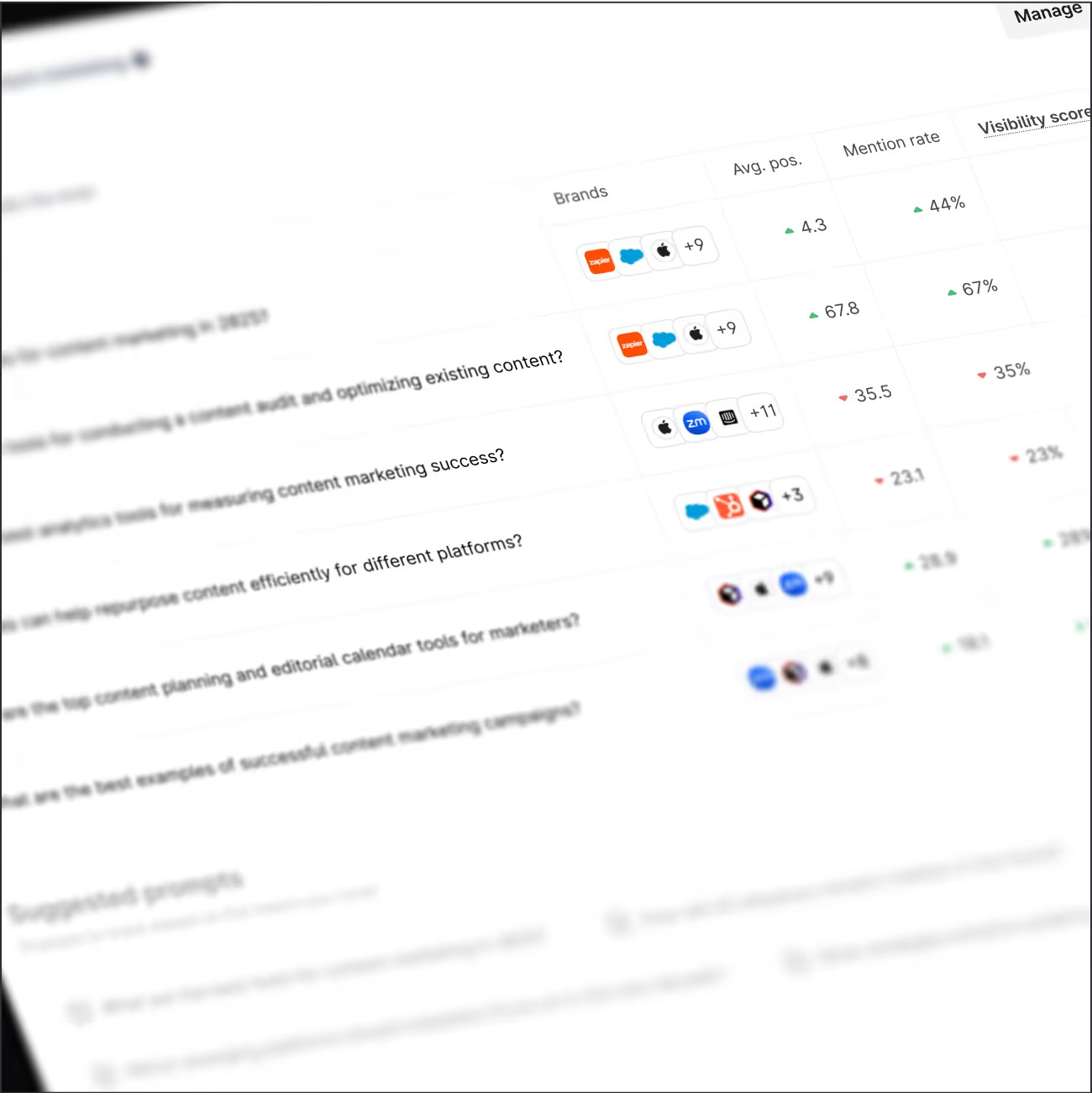
AI Tracker is Surfer’s answer to a nervous new marketing question: what are answer engines saying about us? It monitors prompts and reports mention rate, average position, visibility, competitor share of voice, sentiment, gaps and cited sources. Higher plans expand the number of prompts and refresh them daily across ChatGPT, Perplexity, Google and Gemini experiences. Standalone AI Search Analytics is available for teams that want tracking without the full writing suite.
The better idea is the handoff. If Tracker finds a cited page that is not the primary source, an Optimize button opens or creates its Content Editor. Recommendations can turn findings into a queue. In plain English, the path now runs from “we are absent from this answer” to “here is the page and work that might improve our odds.” No platform can promise a citation from systems it does not control, but joining measurement to execution gives the data somewhere to go.
Track an answer
Spot the gap
Open the page
Edit and watch
The rest of the toolbox
Topical Map clusters ideas into a publishing plan. Content Audit revisits live pages and compares them with current competition. Auto-Optimize applies suggested improvements, while Internal Linking looks for relevant connections among a site’s pages. Sites gathers domains and opportunities into a team workspace. There are plagiarism and AI-detection utilities, a Humanizer, a free Keyword Surfer Chrome extension, Google Docs and WordPress integrations, an API on the Peace of Mind plan, and, since August 2026, an MCP server that lets compatible AI agents use live Surfer data.
| Need | Surfer’s fit | Consider instead |
|---|---|---|
| Guided content production | Strong live brief, scores and workflow | Clearscope, Frase, MarketMuse |
| Backlink and competitor research | Limited compared with broad suites | Ahrefs, Semrush |
| AI-answer monitoring | Tracker connects findings to editing | Semrush, dedicated AEO trackers |
| Technical site crawling | Not the main job | Screaming Frog, Sitebulb |
A Polish side project catches a larger wave
Surfer began in Poland after Michał Suski worked on SEO at an agency founded by friend Sławek Czajkowski. Lucjan Suski brought product engineering experience; Tomasz Niezgoda and Kazik Piętka later joined the founding group. Public accounts place the start in 2017, with the company taking shape around a side project and later finding its breakout product in Content Editor. The business was bootstrapped, a detail the founders have worn with understandable pride.
Growth followed. Deloitte ranked Surfer 211th in its 2024 EMEA Technology Fast 500 and reported 874 percent revenue growth for the measured period. In October 2025, Surfer joined Group Positive, a European marketing software group. Surfer said Lucjan, Michał, Tom and the operating team would continue leading it. The following release cadence supports that continuity: Sites and AI Tracker in 2025, then workspaces, Tracker-to-Editor optimization, unified scoring, a new API and MCP during 2026.
Reality check
Public ratings are warm. Surfer’s pricing page displays 4.8 out of 5 on G2, 4.9 on Capterra and 4.6 on Trustpilot, each from hundreds of reviews when shown. Community discussion is pricklier. Reddit writers repeatedly praise the audit or the cues for non-SEO writers, while others call the scoring rigid, the output robotic or the subscription expensive. There was also criticism in 2025 over an inaccurate promotional screenshot. Buyers should take the sane middle: test the current product on their own pages, measure outcomes, and treat every automated recommendation as a hypothesis.
How to run a useful seven-day trial
New accounts currently receive a seven-day Pro trial. Pick one published page with stable traffic and one new brief. In the old page, remove irrelevant competitors, note the score, apply only recommendations that improve coverage, then track the result outside Surfer. For the new piece, build the outline from the SERP analysis but add material the ranking pages cannot: original examples, customer language, expert comment or first-hand tests. Set up a small AI Tracker project using prompts customers genuinely ask. Do not waste the week importing everything.
At the end, count hours saved rather than points gained. Did the brief reach a writer faster? Did review require fewer rounds? Were the Tracker findings specific enough to prompt action? Could the team explain why each suggested term belonged? If yes, choose a plan based on annual document volume and prompt refresh needs. If the main achievement was moving a score from 76 to 92, cancel before renewal. Unused limits do not roll over on monthly plans, and annual plans charge upfront.
The verdict
Surfer makes a fuzzy craft legible. It gives distributed content teams a common brief, catches obvious coverage gaps and now links AI visibility to the page-editing work meant to improve it. That is a coherent product, not a bag of AI buttons. Its weakness is the authority of its interface: numbers look objective even when relevance, originality and taste remain editorial calls.
For agencies and in-house teams shipping enough search content to need a system, the live editor and measurement loop can justify the cost. For a careful writer publishing occasionally, the subscription is harder to defend. The decision becomes easier when every saved review round has a real labor cost. Use Surfer as a sharp research assistant with a colorful clipboard. The human holding the pen must still know when the checklist has run out of useful things to say.