The least glamorous object in a beautiful hotel lobby may be the spreadsheet that got the chairs there. It contains quantities, finishes, fire codes, fabric choices, lead times, freight, replacement pieces and the increasingly nervous question: where is everything? SUNPAN has spent decades turning that spreadsheet into a furniture company.
From its Toronto base, the private, trade-only business designs, sources, stocks and distributes modern and transitional furnishings. The customer is not usually the person sinking into the sofa. It is the retailer, interior designer, architect, home stager or hospitality buyer who needs the sofa to look right, survive real use and arrive before opening night. SUNPAN’s public catalogue now exceeds 3,000 products. More than 2,500 are offered as stocked commercial-grade designs through its contract program.
That scale gives the company an unusually practical pitch. Instead of asking a designer to hunt across a dozen vendors for a dining room, lounge and lobby, SUNPAN can supply seating, tables, beds, lighting, rugs, art, outdoor pieces and, since summer 2026, the vases and decorative objects that finish the room. It occupies the tasteful middle: more coordinated and project-ready than a consumer furniture store, more accessible than commissioning every object from scratch.
The chair is only the visible part
SUNPAN’s design language is deliberately broad but not chaotic. Clean-lined modern pieces sit beside mid-century forms, classic upholstery and globally influenced, handcrafted objects. Its product team says it studies consumer behavior, style direction and colour palettes, then works with designers, artisans and manufacturing houses around the world. Materials range from Italian leather and marble to glass, concrete, oak, performance fabric and recycled plastic.
The process sounds like fashion forecasting with weight limits. A chair has to photograph well, but for a restaurant or hotel it also has to withstand a parade of bodies, cleaning routines and small collisions. Products carrying SUNPAN’s “CV” mark are tested for durability and safety in commercial settings. The contract assortment covers restaurants, bars, lobbies, hotels, model homes, condo developments, community rooms and offices. Named featured clients on SUNPAN’s contract materials include Hyatt Regency, Westin, Marriott, Walt Disney World Resort, Caesars, Wynn, Atlantis and MGM Resorts.
“Great design is a fusion of art and science.”SUNPAN’s description of its design process
The science extends into customization. Through its Customer’s Own Material program, a project buyer can select one of SUNPAN’s established frames, supply the upholstery and choose from available finishes. That is a useful compromise between stocked furniture and a fully bespoke commission: the silhouette and production logic already exist, while the surface can match a project. Minimums apply, and a representative manages the quote and logistics.
The moat has loading docks
Furniture makes logistics impossible to ignore. It is bulky, damage-prone and expensive to move. A delay is not an abstract service metric when a restaurant has booked its opening or a model home needs to sell units. SUNPAN’s most consequential recent investment was therefore not another handsome collection. It was a warehouse.
In late 2023 the company opened its first permanent U.S. distribution facility: 200,000 square feet in Baytown, Texas, near the Port of Houston. Together with Toronto, the building brought SUNPAN’s warehouse footprint to almost half a million square feet. American customers gained a choice of inventory from Houston or Toronto, along with U.S. pickup and shorter fulfillment routes for many destinations. The facility also created roughly 50 local jobs.
Three showrooms provide the theatrical counterpart. Toronto and High Point operate year-round; Las Vegas opens around its market. Together they total about 80,000 square feet. High Point is particularly important. SUNPAN marked its twentieth year exhibiting there in 2024, dating its U.S. market launch to 2004. A buyer can sit on the merchandise, inspect Italian leather and see coordinated rooms before ordering. The warehouse makes that showroom confidence operational.
A software release disguised as customer service
In April 2026, SUNPAN began rolling out a customer portal to approved trade accounts. The language is modest - orders, invoices, credit notes, shipment tracking and twelve months of purchasing analytics in one place - but the change reveals how the company sees the problem. Trade customers do not merely need another product search. They need fewer emails, phone calls and mystery spreadsheets.
The portal includes permissions for a main administrator, additional main administrators, admins and web-only users. Sensitive financial documents stay with designated roles, while project staff can still see orders and shipment status. Online and offline orders appear together. This is not software sold by subscription; it is software used to make the wholesale relationship stickier and less irritating.
Its customers did. Judging by SUNPAN’s own explanation, visibility was the first thing to strain at scale: trade teams were chasing orders across emails, spreadsheets and calls. The company also says decor was among its most requested additions. The pattern is plain: listen for repeated workflow friction, then expand around it.
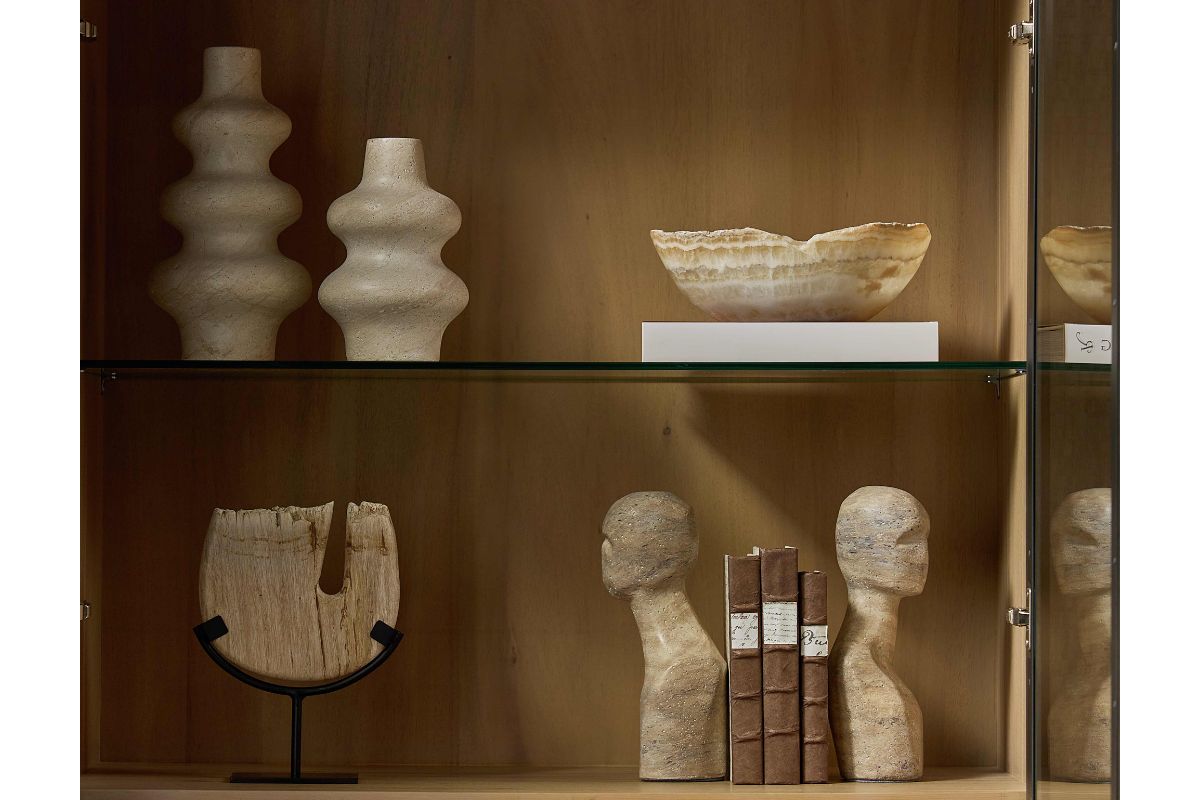
The 2026 decor launch follows the same logic. After a preview drew interest at Spring High Point Market, SUNPAN introduced sculptures, vases, barware and decorative objects made with skilled makers in Indonesia, India and Vietnam. These are not random impulse buys. They increase SUNPAN’s share of a room and give a retailer or designer one fewer supplier to coordinate.


The sustainability claim, item by item
Furniture companies are fond of green adjectives, so the useful details are the nouns. SUNPAN marks qualifying products with a sustainability icon rather than calling the entire catalogue sustainable. Depending on the item, that can mean FSC-certified wood, recycled filling, locally sourced material or fabric containing recycled fibres. Selected upholstery uses at least 39 percent recycled polyester. The North American Domestic collection includes performance fabric with at least 30 percent REPREVE fibres, made from post-consumer plastic bottles.
Outdoor products use recycled-plastic HDPE in selected pieces, PET yarn appears in some rugs, and all teak in the outdoor collection is described as SVLK-certified. SUNPAN says its cartons are fully recyclable and that North American upholstery reduces shipping distance. It also sends gently used furniture to Habitat for Humanity and leftover swatches to Toronto maker Roncy Packs, which turns them into bags. These are specific practices, not proof that moving thousands of large objects around the world has become impact-free.
What an operator can copy
The transferable lesson is to stop defining the product at the edge of the object. SUNPAN could have remained a catalogue. Instead, it added the adjacent services that determine whether the catalogue succeeds in the customer’s world: samples, commercial testing, customization, inventory visibility, showrooms, two-country fulfillment, sales support and account software. Each feature answers a different version of the same anxious question - can I specify this without creating a new problem?
A second lesson is to expand by completion. Lighting, rugs, art and decor do not merely add SKUs. They help the customer finish a room through one relationship. The model is especially effective when choices need to coordinate, orders are operationally complex and delays are costly. A software company can copy it by bundling implementation and monitoring. A food supplier can add menu planning and traceability. A building-materials distributor can combine samples, compliance documents and delivery status.
Copy this when
Customers buy several coordinated items, value availability, face deadlines and would pay in loyalty for less vendor management.
It breaks when
Taste demands one-off authorship, local-only production is mandatory, inventory turns slowly, or buyers want instant consumer checkout and public pricing.
There are real costs. Broad assortments tie up capital. Warehouses add rent, labor and systems. Global sourcing creates freight, currency and geopolitical exposure. In April 2026, rising fuel costs led SUNPAN to add a temporary freight surcharge. The company does not publish project prices, funding or warehouse construction cost, so its return on those investments cannot be judged from the outside. Its older online flow also routed submitted orders to staff for offline confirmation - useful human control, but a signal of the manual work the newer portal is meant to reduce.
That tension keeps SUNPAN interesting. It sells visual ease through operational complexity. The customer sees a curved chair, a quiet rug and a handsome bowl. Behind them sit trend forecasts, test standards, permission levels, port proximity and a forklift. Most brands prefer to photograph the chair. SUNPAN’s business depends on remembering the forklift.