Look at the $15 line. In a 2024 quote for Oxnard Union High School District, an Acer Chromebook costs $315. The Google management license adds $35. Then comes a preparation package: $15 to enroll the machine, apply its asset tag, record its identity, place it in the right organizational unit, connect it to the specified wireless network, and upload it into inventory. The computer is the expensive part. The smaller line explains how it becomes a school computer.
- STS supplies school technology and the people who make it work.
- Its focus is K-12: devices, campus systems, and IT capacity.
- Preparation, maintenance, and retirement are part of the proposition.
- The useful comparison is the complete job, including work left for district staff.
There is a pleasing lack of glamour here. An asset tag will never receive applause at a technology conference. Yet a district buying thousands of machines has thousands of opportunities to misplace one, configure one incorrectly, or send one to the wrong campus. A procurement decision that looks simple on a spreadsheet becomes a logistical undertaking when school starts.
STS Education occupies that gap. The California company supplies hardware, software, classroom equipment, and services to schools across the United States. Its current website reports more than 5,500 schools and districts served, reaching more than 10 million students. Those are company-reported reach figures. The more instructive question is what happens to an individual device before a student opens it.
What arrives matters
For Pasadena Unified, STS describes deploying 14,500 Lenovo 500e Chromebooks. They were enrolled in the district’s Google console, tagged, cased, and network-connected before reaching campuses. Three years of accidental-damage protection accompanied the devices; nearly 200 pre-wired Bretford carts supported charging. STS says it coordinated delivery to individual school sites.
Think of the difference between a pallet and a deployment. A pallet is a delivery achievement. A deployment requires the contents to reach their intended users in working order. A district can do that work itself, of course. The choice is whether its staff have enough time, space, and coordination capacity to do it alongside everything else.
Chromebooks in STS’s reported Pasadena Unified deployment.
Prepared before campus delivery.
The $15 Oxnard preparation package puts a price on one version of this work. It belongs to that historical quote, rather than a universal STS tariff. The quote also includes a $4 environmental fee per device before tax. Different machines, service terms, and purchasing arrangements can produce different totals. Still, the example gives a buyer a better question than “How cheap is the laptop?” Ask what the price leaves your own team to finish.
$315Chromebook
$35Management license
$15Preparation
$4Environmental fee
Per-device line items from a 2024 Oxnard Union quote. $369 before tax. Historical example, not current pricing.
The affordable computer grew a service department
Marc Netka established the predecessor business in 2001 to address schools’ need for lower-cost devices. A 2010 merger with Pacific OneSource produced School Tech Supply. The STS Education name followed in 2016. The legal business operates as Pacific OneSource doing business as STS Education.
The present CEO, Justin Netka, describes a family enterprise that began in his father’s garage, with his grandmother as the first employee. Marc is now chairman. Justin’s account ties the expansion to a change inside schools: technology became central to instruction, increasing the need for planning and sustained support.

“Our mission remains simple, to improve the lives of teachers and students.”Justin Netka · CEO
That is a service-company origin with an unusually domestic opening scene. The garage supplies the entrepreneurial romance; the grandmother supplies the better detail. Today’s proposition is broader than inexpensive computers. STS presents three connected areas: device lifecycle, campus operations, and strategic and operational support.
Its business model combines resale with paid implementation and service engagements. Schools can procure equipment, commission projects, or add ongoing support. This places STS among education-focused resellers and integrators. Alternatives include other national suppliers, local specialists, manufacturer purchasing, and work done by district employees. STS’s stated distinction is K-12 focus and coordination across the job.
The room has requirements of its own
A classroom display has a location, a mounting requirement, a network connection, and a teacher who must use it. Samsung’s October 2023 partnership announcement assigns STS installation and continuing maintenance duties for interactive displays, with support as part of a five-year product warranty. Samsung contributes professional-development resources; STS also offers learning support through Learn.EC.
The arrangement illustrates how equipment manufacturers and education integrators fit together. A manufacturer can design the screen. Someone must assess the room, handle the installation, and help people use the result. The practical test is whether those responsibilities are agreed before the delivery truck arrives.
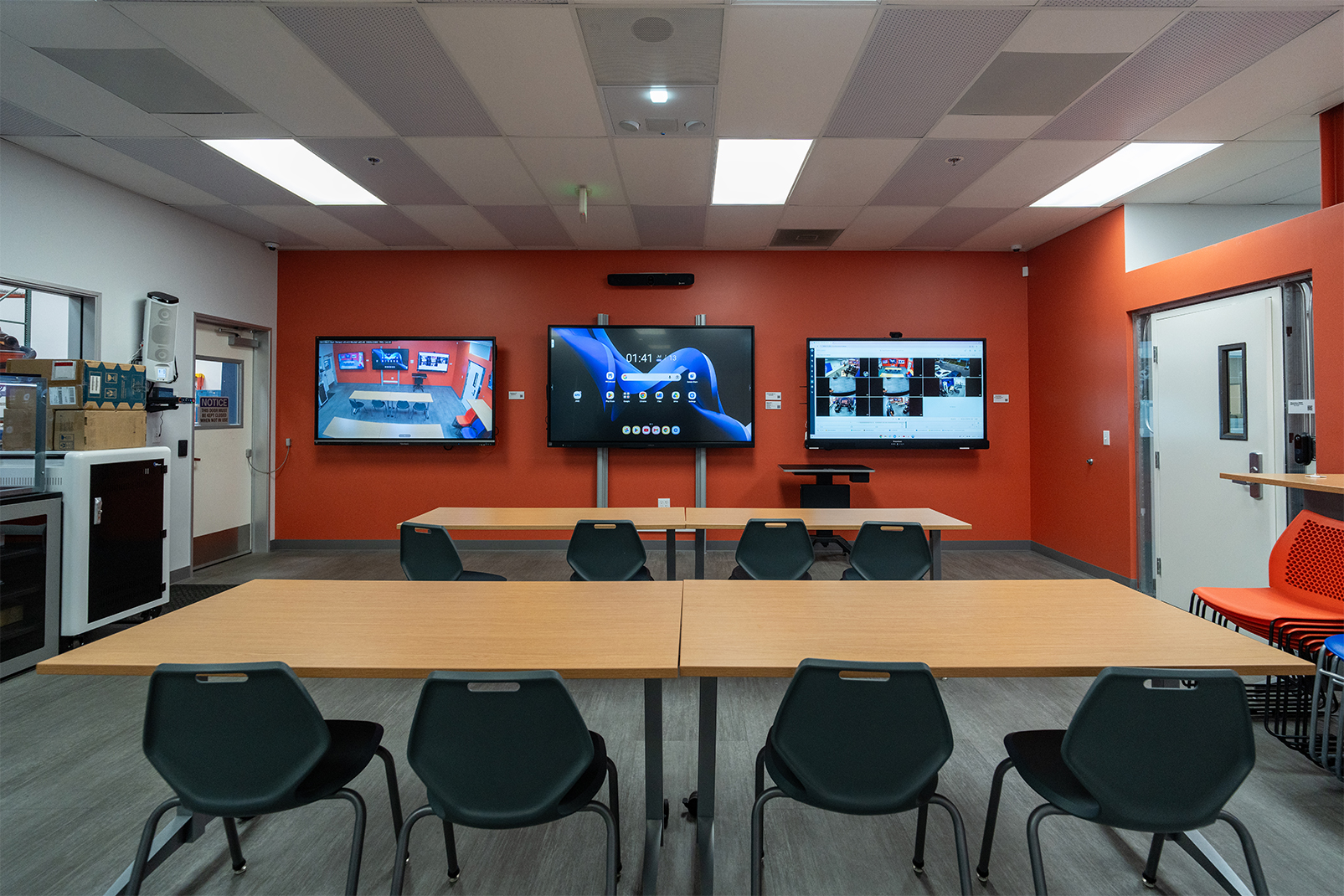
STS’s Customer Experience Center offers in-person sessions and live virtual walkthroughs with an engineer. A team can inspect classroom technology in a working setup. Bring the people who will install, teach with, and support it. A demonstration becomes much more useful when the questions concern your room and your daily routine.
The catalog extends to furniture, charging carts, classroom audio, device management, and communications. That breadth matters when a school is changing a learning space rather than replacing a single screen. It also requires discipline: the purchasing list should follow the intended activity, the available space, and the support plan.
Even the bell belongs to the system
At Guajome Park Academy in Vista, STS reports delivering FrontRow audio in 70 classrooms alongside campus paging, bell scheduling, exterior horns, and common-area amplification. The company says its own team carried out the low-voltage installation and commissioning. This is school technology with fewer shiny rectangles and more cables.
Campus operations connects physical security, networks, cybersecurity, audio, and communications. The appeal is an accountable project that crosses departmental boundaries. The obligation is equally clear: cameras, access systems, and notifications must fit the school’s existing infrastructure and procedures. A catalog alone cannot establish that fit.
For schools short of specialist capacity, STS offers fractional and full technology staffing through EduTech Group, plus project work and professional development with Educational Collaborators. Engagements can cover seasonal work, defined projects, or ongoing needs. A small school may require experienced help without needing every specialty on its payroll throughout the year.
Budget for the second act
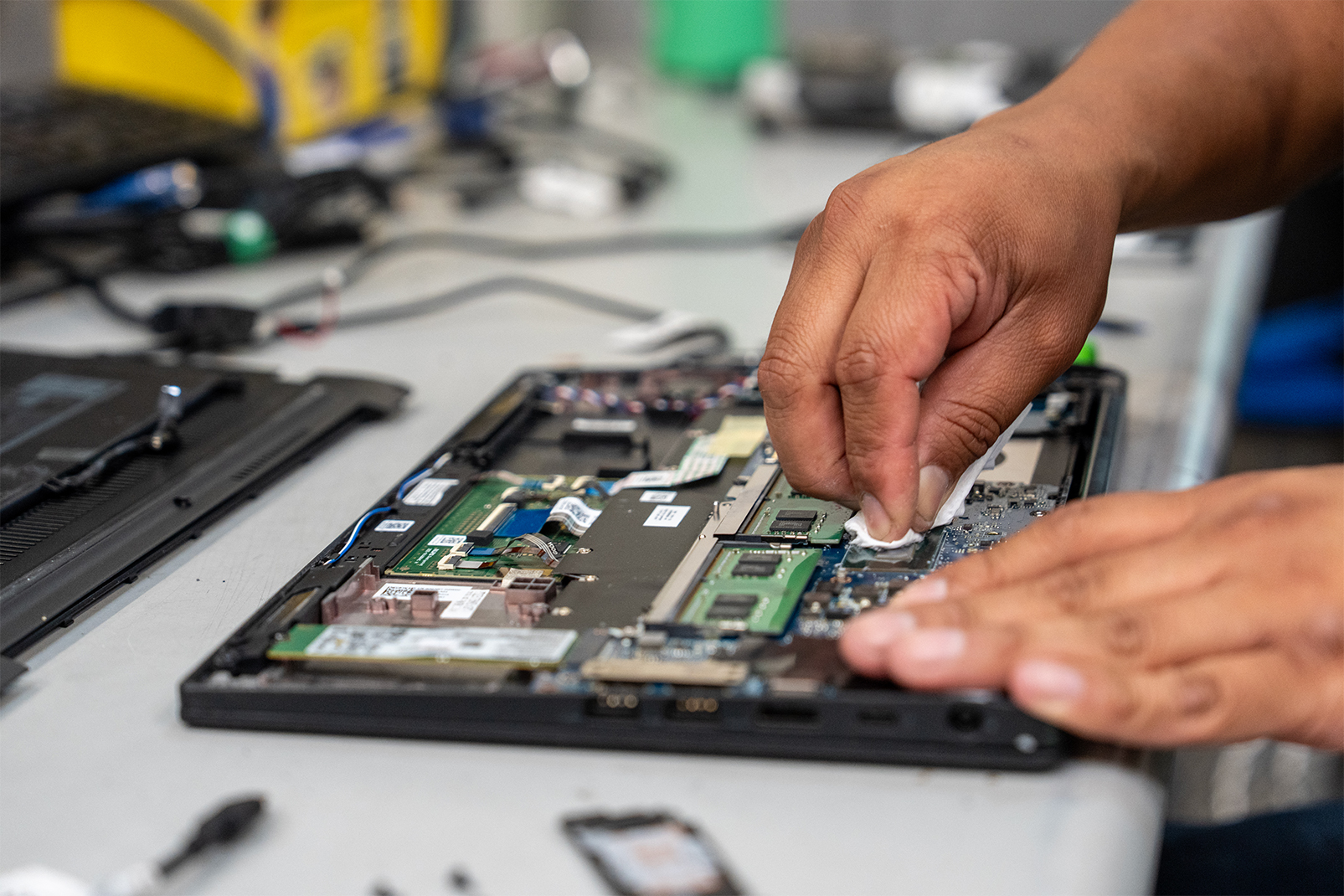
STS’s lifecycle offering runs from planning and provisioning through repairs and retirement. It includes secure data destruction, buyback, and recycling. The company reports returning more than $6 million in cash or credit to districts through its Asset Value Recovery program since 2001. Recovered value is a useful contribution to a refresh budget, rather than a reason to assume every old device will fetch a handsome price.
The refurbishment instinct also found a place in esports. In May 2020, NASEF announced an agreement naming STS its exclusive provider of refurbished gaming computers for K-12 schools. The historical partnership applied the affordable-hardware approach to a particular activity, with schools needing machines suited to gaming rather than just general classroom tasks.
Purchasing routes matter, too. STS lists national, state, and local procurement contracts and offers help with bid processes. A district can examine the relevant contract alongside its equipment specification and service scope. The administrative route and the technical solution should both be settled before committing the budget.
The lesson to borrow
Write the handoffs into the buying plan. Who enrolls the devices? Who delivers to each campus? Who trains staff? Where do repairs go? Who certifies the wipe at retirement? STS’s offering makes those questions visible. Its reported projects are most useful as examples of tasks a buyer can specify, rather than promises that every district will achieve the same result.
A district with a capable internal deployment team may need less outside preparation. A demanding application may require new equipment. A service bundle needs scrutiny if it duplicates work already funded. The sensible comparison includes staff time, support coverage, compatibility, and the full contract price. A low device price is only one input.
School technology earns its keep during an ordinary lesson. The package has to be ready, the network has to work, and the teacher has to know what to do. Look again at that $15 line. It is a small charge for a remarkably consequential verb: prepare.