The job offer arrived in October 2018. By then, Steve Semelsberger had known Testlio’s founders for five years. He had watched their idea develop, advised the company, and put his own money into it. When the board asked him to become chief executive, he accepted immediately. The decision was quick. The acquaintance had taken considerably longer.
That interval is the interesting part. Executive appointments tend to be announced as moments: someone arrives, someone moves, a new title appears beneath a photograph. Semelsberger’s route into Testlio had accumulated in stages. An introduction in Austin became an ongoing working relationship. Eventually, the relationship could support a different division of responsibility.
Five years before the offer
In 2013, Kristel and Marko Kruustük were participating in Techstars Austin. Semelsberger met them there. His own account gives the subsequent dates with an operator’s precision: advising in 2014, a seed investment in 2015, the CEO appointment in 2018. He was familiar with the business well before he acquired the obligation to run it.
Kristel, Testlio’s founding CEO, wanted to concentrate on software testing. A chief testing officer role took shape through conversations with the board and leadership team. Semelsberger’s arrival allowed responsibilities to move around people’s strengths. The founder who had started as a tester could spend more time on testing; the experienced executive could take on the broader business.
- 2013Meets the founders
- 2014Begins advising
- 2015Invests in the seed round
- 2018Becomes CEO
Years later, discussing the arrangement on Payments on Fire, he described an affinity for synthesis and integration. His younger self had skateboarded, played high-school football, and joined a band. He identified as a generalist. It is a useful detail about someone whose professional life would require conversations across specialties, including with people who knew the technical work more intimately than he did.
A résumé with several kinds of work
Before Testlio, Semelsberger had worked across successive software businesses: iChat, Motive, Pluck, and Demand Media. His career included companies that reached two acquisitions and two public offerings. He also served as a president at SYPartners, the management consultancy, and earned an MBA at Duke after a bachelor of science degree at Binghamton.
Those experiences put him in several seats around a company: operating executive, consultant, advisor, investor. Each involves a different relationship to the same practical questions. What does the customer need? Where should the money go? Who will do the work? An investor can ask for an explanation. The executive eventually has to make the budget behave.
Alder Growth Partners, which he founded in 2013, gave that assortment of experience a home. Its work includes helping CEOs, companies, and investors, but it also includes artists. Growth assessments and capital decisions sit alongside recording assistance and creative collaboration. The musician appears in the business description without needing to sneak in through the hobbies section.
Even the name offers a clue. In explaining Alder, Semelsberger wrote about the wood’s use in Fender Stratocaster and Telecaster guitars. He also liked the tree as an image of support and partnership. A discussion that begins with a consulting firm winds up among guitar bodies and tree roots. There are less entertaining ways to explain a company name.
“At the end of the day, I love working with people.”
Steve Semelsberger, on joining Testlio in 2018
The athlete without the industry résumé
One of his more revealing hiring stories concerns someone identified simply as Chris. The candidate had little relevant experience, did not know the industry, and did not understand the product. Those omissions would make a fairly efficient rejection email. Semelsberger hired him.
Chris had been an All-American college athlete. Semelsberger saw evidence of an ability to excel, even though the setting was different. In his account, Chris went on to become one of the company’s leading sales representatives. The story became the opening of a 2018 essay about hiring for demonstrated excellence.
His argument extended beyond athletes. He wrote about hiring musicians, academics, artists, writers, programmers, and gamers. What interested him was a pattern of aspiration, drive, discipline, and confidence. Industry knowledge still mattered, but it was only part of the evidence. A person could arrive knowing how to practice and persist before knowing the vocabulary of a new trade.
That same summer, he was writing about humility in leadership. He asked whether successful leaders value it and which environments reward it. His reflections treated humility as compatible with ambition: an ability to learn, acknowledge others, and keep an organization’s needs in view. The combination is worth noticing beside the Chris story. Both pieces ask a manager to look carefully before deciding what competence should look like.
Software meets the world
At Testlio, the work required looking beyond the software development team’s immediate surroundings. An application might behave as expected in one browser while presenting a different experience on another device, in another country, or through a different payment method. The customer encounters the actual combination. The development plan has to contend with all of it.
In his 2024 Modern CTO conversation, Semelsberger discussed devices, operating systems, localization, and releases whose stakes made failures particularly awkward. A live sporting event provides an obvious example. The viewer has arrived to watch the game; there is limited charm in discovering that the app has chosen the same evening to become interesting.
His explanations linked automated checks with human testing. Different teams, release methods, and risks called for different choices. He could talk about the mechanics, but he kept tying them to the experience of the person using the product. A passed test has a purpose beyond improving the appearance of a report.
His 2024 quality engineering series for CEOs addressed another practical problem: helping business leaders understand that work. Engineering teams need to explain the relationship between quality, spending, release speed, and commercial outcomes. Semelsberger’s contribution was to bring those subjects into the executive conversation, where technical decisions acquire budgets and deadlines.
Semelsberger’s January 2025 client letter also reported revenue growth alongside EBITDA and cash profitability.
That letter gives a view of the scale near the end of his tenure. It described a company deploying more than 1,400 full-time, temporary, and freelance people each month. Full-time colleagues were spread across more than 40 countries. Plans for in-person gatherings sat beside investments in the platform and automation. Connection remained an operating concern in a business whose people worked far apart.
The relationship survives the assignment
Semelsberger had made the underlying argument directly in a 2020 essay about enterprise technology and services. His most rewarding business experiences, he wrote, had grown through authentic relationships. He emphasized trusted introductions, contact with senior decision-makers, genuine interest, and partnerships with mutually understood aims.
He also considered what happens when the work ends. A purchase or project can finish while the relationship continues. That gives his Testlio chronology an additional meaning. The mentoring, advising, and investing were work in their own right. They also created years of context before an operating role became possible.
There is a personal texture to this view of business. He has described living in New York City, San Francisco, London, and Barcelona, while calling Austin home for much of his professional life. In his introduction to Testlio, he also wrote about his wife, Jodi, their three sons, and his attachment to Duke basketball. The career has geography, family, and a team to cheer for.
A different chair, a familiar question
In 2025, Testlio announced that Semelsberger was stepping down and that Summer Weisberg would become COO and interim CEO. On June 30, he announced a return to Alder Growth Partners after six and a half years focused on Testlio. Another operating chapter had ended; the advisory business was active again.
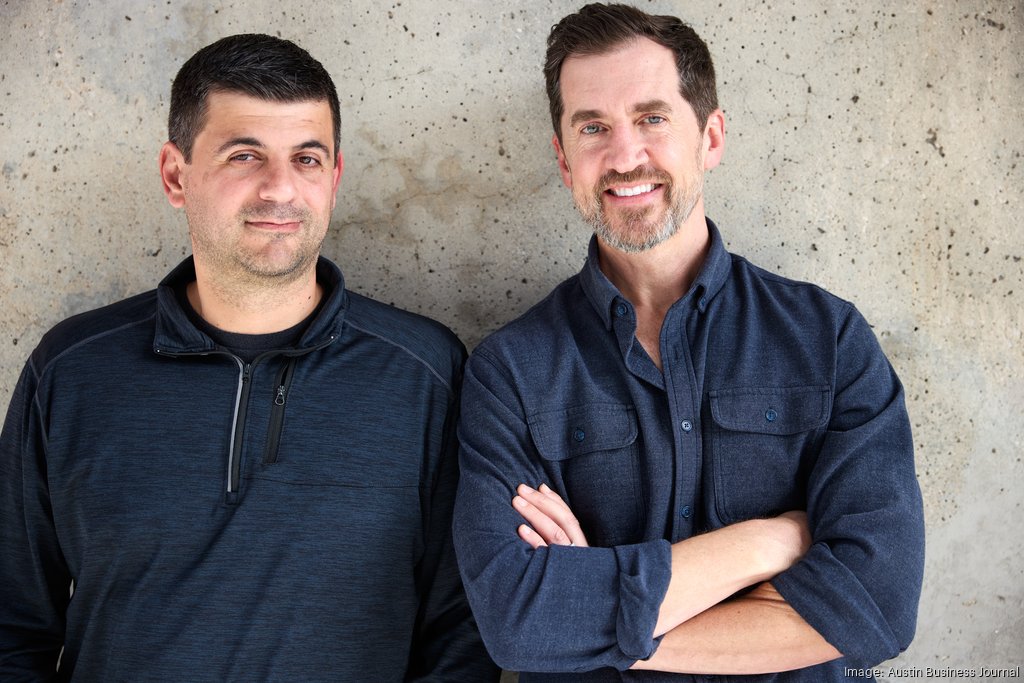
His next venture brought him together with CTO Peco Karayanev. Autoptic publicly launched on January 21, 2026, addressing production problems that can develop across complicated software systems. Its launch announcement described six customers and approximately $1 million collectively committed by the founders and 23 outside investors.
The company’s name means something seen with one’s own eyes, or connected with personal observation. Its stated task is to help engineering teams understand changes and catch developing problems. There is continuity with the quality questions of his Testlio years, now directed toward understanding what is happening while software is already running.
In September 2026, Autoptic introduced its Risks module, designed to help teams model operational concerns and connect findings to their own systems. The ambition is preventative: understand accumulating changes and direct engineering attention before customers experience an incident. It is a specific version of a question Semelsberger has encountered in several roles: how can people act sensibly when circumstances keep moving?
The generalist takes the microphone
That month also brought The Change Resilient, his new podcast. Its opening lineup included software resilience practitioner John Allspaw, entrepreneur Brett Hurt, open-source leader Chris Aniszczyk, and author Byron Reese. The conversations move between technical systems and the ways people and organizations respond to change.
The range suits a career that has accommodated consulting, software operations, investing, and music. An early episode can concern production systems; another can consider human cooperation on a much larger scale. Semelsberger has given his interest in making connections a regular recording schedule.
The five years before his Testlio appointment remain a useful place to understand him. He kept returning to a company, in different capacities, until the work called for a new one. Now he is building with a new partner and asking new guests how they think. The titles have changed. There are still people to get to know.