In January 2021, Stephen James found himself making a rather unusual corporate announcement. His company was still his company. It had not been acquired. It was carrying on. For a founder, this is the sort of news one generally hopes will be too obvious to require publication.
The confusion concerned a former US business. sa.global had divested its shares in that operation in November 2020; HSO subsequently bought the divested business. James wanted the boundaries understood. On LinkedIn, he placed his correction beneath a collection of hashtags that included #notforsale and #trulyindependent. Few pieces of transaction commentary arrive with quite such an efficient statement of mood.
“We have been truly independent for 30 years,” he wrote. The sentence offers an entrance into his career. James founded sa.global in 1990 and kept building it through successive changes in business software. He expanded across countries, concentrated on particular industries, and stayed close to Microsoft's technology. The geographical map widened. The central commitment remained remarkably legible.
A globe replaces an atom
There is a small, pleasing artifact from this expansion: the logo. In October 2007, sa.global announced that its old nuclear symbol was giving way to a spinning globe. Corporate identity departments sometimes require considerable prose to explain a change of shape. Here, the explanation had a fairly concrete basis.
The business said that roughly twenty months earlier its presence had been concentrated in Western Europe and India. By the announcement, it had growing operations across five continents. James described the ambition as giving customers access to one Microsoft Dynamics partner wherever they operated. The globe was, at least, a geographically defensible choice.
Behind it lay the less decorative work of opening offices and finding people. In 2006, the Bangalore operation expanded to a fifth office, with new business and Microsoft development contracts helping drive the move. James, then described as managing director, also announced a move into implementation and consulting for the Indian market. A delivery base was becoming a local business.
In October 2008, development centers in Hong Kong and Shanghai followed. James emphasized their usefulness for serving East Asia and supporting international implementations locally. These decisions reveal the practical construction of a global software business: customers need people who can help where the work happens. A distant contract and a nearby colleague solve different parts of the problem.
sa.global begins
Hong Kong + Shanghai centers
LexisOne acquisition + AI investment
$50m growth financing
Ten-year TLT partnership
By 2012, the company was describing a presence in more than fourteen countries and had received Microsoft Dynamics Inner Circle recognition. Its specialization in professional services was already explicit. James's expansion was acquiring another dimension. He needed breadth on the map and depth inside the customer's business.
The useful inconvenience of knowing an industry
Business software can sound universal until it encounters an actual business. Lawyers, engineers, accountants, and consultants all have clients and bills. They also have particular ways of defining work, allocating people, and deciding what can be charged. Similar nouns can conceal inconveniently different operations.
James had reached a strategic conclusion about those differences. In a 2019 discussion, he recalled that sa.global had chosen to focus on professional services roughly eight years earlier. Many competitors were generalists. Specialization offered a distinct direction. He described increasing billing complexity as one moved through different professional disciplines, with legal work presenting especially specific requirements.
This is a consequential choice for a founder. Once you promise to understand an industry, the awkward details become part of your job. A product demonstration can glide past them. A client trying to close its accounts cannot. Every exception asks whether the supplier understands what the customer actually does.
In March 2019, sa.global completed the acquisition of LexisOne from LexisNexis. The product brought legal practice management, time and billing, accounting, and human resource capabilities built on Dynamics 365. James saw an opening to offer law firms another option for running their businesses on Microsoft's platform. It was an acquisition aimed squarely at the operational machinery behind professional work.
That machinery rarely attracts the glamour reserved for the work it supports. A lawyer's argument may command attention; the path from recorded time to an accurate bill has a less obliging publicist. James built a business around the proposition that the second deserves careful engineering too.
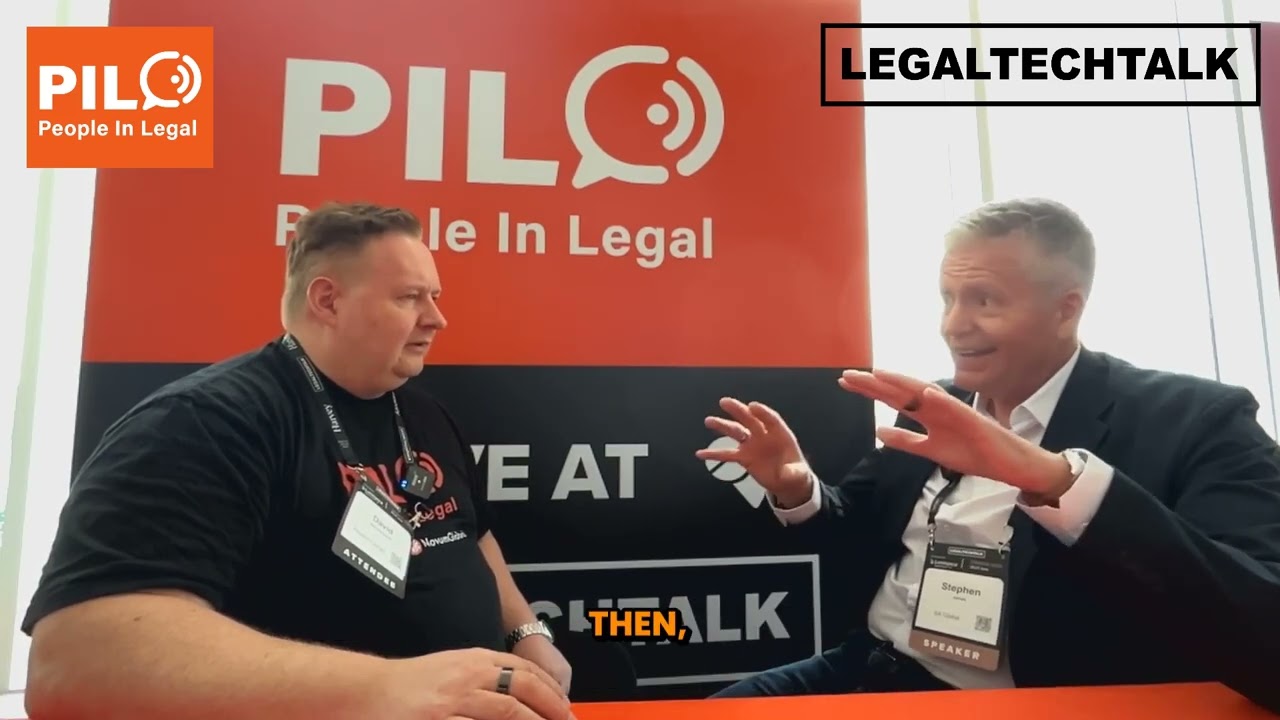 ↗ Watch the conversation
Capital with a say in the future
The independence correction in 2021 gives the next financial chapter a particular resonance. In January 2022, sa.global secured $50 million in growth financing from Kartesia. The funding supported expansion and other initiatives, including the acquisition of Dynamic Consulting in the United States. James was seeking more capacity to compete in a consolidating market.
The stated terms of the relationship mattered alongside the amount. sa.global said it would retain control and remain owner-operated. Kartesia's account emphasized its flexible, long-term approach. The transaction paired a growth ambition with a continuing claim to entrepreneurial decision-making.
At the time, adviser Equiteq described an 850-person business operating in twenty-five countries and serving more than 500,000 Dynamics users. Those are company measures, rather than personal trophies. They show the organizational scale behind a founder's decisions about capital, products, and geography.
Financing gives a business more room to act. It also creates a relationship that must work after the announcement is forgotten. Read alongside his earlier correction, James's decision suggests a consistent concern with the terms on which expansion happens. Growing and continuing to steer were objectives he wanted to pursue together.
Growth capital from Kartesia, supporting expansion and the Dynamic Consulting acquisition.
The present-day business still carries those choices in its shape. sa.global reports a presence in twenty-five countries, clients in more than eighty, and support for over 800,000 users. Its products include evergreen and empower; its customers include firms selling expertise and homebuilders coordinating a different kind of project. Scale brings more places where the original promise has to hold.
A founder can announce a strategy from one room. Delivering it across offices requires other people to interpret it in situations the founder will never personally encounter. The challenge embedded in James's expansion is therefore organizational as well as commercial: make a focused proposition travel without losing the detail that made it useful. The map is the easy part to print.
The lab before the rush
James dates sa.global's investment in its AI lab to 2019. The timing places that work before the later wave of everyday generative AI adoption. The lab began with the legal industry, combining the company's existing business software experience with academic research and work involving a European multinational law firm.
Its proposed ingredients were revealing: internal and external information, structured records and unstructured material, and data held across older systems. The ambition depended on giving that information useful context. For a company already concerned with connecting business processes, AI extended a familiar question about what the organization knows and how it uses that knowledge.
The practical distinction is easy to picture. Knowing that an invoice exists is one thing. Understanding which client, project, agreement, and decision it belongs to requires relationships between records. A system intended to assist with work needs those relationships to be meaningful. That is an explanatory example, rather than a claim about a particular customer deployment.
In a February 2025 conversation with Tom Smith, James emphasized matching AI work to business objectives and securing senior leadership involvement. He discussed assessing projects through feasibility, impact, and incremental delivery. The approach introduces a welcome inconvenience into the excitement: someone has to decide what the business is trying to accomplish.
There is continuity here with the earlier move into industry specialization. Understanding a specific workflow helps establish which intervention could matter. It also supplies a way to question an impressive demonstration. What changes when ordinary employees return to ordinary work? James's argument puts that operational question near the beginning of the investment decision.
Choose the business problem.
Understand the industry and its data.
Assess impact and what can be delivered.
A project with a ten-year clock
By June 2026, that long view had a particularly tangible expression. sa.global announced a ten-year operations transformation partnership with TLT. The law firm selected evergreen, built on Dynamics 365 and Azure, for a phased program connecting finance, human resources, and practice management. The announcement described a commitment whose work would unfold over time.
James's accompanying explanation treated the initial platform as the beginning of continuing adaptation. Software was changing, he argued, and the work would continue above that foundation. He was describing a relationship intended to outlast the initial implementation and adapt alongside the underlying technology.
“A ten-year commitment is the right horizon for that kind of work.”
Stephen James · June 2026
The partnership is a forward commitment, with results to be established during delivery. Elsewhere, there were more immediate indicators of the company's current work. In July 2026, sa.global announced Microsoft Copilot Specialization, supported by three approved customer engagements involving vendor reconciliation, support automation, and supplier and account workflows. The examples brought the discussion back to ordinary operations.
Outside that operational world, James keeps freshwater and tropical fish and enjoys cycling in Brussels, where he is based. The hobbies provide a modest relief from the executive vocabulary. An aquarium has little use for a product roadmap. The fish still require attention after the installation.
It would be too tidy to turn a hobby into a theory of management. His business decisions provide firmer evidence: open locally, learn the industry, protect room to decide, keep working after launch. Thirty-six years after sa.global began, James remains its founder and CEO. The software has changed repeatedly. He has stayed close enough to the problem to keep having another question.