For eight months, Santiago Bibiloni paid other people’s salaries without taking one himself. His office was a windowless storage room in Once, Buenos Aires. He spent a year and a half there. A young agency founder can put almost anything into a presentation; natural light, apparently, was outside the budget.
Years later, he would build software around a question that makes the bright offices of advertising firms uncomfortable: how much does this work actually cost? The question sounds pedestrian until a successful project leaves the company poorer. A client is pleased. The team has delivered. The invoice goes out. Somewhere between the first brief and the last revision, the margin has disappeared.
Bibiloni, the Argentine co-founder and CEO of COR, had encountered that arithmetic from the wrong side of the desk. His story runs through a communications degree, a blog, an agency, a move to San Francisco and a sales strategy he initially found implausible. The recurring subject is the value of work, including the work that looks suspiciously like sitting around thinking.
The first salary, and the people behind it
Before Balloon Group, there was Di Paola. At twenty, Bibiloni worked part-time as an account assistant while studying. In a July 2025 reflection, he called it his first paid job and his only one before entrepreneurship. Francisco di Paola gave him that opening. Bibiloni cheerfully acknowledged a family connection: he was dating di Paola’s sister-in-law.
One memory stayed with him. Creative director Flavio Rucci came to the accounts floor annoyed that someone had interrupted him while he was thinking. Bibiloni took the point: thinking counted as work. It is a small scene with a long afterlife for someone who would later spend his career asking agencies to account for their effort.
Di Paola became an early COR customer. When Bibiloni wrote his retrospective, the agency was still using it. A first employer had become a buyer of the former assistant’s software. The relationship gives his career a pleasing circularity: the people who helped him understand an agency eventually trusted him to help run one.
A blog with room to grow
Bibiloni studied communications at Universidad Austral. His university-era writing became a blog called No Tenemos Techo, a name he explained as “sky’s the limit.” In his public profile, he says it attracted 30,000 organic unique visitors a month. Before there was an enterprise sales pipeline, there was an audience.
His communications background also reached print. He researched and wrote the “The People” chapter of Leandro Zanoni’s 2012 book about Apple, La Gran Manzana. That contribution is an interesting companion to his later software career: the future founder was already looking at the people inside a technology company.
The blog gave him practical experience with WordPress. Entrepreneurs needed help getting businesses online, and he could provide it. Balloon Group grew from that opening. By 2016, the agency had helped more than 400 entrepreneurs and small-business owners. By March 2018, its work extended to 400 clients in twelve countries. Those figures describe an agency with customers, obligations and enough moving parts to make its internal problems consequential.
The revision that eats the margin
The difficulty Bibiloni identified was embedded in the commercial arrangement. Agencies sold a project or a monthly service for a fixed fee. Their costs moved with the hours people spent doing the work. A new client request could increase the second number without changing the first. Repeat that often enough and an apparently busy agency acquires a rather expensive hobby.
He and his colleagues had experienced this at Balloon Group. When they asked other agencies, they heard versions of the same problem. It travelled beyond advertising to other businesses selling professional time. COR grew out of that mismatch, linking projects, team capacity and finances so managers could see the economics of delivery.
The appeal of the idea is its timing. Learning that a project lost money after finishing it offers a useful lesson and a useless rescue plan. Seeing a deviation while work is under way creates a chance to change the staffing, discuss the scope or renegotiate the fee. The client conversation can move from an exhausted complaint to a description of what has changed.
San Francisco did not supply a welcome mat
The founders wanted a business with international scope. San Francisco offered proximity to capital and the technology industry. COR’s co-founding team included José Gettas and Gabriel Marin; Gettas had also been involved in Bibiloni’s earlier agency. There was shared experience behind the new company, rather than a problem selected from a list of fashionable markets.
The early move was difficult. Bibiloni recalled a departing technical co-founder, an investor withdrawing a commitment, few local contacts and English that did not make the first steps easy. Building the product, finding customers and raising capital had to happen together. The geography had changed; the obligations had multiplied.
One connection arrived by air. After a flight cancellation, Bibiloni found himself travelling in first class beside Kevin O’Connor, the DoubleClick founder. They began talking. Bibiloni did not initially know who his fellow passenger was. They exchanged emails, and O’Connor became an early investor. The story gives chance its due without pretending that every boarding pass is a fundraising strategy.
Other supporters included MercadoLibre founder Marcos Galperín, Anaplan founder Doug Smith and entrepreneur Tom Chavez. Their relevance went beyond recognisable names: they had built businesses selling technology, running operations or serving the advertising market COR wanted to reach.
A rough product asks for a serious commitment
Getting into 500 Startups opened another door. Bibiloni later described applying again after moving to the Bay Area, having received an earlier rejection. Persistence had a practical form here: relocate, keep building, return with a different situation. A refusal was part of the sequence.
The accelerator’s sales advice challenged the founders’ assumptions. They had been offering free trials and monthly payments to smaller businesses. Their mentor urged them to approach Fortune 500 companies, secure longer contracts and collect payments in advance. Bibiloni recalled thinking the advice was impossible for such a young company.
They tried it. His subsequent accounts describe winning large corporate customers early in the product’s life. The shift was an exercise in taking the customer’s problem seriously enough to ask for a serious commitment. A rough interface and a valuable answer can coexist. A polished interface and a disposable answer can coexist, too.
In a 2021 interview, he put COR at approximately 115 clients and described spending around $10,000 of the founders’ money on the initial minimum viable product. The starting sum and the later customer count belong to different stages; placing them together shows the distance travelled without turning either into a prediction.
What he chose to pass on
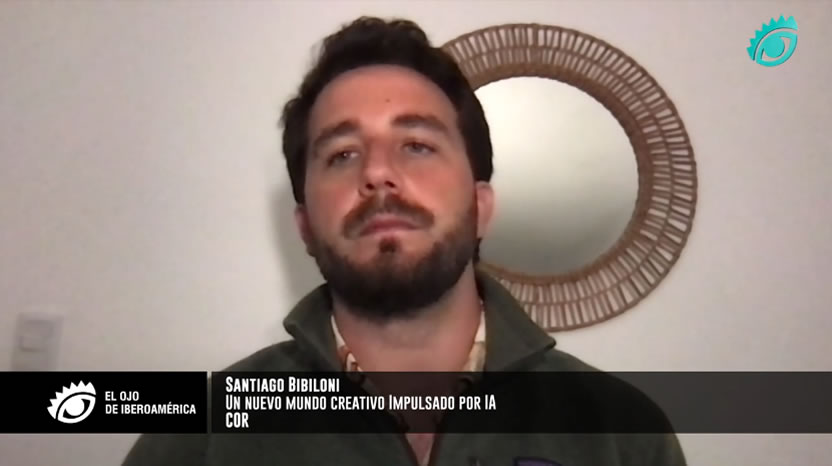
Bibiloni also became a sales mentor at 500 Startups and spoke to the advertising industry at El Ojo de Iberoamérica in 2021. His position joined two worlds that do not always use the same vocabulary: creative teams defending an idea and software founders explaining a business model.
In 2024, COR’s awards programme put him alongside David Sable, the former global CEO of Y&R, to recognise customers’ use of the platform. Sancho BBDO received a client-transparency award. Here, transparency meant clients being able to see and discuss the work, a commercial relationship with fewer mysteries in the middle.
That year, Bibiloni explained another choice: he had reduced personal media appearances and directed more attention toward encouraging people to believe they could build something themselves. He listed speaking invitations from institutions including London Business School, Deakin University and IAE Business School. At Austral, he urged students to believe in themselves and persevere.
There is a useful tension in that message. Confidence helped him move and try again. Advice helped him change the way he sold. His experience leaves room for conviction and correction in the same person. A founder who can only persist risks repeating himself; one who can only adapt may never stay with anything long enough to learn.
When the hours belong to machines
By July 2025, Bibiloni’s argument had widened. In an opinion column, he described agencies adopting AI through scattered individual subscriptions and disconnected practices. He argued for shared infrastructure, visibility into token consumption and clear governance. The old question about the cost of a project now included the cost of software agents.
His concern was operational. Faster production alone does not tell an agency what to charge, what it spent or who should take responsibility for the result. Human judgement still needs a place in the process. The commercial system has to keep up with the tools being used inside it.
“Que la creatividad también sea un buen negocio.”
Santi Bibiloni, July 2025
“That creativity should also be good business.”
On July 28, 2026, COR announced a $30 million investment from FTV Capital. The announcement described teams in 38 countries and 51% revenue growth in 2025. The investment would support AI development, expansion into adjacent industries and international growth. FTV’s Alex Malvone and Tommy Tighe were set to join the board.
Those are company milestones. The personal continuity is quieter: Bibiloni is still working on the question he met inside an agency. The inputs now include human hours and machine activity. The office has changed. The need to understand a job before agreeing to its price has endured.
Back at Di Paola, an interruption taught a young account assistant that thinking was work. COR asks businesses to take the rest of that proposition seriously: work has a cost, and a good idea deserves a business capable of paying for it. That seems a fair ambition for someone whose own first agency once paid everyone except its founder.