At six in the morning, Stephen Dinan was making room for an old ambition. In March 2025, the co-founder and CEO of The Shift Network told his newsletter readers he planned to write from six until seven, before his daughters woke up. He also earmarked an evening away from parenting duties. Eight hours a week, he reckoned, would let him contribute something useful to a country whose direction deeply troubled him. A global education business was already on his calendar. The blank page still wanted its hour.
A month later, thanking paying subscribers, he explained the detour. Writing had always mattered to him, but making a career of it had proved difficult. He had put those skills into marketing instead. Marketing, in turn, had helped lead him to The Shift Network. There is a pleasing reversal here: the writer learned to find an audience for other people, built a company around doing so, then returned to ask readers what they wanted from him.
Dinan’s career makes more sense through that reversal than through a list of executive titles. He assembles people, ideas and ways to distribute them. Books, short videos, membership programs and online courses have each offered an answer to the same practical question: how does something meaningful travel beyond the room where someone first says it?
The editor before the executive
His education brought together subjects that universities usually file some distance apart. He studied human biology at Stanford and earned a master’s in East-West psychology at the California Institute of Integral Studies. That combination runs through his later work: an interest in human beings coupled with a willingness to consider how different traditions understand them. His institutional career would repeatedly put him at the meeting point.
At Esalen, Dinan helped create and directed the Center for Theory & Research. The work involved bringing scholars, researchers and teachers together to explore human potential. Before there was an online network, there was the work of convening: choosing a question, gathering people who might illuminate it and making space for a conversation that could go somewhere.
His 2002 anthology, Radical Spirit: Spiritual Writings from the Voices of Tomorrow, did something similar on paper. It collected 24 essays and poems from younger voices, with a foreword by John Robbins. Julia Butterfly Hill contributed on spirituality and environmental activism. Against the familiar portrait of Generation X as disengaged and materialistic, the collection offered people trying to connect an inner life with responsibilities outside themselves.
An anthology is an instructive early project for a future network founder. The editor’s personality is present in the selection, but the point is to give other voices enough room to be heard. Dinan would later work on a much larger scale. The basic editorial instinct was already visible between two covers.
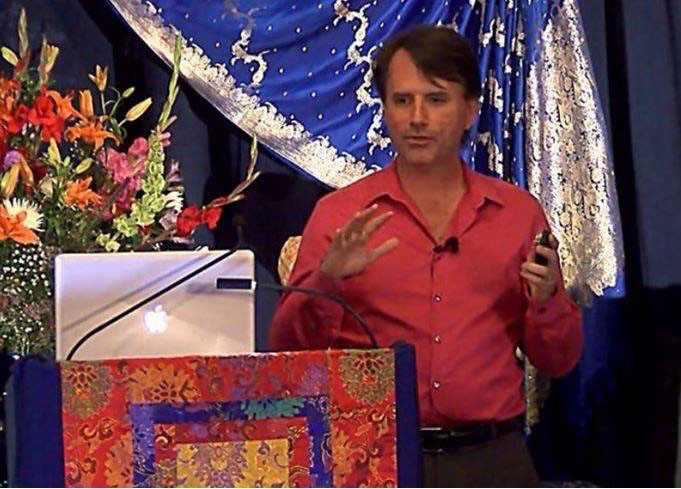
A minute was one place to start
At the Institute of Noetic Sciences, Dinan became director of membership and marketing. He drove the Shift in Action membership program and the One Minute Shift video series. His company biography credits the former with reaching 10,000 paying members and the latter with more than a million views. Those figures describe different kinds of participation, but both show him experimenting with how people encounter an idea and decide to stay with it.
The names themselves reveal a useful impatience. “Shift in Action” asks what happens after reflection. “One Minute Shift” gives the newcomer a small doorway. A person need not rearrange a life to watch a minute of video. The publishing challenge comes afterward: making that first encounter substantial enough that another might follow.
Dinan has described the inspiration for his eventual company as a vision during a meditation retreat. In a 2013 account, he recalled imagining a global transformation network. Whatever a reader makes of that origin, the subsequent work had dates, colleagues and products. In 2010, he and Devaa Haley Mitchell founded The Shift Network. The idea acquired the obligations of a business.
The retreat gets a business plan
The company delivers virtual summits, courses and trainings across subjects including spirituality, peacebuilding, Indigenous wisdom and sustainability. Dinan’s role joins an editorial judgment about whom to invite with an operator’s responsibility to keep the enterprise functioning. Inspiration may explain why a company begins. It leaves a considerable amount of scheduling to everyone afterward.
By October 2021, Shift announced an $8.7 million Series A led by Evolve Ventures and Bridge Builders Collaborative. The money was intended for educational offerings, the team and technology. In the announcement, Bridge Builders’ Charlie Hartwell pointed to the company’s growth with little outside investment. Eleven years had passed since its founding; this was an existing publishing operation seeking more capacity.
“This investment will help us broaden our reach and make more wisdom accessible to all who can benefit,” Dinan said. That sentence combines his two recurring vocabularies: reach, the measurable concern of a publisher, and wisdom, the less easily measured thing he hopes to circulate. The tension gives his work its particular character. A distribution system can count attendance. What people do afterward remains a harder question.
Funding announced for The Shift Network, led by Evolve Ventures and Bridge Builders Collaborative.
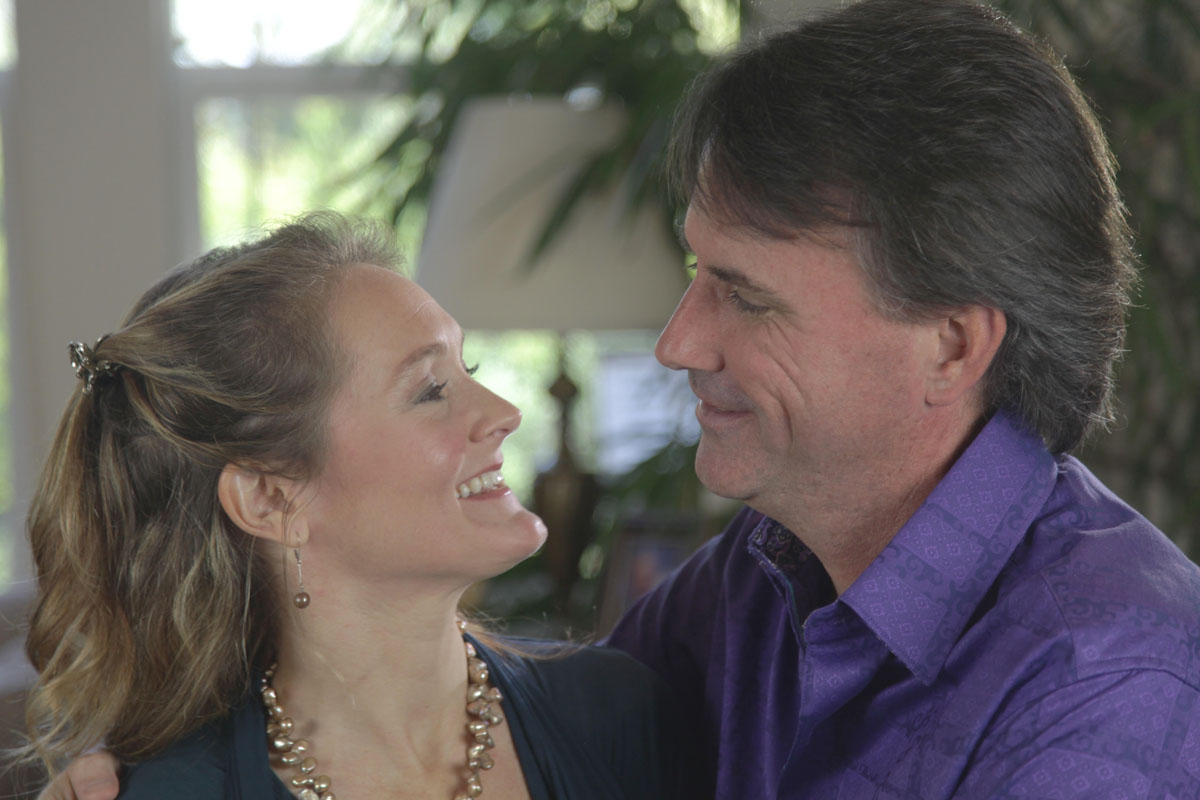
Devaa is both his co-founder and his wife. Their collaboration has also extended into mentoring other entrepreneurs. A 2024 Visionary Mastermind program put them together as guides for a six-month cohort, limited to 24 participants. The business that gathers teachers had created another setting in which its founders could teach what they had learned about building one.
A country enters the conversation
Dinan’s 2016 book, Sacred America, Sacred World: Fulfilling Our Mission in Service to All, moved his argument from personal development into public life. Marianne Williamson wrote the foreword. The book proposed a vision of citizenship that sought common purpose across political divisions. It was an ambitious choice of subject in an election year that offered little shortage of division.
In discussing the book, he argued for bridge-building, civic participation and a view of America’s responsibilities that extended beyond its own interests. His recurring concern was the relationship between an individual’s development and the society that individual helps create. Private reflection, in this account, carries a public assignment.
He returned to that theme in a 2020 interview, describing unity as something compatible with different cultures, languages and individual roles. His argument did not require everyone to become interchangeable. It asked people to recognize a shared belonging while retaining their differences. That is an appealing proposition on a book jacket and a demanding one at a dinner table.
By 2025, the tone of his political newsletter was more urgent. He criticized the Trump administration and described writing as a form of activism. These were his assessments and convictions. Their place in his story is that he chose to state them publicly, alongside the duties of running a company. The executive who spent years amplifying other speakers was increasingly putting his own judgment on the page.
Learning how fast to go
There is another, quieter revision in Dinan’s writing about leadership. In an essay called The Rhythms of Reconnection, he describes having pushed hard to realize Shift’s vision. Attempts to accelerate the business, he writes, sometimes outpaced the team dynamics and processes needed to sustain that growth. A noble purpose did not make the organization infinitely elastic.
His answer was to reconsider the pace: more spacious summers, time in the Mexican tropics during winter, a workday with an ending. He also wrote that advising and coaching other leaders had become a growing part of his contribution. The seasoned founder was reconsidering how his time could be useful, including when he should stop filling it.
That admission gives the profile some welcome friction. He has asked people to imagine large changes in society while acknowledging the limits of forcing change inside his own organization. “Organic unfolding” is his preferred language for the alternative. In an executive’s diary, it has to coexist with meetings, decisions and the occasional task that remains stubbornly unfinished.
“Who else needs to read this?”
Stephen Dinan · to his newsletter readers, March 2025
The next conversation has a keyboard
More recently, Dinan has brought his interest in consciousness into discussions of artificial intelligence. In October 2025, he published The Case for Wise AI, arguing that people should deliberately cultivate wiser ways of engaging with AI. He treats the relationship between human values and technological development as an immediate subject for experimentation.
In an August 19, 2026 appearance on The SuperHuman Academy Podcast, he discussed his belief that some AI systems may develop something resembling an individual identity. Those are Dinan’s interpretations of his encounters with the technology. They extend his longstanding curiosity into a new setting, where questions about consciousness now arrive through a keyboard.
The continuity is more revealing than the novelty. The editor of Radical Spirit, the membership marketer, the convener of online teachers and the newsletter writer all want to know what a conversation might make possible. His answers have changed format. At six in the morning, before the family day begins, the work still comes down to choosing words and hoping someone will find a use for them.
Keep the conversation going
Dinan’s writing, public profiles and conversations.
- Official website
- Stephen’s Newsletter
- The Daily Shift
- Personal blog
- Medium
- Sacred America, Sacred World
- The Shift Network
- X / Twitter
- Bluesky
- Shift YouTube channel
- Watch: from Dinan’s video gallery
- Watch: from Dinan’s video gallery
- Listen: The Ghost Behind the Code · August 2026
- Read: The Rhythms of Reconnection
- Read: The Six Steps to Sacred Citizenship
- Read: October 2021 funding announcement