The button was somebody else’s problem. So was the container around it. For students working on a support widget for EdTonomy, those two facts belonged together: one person’s finished work could still leave another person waiting. A coding assignment had become a small lesson in organizational life. The code mattered. So did the handoff.
- Practicum USA became TripleTen in June 2023.
- Students combine independent study with professional feedback and portfolio work.
- Partner projects introduce real requirements, shared tasks, and someone expecting delivery.
- Tuition buys a learning process. Employment still depends on the market and the learner.
This is a useful place to begin with Practicum USA, the online bootcamp now called TripleTen. Education companies sell access to knowledge. Knowledge, however, is an awkward thing to put on a résumé. A hiring manager cannot inspect the hours a beginner spent understanding a concept. A finished project gives that conversation somewhere to start.
The awkward leap from solo to team
In its EdTonomy case study, TripleTen describes students building support and feedback components for an existing teaching platform. They divided the work into six parts, mapped dependencies, and used Jira to track requirements. They also had to learn Tailwind CSS, a framework outside their core program.
That last detail deserves attention. An exercise can conveniently demand only what the student has learned. An existing product arrives with other people’s choices already embedded in it. The team used Storybook to demonstrate components without constructing an entire application around them. The delivery included a chat widget, support buttons, a questionnaire, and a feedback widget.
There is no need to inflate this into a heroic software launch. Its modest scale is the point. A bounded feature can expose a beginner to requirements, dependencies, unfamiliar tools, and presentation. Those are substantial additions to knowing how to write a function.
The useful loop ends with work another person can inspect.
Someone has to read the code
Practicum emerged from Yandex’s education business, launched in 2019. Its international bootcamp adopted the TripleTen name in 2023. The name contains a programmer’s joke: binary 101010 equals 42, the famous answer in The Hitchhiker’s Guide to the Galaxy. A career change apparently deserves a little cosmic humor.
The less whimsical distinction sits inside its teaching method. A historical platform walkthrough describes lessons that mix explanation and coding tasks, followed by projects reviewed by experienced practitioners. Successful review unlocks the next chapter. The student has to satisfy somebody beyond the little voice that says, “Looks fine to me.”
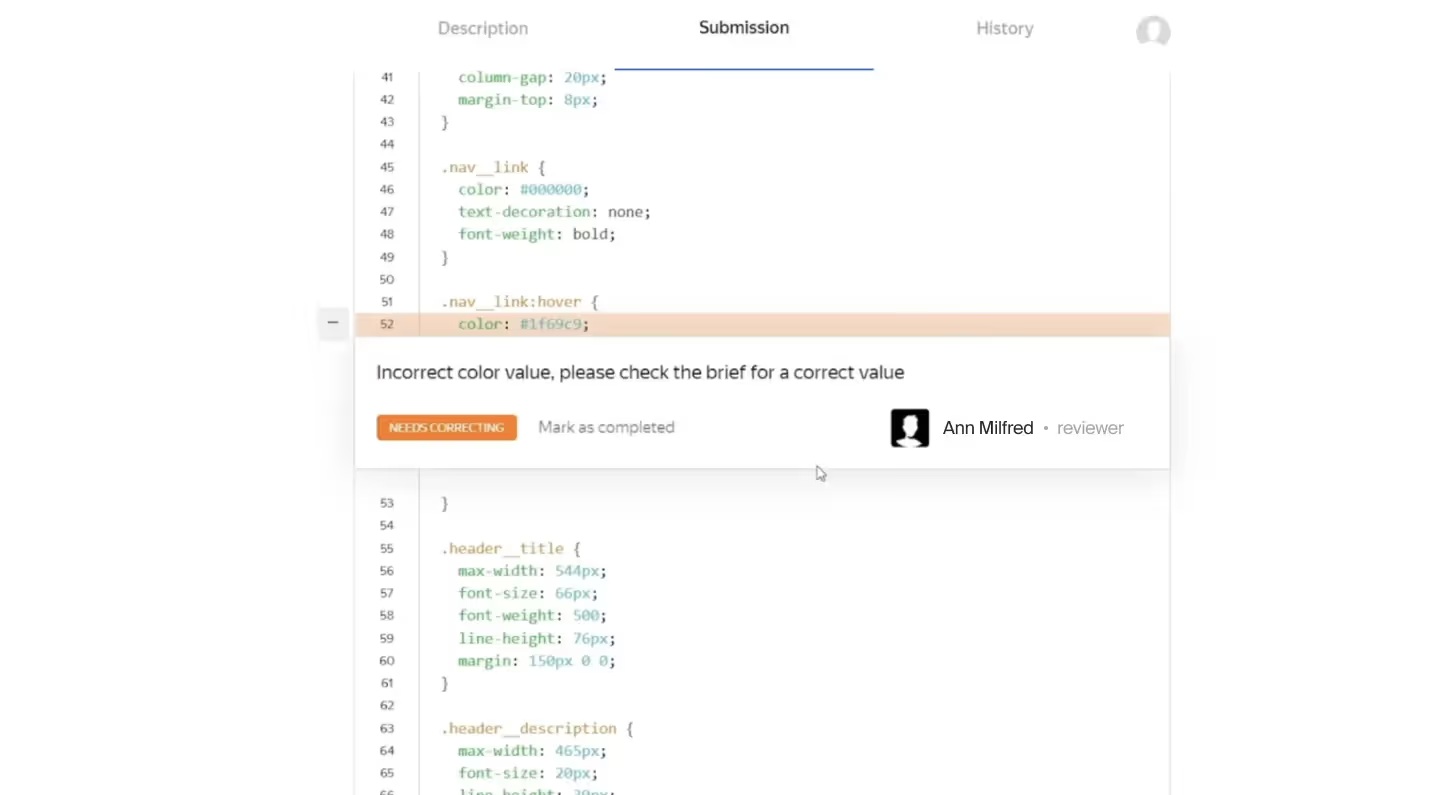
That makes the product more involved than a library of instructional videos. Its customers are paying for structure, feedback, and help getting unstuck. The expertise is both technical and instructional: breaking a profession into tasks a newcomer can attempt, then making corrections specific enough to use.
The partner exchange adds another layer. Organizations can receive project help and graduate referrals free of charge; learners pay tuition for their training. Instructors manage project delivery. The outside organization supplies a problem and feedback. Each party contributes something the others need, although the student’s project should still be judged on its actual quality.
The spreadsheet talks back
Software is only part of the story. A Prepare4VC analytics project put four students to work on a startup community’s records. Their first dataset contained 1,151 entries. They cleaned the information and presented findings through Tableau.
The useful discoveries were refreshingly unglamorous. The case study reports an average active membership period of three months and a welcome checklist completed by only 1% of users. It also identifies missing Gmail sign-in data. Before anyone could make confident claims about the community, somebody had to notice what its records were failing to capture.
“I had a great time working with others.”A.C. Slamet, Prepare4VC project participant
Readers can borrow the method. Begin with a question someone actually cares about. Examine the records behind it. Check the omissions. Present a result that changes the next conversation. A complicated model is optional; a defensible explanation is essential.
The price of another try
The business belongs in the paid career-training market, alongside other bootcamps and between inexpensive independent study and longer academic routes. Its proposition rests on combining flexibility with human attention. The comparison a prospective student should make is practical: how much review, coaching, and useful project work will this particular program provide?
On May 4, 2026, TripleTen announced a 30% reduction in the listed upfront tuition for its specified career-change tracks. QA became $4,935; Data Analytics and AI Automation, $5,950; Cybersecurity and AI Software Engineering, $9,800. Financed totals differ. The company attributed the change to internal process work and revised financial relationships.
The employment story also needs dates attached. Its 2026 outcomes discussion says nearly two-thirds of graduates landed jobs over the past year, down from a previous report’s 82% within six months. Those descriptions use different windows; they are not a clean before-and-after experiment. They do establish why an old success percentage should not become a permanent promise.
TripleTen describes a qualifying graduate who received a tuition refund after failing to find work within the guarantee period, then found a role later. The refund has conditions. Neither a portfolio nor an externship obliges an employer to hire its maker.
A small problem, properly finished
The current catalog’s emphasis on AI reflects another adjustment to changing work. Beginner career tracks now sit alongside advanced offerings for experienced engineers. The distinction matters: someone starting from zero and someone already shipping production code need different instruction.
The model also needs time, willingness to revise, and a project that can reasonably be supervised. A business needing immediate production ownership has different needs from an externship partner. A learner unable to make room for practice will struggle to extract value from even attentive feedback.
Still, the lesson travels. Find a small problem. Build something for a person who can tell you where it falls short. Revise it. Explain your choices. The button, eventually, has to fit inside somebody else’s container.