A microchip was becoming cheaper. Testing it was becoming more complicated. In the late 1970s, Stephen J. Bisset was building a company in the awkward space between those two facts. It is a good place to begin his story: with somebody else’s progress creating a problem that needed a machine.
Today Bisset leads Terrajoule Energy, a company developing solar generation with storage. Between then and now sit touchpad inventions, industrial customers and a continuing interest in what equipment actually does for the person paying for it. The subjects change considerably. The purchasing question survives.
A chip checks a chip
As president of Megatest, Bisset described a troubling arithmetic in December 1977. Semiconductor devices were getting more complex, and testing costs followed that complexity. Meanwhile, the devices themselves were becoming cheaper. A factory could get better at making chips and still find itself spending an uncomfortable amount determining which ones worked.
There is an appealing indignity to that problem. The glamorous part of the industry invents a small electronic marvel. Somewhere nearby, another department has to establish whether the marvel deserves to leave the building. Its budget, inevitably, is less glamorous.
Megatest’s Q8000 addressed the task with a reference device. A known device helped generate the patterns against which another device could be tested. In his May 1978 technical article, Bisset described a benchtop tester that used an identical device to generate test patterns, reducing the burden of storing and programming them separately.
The idea had a pleasing economy: give a microprocessor some of the work of checking a microprocessor. For the customer, the attraction was practical. The tester could handle different processors and peripheral chips at actual system speeds. The architecture connected the test to the behavior of the device.
That flexibility came with a bill. The Q8000 needed a separate reference-device module for each device type. In March 1978, its base price was reported as $30,000, with modules costing $3,000 to $5,000 each. A buyer checking a limited range of devices could find the arrangement economical; a buyer with a broad assortment had to add carefully.
Those figures belong to their period. Their value here is the shape of the decision. Better equipment has to be better for a particular customer. A purchasing department cannot pay its invoices with an elegant principle, although it may admire one over lunch.
The company inside the machine
Bisset’s route into this business began far from a semiconductor production line. Raised in Australia, he spent the summer of 1969 traveling along America’s East Coast in a van full of surfboard samples. Caltech followed, with an invitation to join its football team helping him make the decision. He had expected rather more beach from Pasadena.
“There was no master plan,” he recalled. Courses with Carver Mead helped draw him toward Silicon Valley. After Caltech came Hewlett-Packard, then Intel, then Megatest, which he co-founded with Howard Marshall. The company eventually became publicly traded under the ticker MEGT.
“There was no master plan.”
Steve Bisset, reflecting on his route to Silicon Valley
The connections around Megatest were unusually close. Bob Miller later remembered sharing a Sunnyvale house with Bisset and Marshall. Miller had also been Bisset’s roommate at Caltech. When the other two started Megatest, Miller joined a different startup. Living together and working together, he suggested, might have been rather a lot of togetherness.
A 1979 Caltech alumni account gives the network a more concrete scale. Megatest employed about 12 Caltech people among 85 employees. Jeff Hurn ran its art, advertising and technical writing department, working among friends and putting filmmaking and slide-show skills to use.
A company selling test equipment still needed to explain itself. Someone had to design the machine; someone had to make its purpose intelligible. The alumni account catches that less celebrated part of building an industrial business: technical colleagues, communicators and customers all needing to understand the same object.
The second finger gets a job
Another chapter in Bisset’s career fits beneath a laptop keyboard. In October 1998, a US patent named him and Bernard Kasser as inventors of a method for sensing multiple fingers and using them to emulate mouse buttons and operations. The original assignee was Logitech.
Its examples turn familiar hand movements into specific instructions. One finger can point while another supplies a click. Two fingers moving together can drag. A second finger can switch an electronic drawing action on and off while the first continues moving.
Behind those gestures lies an interpretive problem. The sensing system must distinguish fingers and assign meaning to their changing positions. A person feels a simple action; the device has to recognize a pattern. That separation between the user’s intention and the machinery’s measurements is where much of the engineering lives.
The patent is a concrete contribution to touchpad operation, with a collaborator beside Bisset’s name. It also offers a useful change of scale in his story. A production tester helps an industrial customer check a chip. A touch sensor helps an individual tell a computer what to do. Both require a technical system to respond to a practical purpose.
Bisset’s professional profile also contains a recommendation from a collaborator on Mathcap, a mathematics education project. Nilesh Deshpande described detailed work on selecting questions according to a student’s previous answers. It is another setting in which the next response matters as much as the initial input.
Sunlight needs a place to wait
In 2009, Bisset co-founded Terrajoule Corporation. Four years later, the company announced an $11.5 million Series A backed by investors including New Enterprise Associates and Air Liquide’s investment arm. A pilot near Modesto paired solar concentrators with steam-engine technology; the announcement described a 100-kilowatt installation.
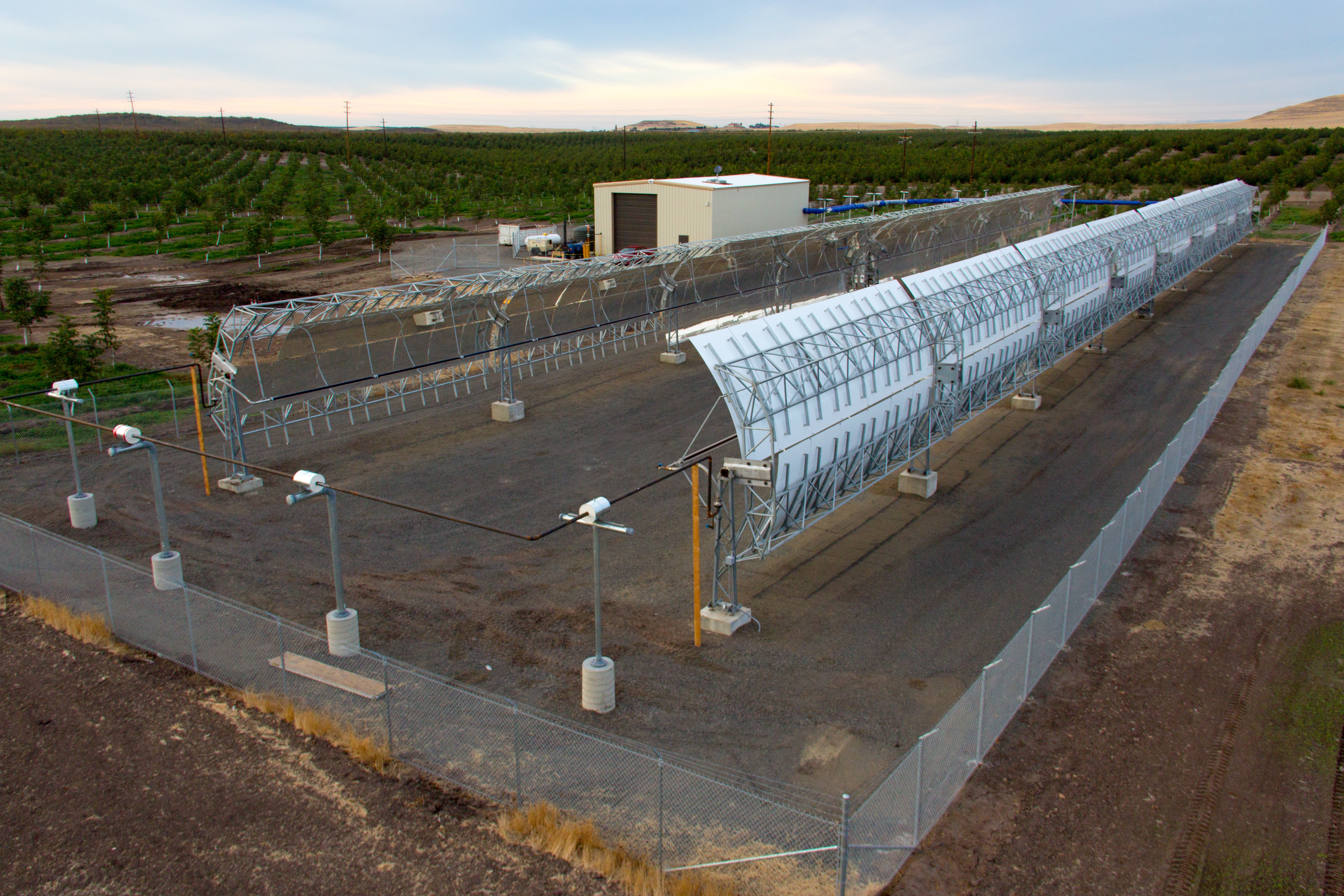
The customer problem was time. Sunlight can arrive before electricity is needed, and disappear while equipment still needs power. Terrajoule’s approach stored energy in pressurized water and used steam machinery to convert it into electricity. The original pitch included replacing diesel generation without exposing customers to fluctuating fuel costs.
The early work also entered a federal research program. A 2013 small-business award named Bisset as principal investigator on a Terrajoule project examining distributed concentrated solar power with storage. Its proposed work divided responsibilities among Terrajoule, Roush Industries and Electricore, including subsystem development and fluid simulation.
That division of labor matters. A solar field, a storage vessel and a generator have to behave as a system. The business has to assemble expertise as carefully as it assembles hardware. An engine designer and an energy customer can look at the same machine and have very different questions.
Bisset’s own explanation of his interests is disarmingly commercial. He likes industrial equipment whose buyers can examine a real economic return. He jokes that his consumer tastes are unreliable: the products he likes tend to disappear. Capital equipment gives him a customer problem he can understand in practical and financial terms.
His energy ambition extends beyond the invoice. He has linked distributed electrical generation with a wider distribution of economic and political power. But his advice returns to the first buyer: understand a problem worth solving, identify who would pay, and establish what would make the purchase sensible. The large vision has to pass through somebody’s smaller decision.
The factory belongs in the drawing
Bisset led Terrajoule’s restart as Terrajoule Energy, which acquired the earlier corporation’s intellectual property. Its present team connects Palo Alto with Coimbatore in India and Vancouver in Canada. Chief engineer Andrew Murdoch has worked on the technology since 2009; partners include Empereal and New Leaf Technologies.
The current design describes insulated steel pressure vessels filled with water, heated through a prefabricated solar concentrator. Steam-based generation supplies the electricity. Storage lets the collection of energy and its use happen at different times - the essential scheduling trick behind the proposal.
Collection and dispatch can also happen simultaneously.
Terrajoule’s manufacturing strategy favors conventional materials and established processes. It aims to use existing fabrication capacity, repeatable modules and automated installation. The appeal is straightforward: a design intended for widespread use must make sense beyond its first carefully tended example.
A solar-concentrator application published in December 2023 lists Stephen James Bisset alongside six other inventors. It describes a structural frame carrying concentrator panels and supporting a mobile manipulator. That machinery can help with tasks including installation, inspection, cleaning and repair. Moving the equipment around the field becomes part of the field’s design.
The company also identifies pressure-vessel fabrication as a cost opportunity, drawing on welding methods used for pipelines. Its concentrator work addresses shipping, wind loads and onsite labor. These details locate the ambition in the ordinary obstacles that accumulate between a drawing and a working plant.
The published roadmap places commercial pilot engineering, construction and volume tooling in the plan. It describes completed design and modeling work. The distinction keeps the next chapter clear: the proposed product must move through construction and into repeatable production.
In July 2023, Bisset was listed among the industry contributors to the US Department of Energy’s thermal energy storage strategy assessment. His career has reached a policy discussion as well as a factory drawing. Yet the most revealing connection runs back to that early tester: equipment becomes useful when it resolves the constraint facing the person who needs it.
A chip has to be checked. A gesture has to be understood. Sunshine has to wait. Bisset’s working life keeps meeting those awkward details, where the invention finally encounters the day someone wants to use it.