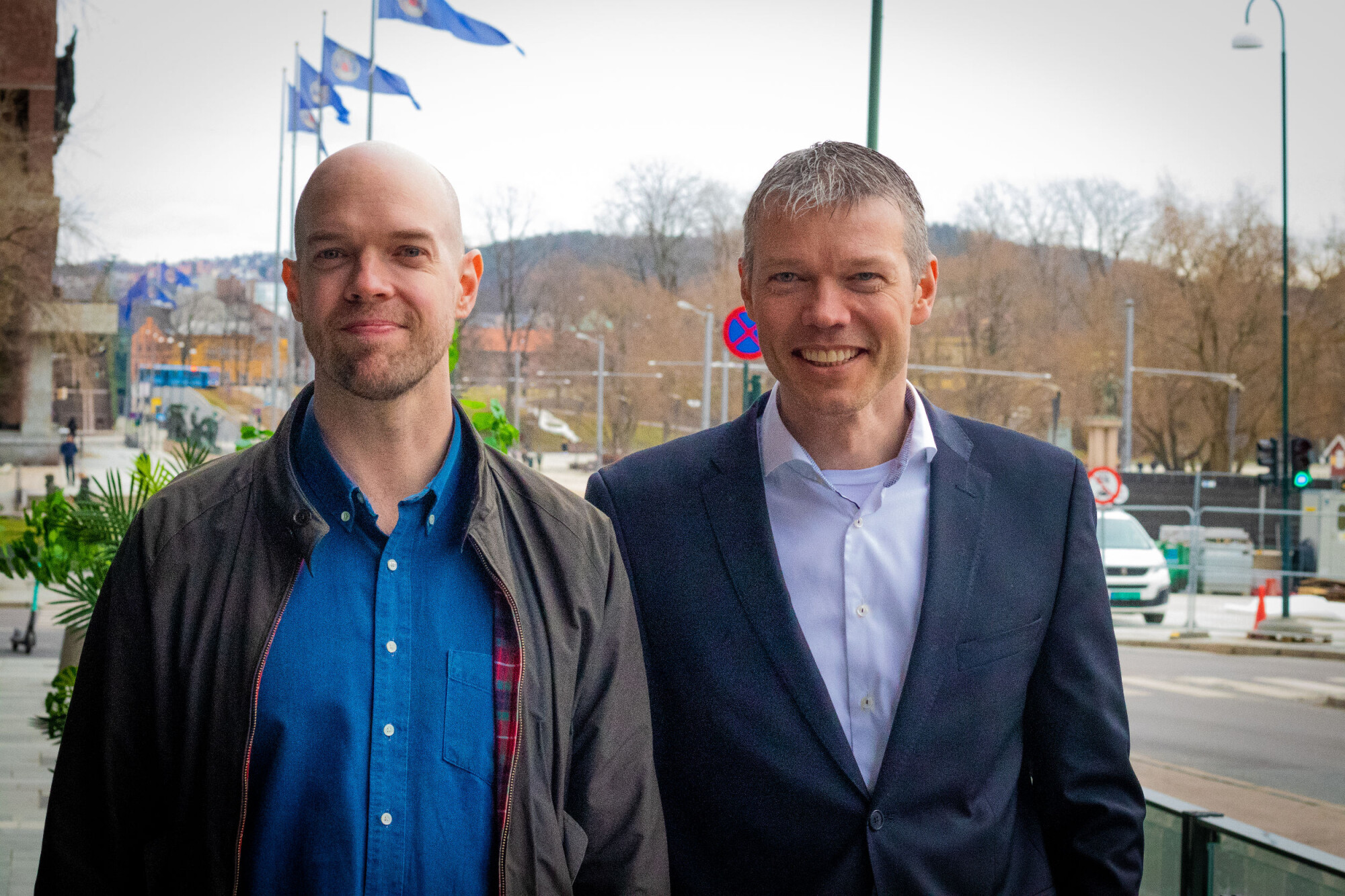
Before Stein Ove Eriksen explained his new camera system, Graham Williams gave him a small theatrical introduction. It was February 2023, and Huddly was presenting its quarterly results. Williams, then CEO, told the audience that the co-founder had been rehearsing in the background. An engineer was about to discuss a product inspired by television production. A little rehearsal seemed entirely appropriate.
Eriksen introduced Huddly Crew: three cameras working together, with software choosing the view. Then he described an unusual part of the development process. The team had worked with live television producers, watching how they handled meetings and events. They studied which shots worked and which did not. A company that knew how to build cameras was learning more about what to do with their pictures.
There is a pleasing complication here. Making a face visible is an engineering task. Deciding when that face belongs on screen involves the conversation around it. The speaker matters. So does the person listening, looking doubtful, or preparing to join in. Eriksen’s career has carried him from the circuitry of video conferencing into that territory: the small decisions that determine what a distant colleague gets to see.
Oslo, before the close-up
His route into the meeting room began with a technical education. Eriksen holds a Master of Science from the Norwegian University of Science and Technology, with his studies listed in electronics and digital systems design. He entered the video conferencing industry in 2009 and worked at Tandberg and Cisco before starting Huddly. The company would grow out of an existing Norwegian engineering community.
Tandberg had developed its own cameras for video conferencing. After Cisco bought the company, that camera activity was no longer continued in Norway. Expertise, however, does not evaporate when an organizational chart changes. Engineers can take what they know and apply it to a different customer. In this case, attention turned toward the smaller rooms where teams met, rather than concentrating solely on elaborate conferencing installations.
In 2013, Eriksen and Anders Eikenes founded the business that became Huddly. Its original name was Kubicam, a name with the product practically sticking out of it. The early proposition combined a small camera, a wide-angle lens and intelligent software. Small meeting rooms were the opportunity: spaces that needed a usable view of the people around a table without requiring an elaborate production of their own.
That starting point helps explain the career that followed. The challenge was close to everyday work. People sit near each other, lean forward, turn sideways and move. Equipment has to accommodate those habits. A camera with a good view of the room is a beginning. Getting that view onto somebody else’s screen in a useful form provides years of further work.
The camera comes with company
Huddly’s design history is a useful antidote to the solitary-founder portrait. The Huddly IQ project brought Eriksen, credited as CTO, together with industrial designers, user-experience specialists and collaborators from Frost Produkt and Heydays. It received the DOGA design and architecture mark. The product was a team effort with names attached to different kinds of work.
The design jury noticed practical details: automatic zoom, whiteboard functionality, a flexible integrated foot and compatibility across computers. These are wonderfully unglamorous things to get right. A camera can possess impressive electronics and still become an irritation if nobody can place it properly. The mount, the interface and the image all have to cooperate before the user can stop thinking about them.
By the fourth quarter of 2019, Huddly had reached 100,000 camera sales. It also reported its first annual profitability. Eriksen had moved from CTO to CEO that August. The milestone put a commercial number beside the product idea: cameras that had begun as a proposal were now being bought and put to work. A lens drawing on a desk had become equipment in other people’s rooms.
Partnerships supplied another route into those rooms. In September 2020, Huddly announced two cameras for Google Meet Series One room kits from Lenovo. There were models for different room sizes, including a larger camera designed to capture people farther from the lens. Eriksen, speaking as CEO, described the work as a continuation of the company’s relationship with Google Cloud.
Crestron was another connection. Huddly IQ had been part of its Flex solutions since 2018; in October 2021, Huddly L1 joined the lineup for medium and large rooms. These arrangements made the camera part of a larger meeting setup. Eriksen’s product had to work with equipment and platforms chosen by someone else. Compatibility was part of the job, along with image quality.
A different chair, the same questions
At the end of 2021, Huddly announced that Alexander Woxen would become CEO on February 1, 2022. Eriksen would continue with product strategy and strategic partners. Woxen was already familiar with the business: he had supported it from its beginnings in 2013, through StartupLab and personally as an advisor and investor.
The handover gives Eriksen’s story a different shape from a simple climb through titles. He had held responsibility for technology, then the whole business. Now the company was making more room for him to concentrate on products and relationships. The announcement described increased capacity and focus. It is possible to change the scope of a founder’s work while keeping that founder close to the original problem.
His present title is Co-Founder and Chief Product Officer. He also serves as an elected observer to the board. Huddly’s CEO is Rósa Stensen, who has held that position since 2024. For Eriksen, the current role places the product itself at the centre of his public work: what a camera sees, how systems cooperate, and how people experience the resulting meeting.
There are colleagues around those questions. Chief Design Officer Knut Helge Teppan has described the television-production work in terms of framing, rhythm and pacing. CTO Vegard Hammer has explained the processing on the devices. Their accounts give the idea several dimensions. Choosing a shot calls for design judgment; making the choice happen in real time calls for engineering.
Give the listener a shot
A conventional room view has a straightforward virtue: it shows where everyone is. It also asks the remote viewer to read small faces across a large space. A close-up helps, but following only the speaker can leave the rest of the discussion outside the picture. A meeting includes all the people listening to the proposal, even when the microphone has little to report about them.
Huddly Director uses views of speakers, listener reactions and room overviews. Television offers a familiar grammar for that sequence. A wider view establishes the setting; a closer one makes an expression easier to read. Cutting to a listener can give the speaker’s words context. Anyone who has watched an interview understands how much a reaction shot can carry without adding another sentence.
“We have worked with live TV producers.”Stein Ove Eriksen · February 2023
With Crew, multiple cameras provide different viewpoints. The devices coordinate, and the director selects among available shots. To the viewer, the intended effect is an easier conversation to follow. Behind it lies the problem of choosing a useful image from more than one candidate. Owning three cameras does not settle that question. The system still has to decide which view to send.
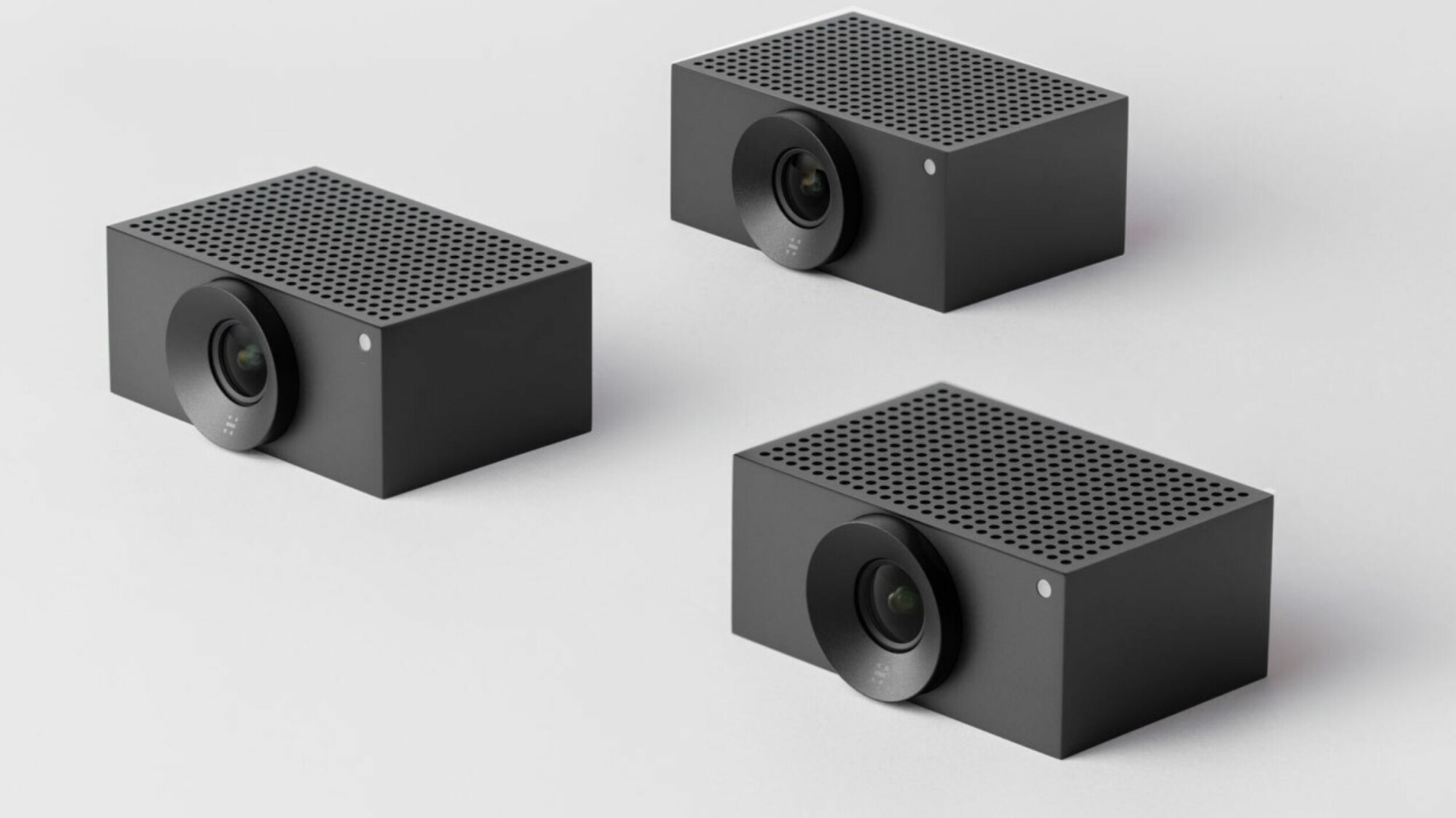
Crew received the iF Gold award in 2023. The recognition belonged to the product and its team, with the jury drawing attention to real-time editing and nonverbal cues. By August that year, the system was available through certified resellers. An idea explained to investors in February was moving into customers’ meeting rooms, where usefulness would be judged without an awards ceremony.
The box should outlast the brochure
Eriksen’s later writing makes the processing location part of the product argument. Edge AI puts intelligence into the camera, enabling it to respond to what is happening nearby. He also argues for modular hardware and software that can be updated. The ambition is equipment that accommodates changes in the room and improvements in the experience over time.
“prepare for the next decade, not just the next year.”Stein Ove Eriksen · October 2024
There was a concrete example that same month. An October 2024 update added Framing Zone and Perspective Correction to Huddly L1, alongside Gallery View improvements. A framing boundary could limit the meeting area the camera considered. Perspective correction addressed distortions in the image. These changes arrived through software on existing equipment. The camera on the shelf had acquired additional work to do.
The relationships continued developing, too. In January 2024, Huddly announced a contract enabling direct camera sales to Lenovo after previously supplying its Google Meet Series One kits through a third party. At an Oslo partner day that April, visitors could meet Eriksen and Hammer, see live demonstrations and ask questions. The advertised refreshments included biscuits. Even a discussion of automated camera direction can benefit from something uncomplicated.
In summer 2025, Eriksen contributed to Technology Record’s discussion of Huddly’s AI and Microsoft’s generative AI. In August 2026, Huddly disclosed that he had been allocated 4,545 offer shares, worth NOK 99,990, in a private placement. It is one precise entry in the continuing relationship between a founder and the business he helped start.
The central question remains easy to recognize. When colleagues meet across a screen, what should the person at the other end see? Eriksen has approached it as an engineer, a CEO and a product officer. Along the way, the camera gained company, software gained responsibility, and the listener gained an angle. The next time someone raises an eyebrow in a meeting, it may finally get its close-up.