The most revealing thing Soundvision Technologies makes may be a hole in the ceiling. Not the hole itself, obviously. The Hurricane, Utah, company sells what goes into it: speakers that swivel toward a sofa, grilles meant to disappear, amplifiers that send different music to different rooms, and the network gear tasked with keeping the whole production from becoming a very expensive silence.
Soundvision is the parent behind five core brands - TruAudio, VSSL, Alta Labs, Forge and Current Audio. That portfolio covers architectural, outdoor and commercial speakers; multi-zone streaming amplifiers; AV racks; and professional networking hardware. The direct customer is usually not the person choosing a playlist. It is the dealer, distributor or custom integrator who designs the system, cuts the drywall and gets the call if Spotify stops in the kitchen.
This makes Soundvision a useful kind of company to study. It is private, compact - LinkedIn lists 18 employees - and not wrapped in a public funding narrative. It grew from a nationally recognized electronics integration business that, by the company’s account, designed and installed thousands of home theaters and multi-room audio systems. Rather than theorize about what installers needed, the team spent years discovering it with ladders, wire and impatient homeowners.
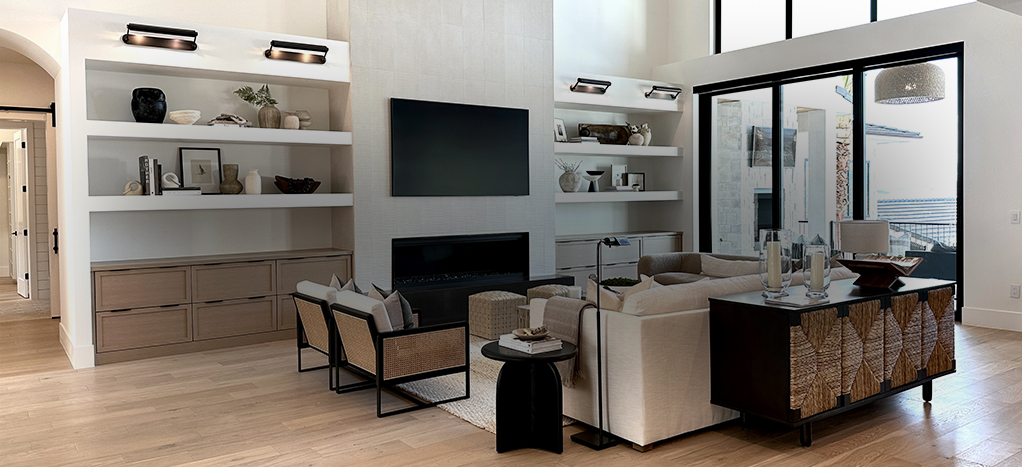
The pivot was hiding in the service call
What changed the company’s mind about manufacturing was not a single dramatic failure. It was repetition. Install enough systems and the same annoyances begin arriving like subscription boxes: awkward mounting, visible hardware, mismatched components, confusing controls and products designed by people who will never have to fit them between two joists.
Soundvision says that experience led it to found TruAudio, its original manufacturing brand, around premium custom audio. The product idea was practical: speakers should blend into a room, sound convincing and be friendlier to the professional doing the installation. TruAudio’s in-wall, in-ceiling, landscape, commercial and custom-soundbar lines remain the center of gravity. Indoor speaker products bought through the authorized channel can carry lifetime warranty coverage, while outdoor and electronic products have shorter terms.
“The company’s real product is fewer ugly surprises between specification and service call.”YesPress analysis
That warranty detail reveals the business model. Soundvision is not built as a frictionless direct-to-consumer shop. It directs buyers to certified dealers and warns that products bought through unauthorized internet auction channels receive no warranty. To an online shopper, that can feel restrictive. To an integrator responsible for a six-figure home project, channel discipline can mean traceable product, technical help and a manufacturer that has not undercut the quote overnight.
One installer, five adjacent jobs
THE PORTFOLIO LOGIC → Move backward from the sound in the room to the infrastructure making it possible.
A portfolio built backward from the room
The expansion makes more sense when viewed from an installer’s work order. TruAudio supplies the transducers. VSSL, launched in 2017, supplies multi-zone amplifiers with native access to familiar streaming methods such as AirPlay, Google Cast and Spotify Connect. Forge organizes the electronics. Current Audio, acquired in January 2019 for an undisclosed price, added complementary architectural products. Alta Labs, founded in 2022, supplies access points, switches, routers and cloud management - the connective tissue for an increasingly IP-dependent home.
None of those moves requires Soundvision to find a wholly new buyer. The same integrator specifying speakers may also need the amplifier, rack and network. That is the quiet advantage. Customer acquisition can be shared across a basket of adjacent products, while dealer feedback moves in the other direction. Alta Labs says it tests with sibling brand VSSL so an installer using both gets a smoother experience. The mundane phrase is “cross-brand compatibility.” The expensive reality is avoiding a return visit.
There are external relationships, too. Soundvision became a U.S. distributor for Severtson projection screens in 2021. VSSL sponsored a two-way control driver for URC. Soundvision supports U.S. distribution for cerasonar invisible speakers and provides DSP resources for LEA amplifiers. These partnerships extend the basket without forcing the company to invent every item inside it.
The portfolio has been tested in settings considerably less polite than a demo room. One published Caribbean estate installation used 125 TruAudio speakers across six buildings, with audio reaching patios, pools and a lagoon. The installer asked TruAudio to upgrade the finish on an exterior rock speaker for the island climate. That anecdote captures the feedback loop in miniature: the site supplies an edge case, the installer translates it, and the manufacturer adjusts the object. A product catalog becomes more useful when field conditions are allowed to edit it.
What it costs - and what the price hides
Soundvision does not publish consolidated revenue, valuation or venture funding. The Current Audio deal price was not disclosed. Product pricing often runs through dealers, and Alta Labs has even discussed installer-specific products without an online MSRP. That opacity is not an editorially satisfying number, but it is strategically legible: the quoted price can include design judgment, installation labor, system configuration and someone to call later.
The customer pays in another currency as well - dependence. A professionally installed ecosystem is harder to swap than a Bluetooth speaker. The dealer channel adds expertise but also another link in the chain. Cloud-managed networking adds convenience while introducing hosting risk. Alta Labs’ answer is unusually concrete: it says it placed cloud source code with Codekeeper, a third-party escrow provider, so code could be released if Alta could no longer host the service. That does not eliminate risk, but it acknowledges the right nightmare.
Where the model concentrates its energy
Competitively, Soundvision lives in a crowded equipment closet. Sonance, Origin Acoustics, SpeakerCraft, Episode, Russound, Crestron and Savant overlap its audio and automation territory. Alta Labs encounters Ubiquiti, TP-Link Omada, Araknis and Ruckus. Soundvision’s claim is not that no one else makes a ceiling speaker or access point. It is that installer experience shapes the details, that sibling products are tested together, and that a compact supplier can support more of the same job.
The bit worth stealing
A field-to-product loop anyone can copy
- Do the service manually until recurring friction becomes obvious.
- Choose a narrow problem whose fix saves the operator time or risk.
- Sell through the people who already own the customer relationship.
- Expand one step along that same operator’s workflow.
- Turn support tickets, training and warranty claims into the next brief.
The copyable part is not “start five brands.” It is sequencing. Start close to the work. Build the item your operators repeatedly wish existed. Protect the economics of the channel that specifies it. Then expand into adjacent purchases made by the same customer for the same project. Soundvision moved from the visible outcome - music in a room - toward the hidden system beneath it.
The company also treats education as part of the product. Its dealer library contains manuals, drivers, DSP presets, dimension drawings, installation guides and videos on everything from outdoor systems to invisible-speaker wiring. That material is not glamorous content marketing. It lowers the odds that a good product gets installed badly, and it gives a dealer a reason to return before the next quote.
Installation is consequential, buyers value expert specification, products share a workflow, and support can prevent expensive callbacks.
The category is disposable, customers insist on instant direct buying, intermediaries add no expertise, or adjacent brands create complexity without shared demand.
This playbook would fail in a commodity market where the cheapest listing wins and setup ends at unboxing. It also weakens if dealers stop creating value or if the portfolio becomes a cabinet of unrelated logos. Soundvision’s brands work together because they inhabit the same blueprint. The discipline is to keep following the installer’s workflow, not the temptation of a larger but foreign category.
A quiet company in a loud market
Soundvision’s culture reads like its distribution model: practical, relational and slightly allergic to spectacle. In late 2024, when Mike Grubb joined as vice president of global sales for TruAudio and VSSL, the announcement stressed collaboration, integrity and partnerships. At CEDIA Expo in 2025, Grubb described the business as built by installers for installers. It is a tidy slogan because the operating history backs it up.
The company is not without oddities. Its website once offered an SVT NFT beside links to speaker manuals and rack diagrams - a tiny artifact from the era when every physical business briefly considered a blockchain souvenir. But the durable story is more grounded. Soundvision manufactures things that vanish into architecture and depends on professionals whose best work is equally invisible. When the music plays, the network holds and nobody calls support, success looks like nothing happened at all.