A farmer can buy a field’s worth of fertilizer and still watch the crop go hungry. Phosphorus may be tied up in soil minerals. Nitrogen may arrive at the wrong moment or leave before the plant can use it. Roots can only reach so far. Sound Agriculture has made a business of that awkward gap between what a field contains and what a crop can actually eat.
- What it sells: SOURCE, a foliar signaling product; BLUEPRINT, beneficial fungi; and INFLECT, a seed treatment for particular corn acres.
- Who buys: commercial growers, usually through farm dealers or Sound representatives.
- The bet: improve nutrient access and crop yield, or reduce some synthetic fertilizer while maintaining performance.
- The proof problem: results depend on the field. Sound offers trials and conditional guarantees, with acreage and data requirements.
The company began in 2013, founded by microbiologists Eric Davidson and Travis Bayer. Before it was Sound, it was Asilomar Bio. The 2018 rename came with a surprisingly apt explanation: “sound” can mean a channel connecting bodies of water. The founders were studying how plants connect to their surroundings. An obscure geographical definition became a useful piece of corporate honesty: Sound does not manufacture sunlight or soil nutrients. It tries to improve the connections between them.


A message sent from the leaves
SOURCE, launched commercially for the 2020 season, is the peculiar star of this story. It is applied to leaves, often in a tank mix with a herbicide or fungicide. Yet its intended audience is underground. The chemistry mimics a natural plant signal and stimulates native microbes involved in nitrogen fixation and phosphorus solubilization. Sound calls it a soil activator. That is a tidy name for a complicated chain of events, and one that explains why this is different from simply pouring more fertilizer onto a field.
The distinction matters commercially. Synthetic fertilizer supplies nutrients directly; many microbial products add living organisms. SOURCE aims to prompt organisms already present. A farmer can use it to pursue more yield with the existing fertilizer plan, or, under a narrower program, replace a measured portion of nitrogen and phosphorus. Sound’s materials often refer to 25 pounds of each. The number is a program claim, not permission to skip soil testing or ignore a crop’s nutrient budget.
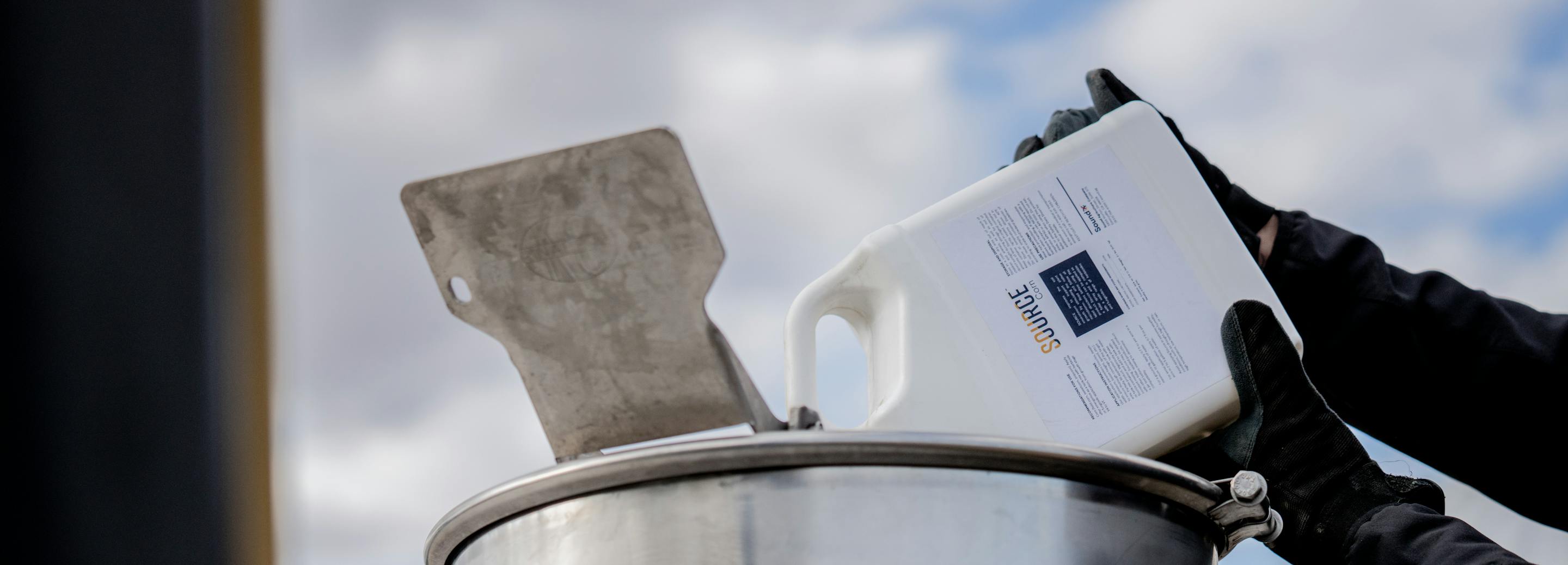
That ease of application is part of the sales pitch. A biological idea is much easier to buy when it fits equipment a grower already owns. But convenience does not settle the question of yield. Sound reports that SOURCE passed one million US acres of use by 2022 and reached two million acres in four years by late 2024. Its third-party data page lists university and commercial trials, while its own 2024 results report says the SOURCE and BLUEPRINT combination won on corn 84 percent of the time in the company’s Maximum Acre trials. Those are useful signals; a grower still has to ask how a particular soil, crop, season and control strip compare.
The miners needed a carrier
BLUEPRINT, introduced for the 2025 growing season, supplies arbuscular mycorrhizal fungi, or AMF. Fungal threads form an association with roots and extend the effective zone from which a crop can draw water and nutrients. Sound’s own explanation is almost charmingly industrial: SOURCE helps make nutrients available; BLUEPRINT builds a delivery network. The pair is designed to solve a bottleneck that neither product alone fully addresses.
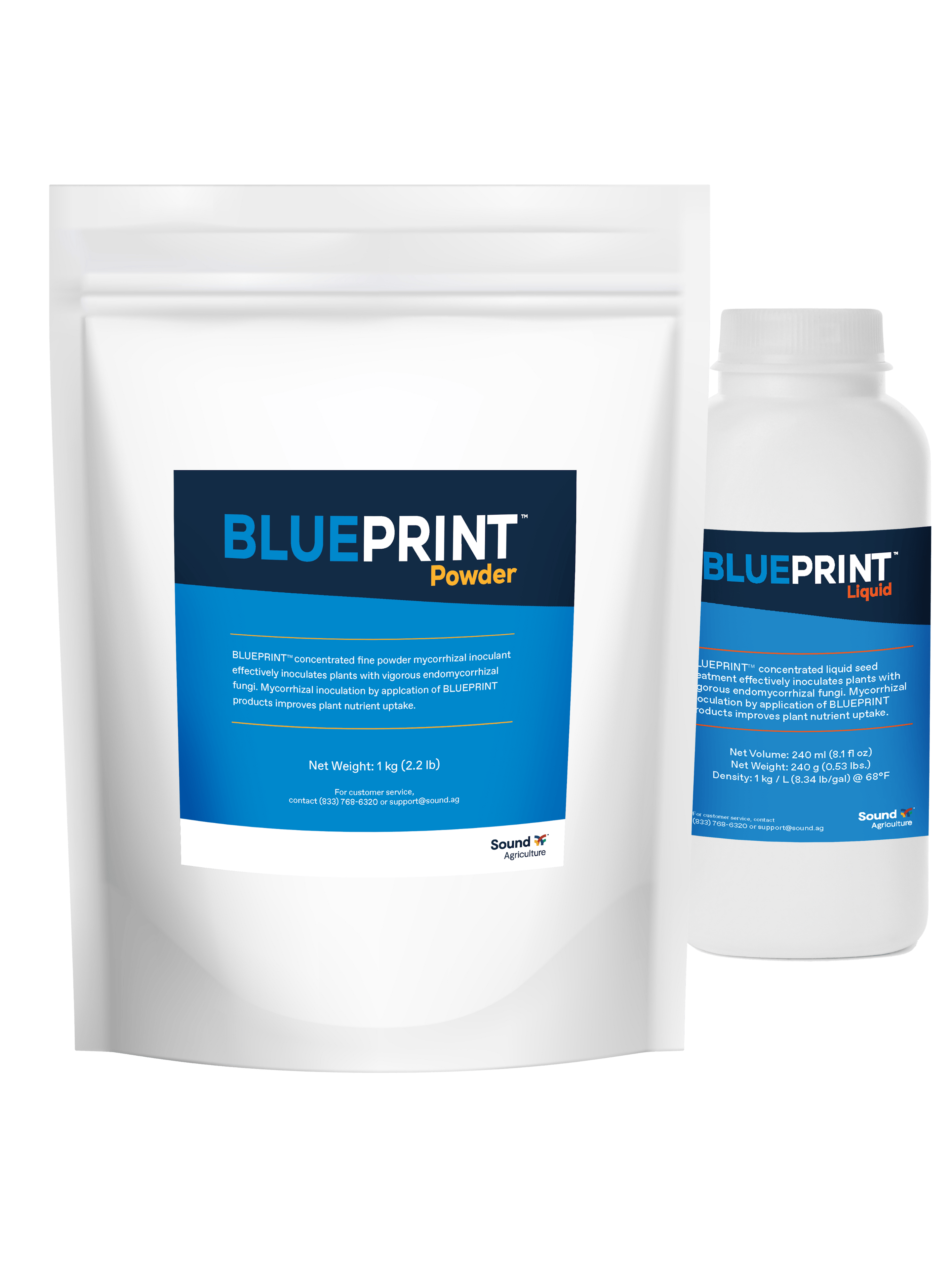
The company’s third current product, INFLECT, addresses a more specific field condition. Sound describes it as a seed-applied mix of three microbes for corn grown with anhydrous ammonia or heavy manure, where high ammonium and salt can disrupt sensitive soil biology. Its public product page lists a price of $12 per acre. It also reports a 92 percent win rate and an average six-bushel-per-acre lift in 2025 commercial demonstrations. That makes for a striking offer, though it is a company-reported result from a particular set of trials, not a universal promise about every cornfield.
The pivot buried in the footnotes
For years Sound also talked about on-demand breeding, an epigenetics platform meant to change how plant traits are expressed without changing DNA sequence. The idea had genuine range: flavor, nutrition, shelf life, resilience. In December 2024, alongside a $25 million extension of its Series D, Sound announced that it had spun the platform out. The remaining company would concentrate on nutrient efficiency. The shift did not declare the breeding science a failure; it marked a choice about which business Sound would build itself.
It was an expensive choice to make. Sound had raised a $75 million Series D in 2022, on top of earlier capital. Its 2024 extension was co-led by BMO Impact Investment Fund and S2G Ventures. This money backs field development, manufacturing, distribution and a grower-facing organization. Science can demonstrate a mechanism in a lab; a farm-input company must also get a dealer to stock it, a farmer to apply it correctly and a harvest to justify its price.
Sound has used partnerships to cross some of that distance. Mosaic agreed in 2021 to co-develop a nutrient efficiency product, with Sound handling active ingredient manufacturing and formulation and Mosaic taking field development and commercialization responsibilities. Syngenta agreed in 2020 to trial SOURCE in China, with commercialization dependent on trial success. SOURCE DC entered WinField United’s BioVerified screening program in 2024. These agreements and designations offer access and credibility, but they are not substitutes for field-level economics.
The guarantee is a spreadsheet, not a slogan
Sound’s most interesting competitive move may be the way it tries to price doubt. Its 2026 fertilizer replacement guarantee covers eligible grain and silage corn growers who reduce a specified amount of nitrogen and/or phosphorus with SOURCE, or with SOURCE and BLUEPRINT. The published terms describe an ROI guarantee of up to $100 an acre. They also require at least 500 treated acres, nutrient-use thresholds, timely payment, application records and data to validate outcomes. The yield performance guarantee has its own crop and acreage rules.
This is where “risk-free” marketing meets farm practice. A guarantee can reduce a buyer’s exposure only when the buyer qualifies and can document the result. It also reveals the company’s real customer: not someone shopping for a cheerful sustainability badge, but a grower able to run a controlled comparison and defend the numbers at season’s end. Sound’s 2026 financing offer similarly moves payment until after harvest for qualifying purchases, subject to credit approval. Neither device changes the biology; both make the experiment easier to finance.
The sensible copyable idea is modest. Start with a nutrient budget and a soil test. Choose a field where the product’s mechanism matches the actual constraint: access to nutrients, reduced fungal reach, or corn after ammonium-heavy fertility. Keep an untreated comparison and clean application records. Count the product cost, fertilizer saved and harvested yield. If the difference is repeatable, expand. If it is not, the field has told you something useful before you have committed the whole farm.
Sound’s wager is not that every acre needs a new jug. It is that agriculture sometimes mistakes an access problem for a shortage. That is an appealing proposition precisely because it can be checked. At harvest, the crop will have the last word.