The customer has paid. The shop has made its sale. Somewhere between those two reassuring facts and a usable bank balance, Soren Azorian sees a business problem. An online merchant can assemble the storefront, attract the buyer and process the order, then discover that receiving the revenue introduces a fresh set of obstacles. Commerce has crossed the border. The payout is still looking for its papers.
Azorian returns to this less photogenic end of entrepreneurship in his writing about REDFi, the financial technology company he founded. He asks what happens after checkout: where the proceeds arrive, which currency they sit in, when they are converted and how they reach the place where the business actually operates. A successful sale, in his telling, is only part of the journey.
It is a useful entrance to his working life. As founder and CEO of REDLINE LAB, Azorian invests in and helps build technology ventures. His interests range from payments to developer education and the digital representation of assets. The common concern is practical: the arrangements that allow an idea to become a business people can use.
Connections before crypto
Before the blockchain ventures, there were telecommunications and marketing. A 2018 business biography describes Azorian as having served as CEO of Planet Telecoms Inc. from 2003 to 2015, followed by work in app development and digital marketing services. That earlier experience places his current interests in a longer career concerned with connecting businesses and customers.
The technologies have changed. The operating questions have a familiar shape. How does a service reach its customer? What happens between the promise and delivery? Where does the process become cumbersome enough to lose someone? These are useful questions for understanding the transition, without pretending that every career arrives with its eventual strategy neatly packed in the first suitcase.
Panama became a documented part of the story in 2021. Redline Blockchain S.A.’s operating certificate records October 5 of that year as the start of operations and names Azorian as its legal representative. The registered activities include systems integration and application development. Software, at that stage of the paper trail, was already part of the business.
Today, Azorian describes his life as divided between the United States and Panama. His professional profile places him in the Los Angeles metropolitan area; REDLINE LAB operates from Panama City. His stated commercial focus includes Latin America and international markets. Crossing jurisdictions is therefore more than a theme for his articles. It is part of the geography of his work.

A portfolio with adjoining doors
REDLINE LAB describes its work through investment, incubation, mentorship and expansion. A founder may need funding, but may also need technical resources, a useful introduction or help entering another market. The studio’s proposition is to make several kinds of assistance available within the same network. Writing the check is one task among others.
Its published method begins with testing ideas against market needs. Resources are then concentrated on the opportunity, followed by continuing refinement. There is an appealing absence of ceremonial finality in that sequence. Refinement assumes that the first version will require another look, and that a venture remains work in progress after its name appears on a website.
A sequence of work, rather than a measure of results.
The ventures associated with Azorian give that method different settings. REDFi addresses payments and the movement between supported currencies and stablecoins. Tesseras works on infrastructure for tokenized assets. BBR Tek combines trading analytics with education. Dojo Coding trains developers and connects learning with building. Bell N Desk concerns teaching and paid communities.
Those are distinct businesses, with distinct jobs. Together, they suggest why Azorian speaks about building an ecosystem. A founder needs people who can make software; those people need projects; a business serving customers internationally needs ways to handle revenue. The connections are the attraction of the model. Their usefulness still depends on what the individual companies deliver.
Azorian’s stated preference is for companies that strengthen the surrounding network. He presents his role as a combination of investor, advisor and connector, bringing operating experience and relationships alongside capital. The ambition is cooperative growth across ventures. It is an ambition to judge through execution, rather than through the sheer length of a portfolio list.
The interviewer’s chair
His podcast work offers a more personal view of those relationships. In June 2026, Thelly Mapp interviewed Azorian about REDLINE LAB and its founding philosophy. The conversation’s framing drew on the Purple Cow idea: businesses should give people a reason to notice them. The studio’s own account also makes that influence explicit.
Azorian takes the other chair in conversations with portfolio founders. A REDPOD episode brings him together with Dojo Coding’s founder and CEO, Daniel Bejarano, and technical director Juan C. Guerrero. Their subjects include developer communities in Latin America, real projects and the distance between learning about software and being able to build something with it.
That distance matters to the broader story. Education can become a destination of its own: another course completed, another credential collected. The Dojo conversation turns toward execution and the projects that follow. For a studio interested in helping ventures grow, a supply of people able to do the work belongs close to the investment conversation.
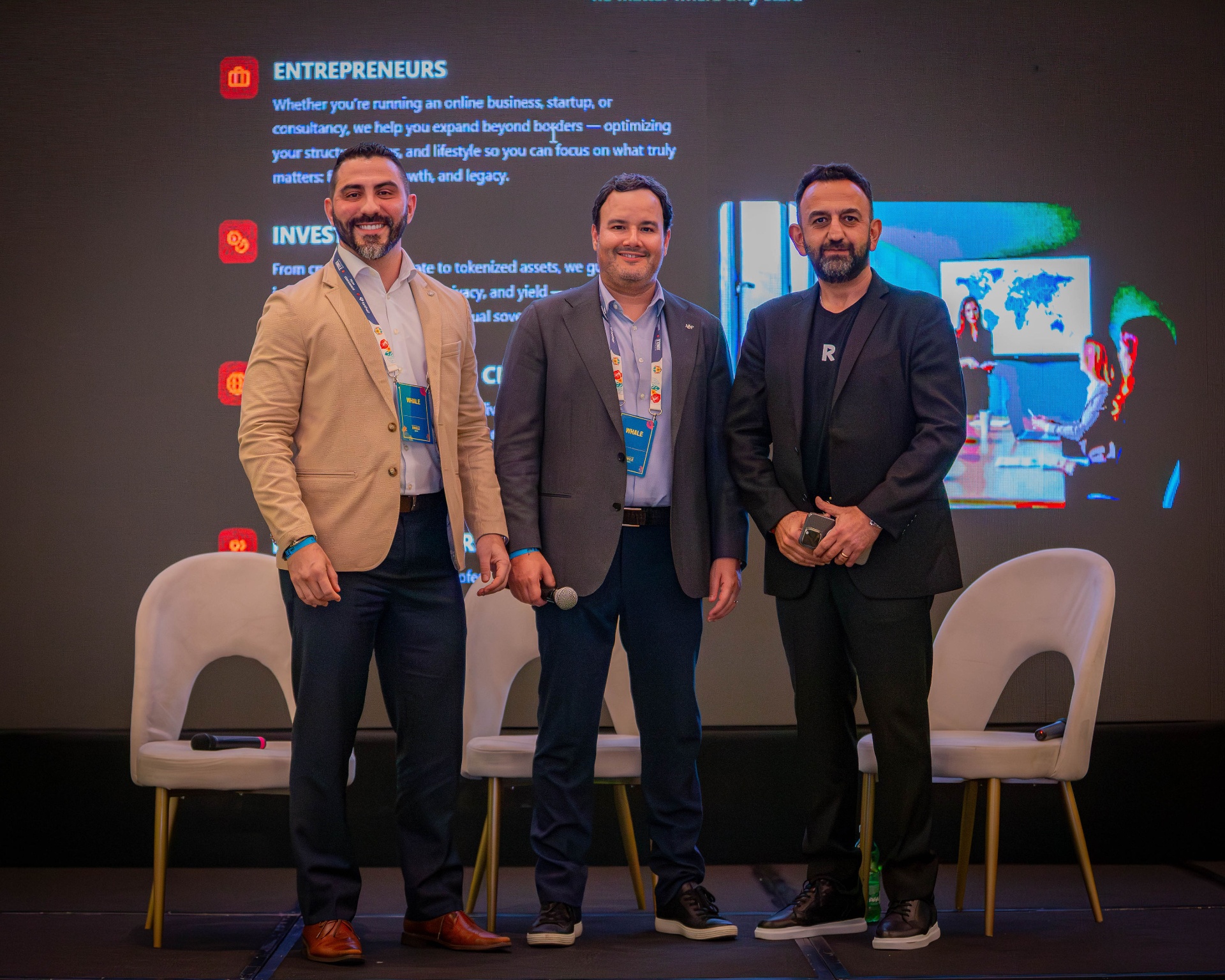
Other episodes bring him into discussion with Blockchain Jungle’s Juan C. Guerrero and Betski co-founders Alejandro and Carlos Navarro. The subjects vary from regional technology communities to gaming businesses. The format makes visible an aspect of his role that a title cannot convey: he spends some of his public time asking other founders to explain their work.
A short book, a long assignment
In April 2023, Azorian published Breakthrough Formula for Businesses: A CEO’s Guide to Adaptability. The paperback is listed at 46 pages. Business publishing does not always resist the temptation to turn a useful point into a doorstop. Here, at least, the physical assignment is modest.
The intellectual assignment is less so. The book addresses growth, new technologies, learning and creating value, with adaptability as its organizing concern. It asks business leaders to keep responding as circumstances change. Coming from someone working across several ventures and markets, the choice of subject is easy to understand. A fixed approach would have a great deal of territory to cover.
One compact paperback.
A subject that follows the founder into each venture.
There is a related tension in his essay about the publicity trap. Azorian argues that making a prediction publicly can make its author reluctant to change position. A person begins by offering an opinion and ends up feeling responsible for protecting it. The original question quietly acquires a public-relations department.
For a founder who writes, speaks and hosts conversations, that is an interesting concern to put in public. He advocates preserving room to reconsider. Read alongside the book, the essay gives adaptability a more demanding meaning: changing a business can also require changing what one has already said about it. Flexibility has a social cost as well as an operational purpose.
His stated working principles are less theatrical. They include arriving prepared, giving timely feedback, keeping commitments and speaking honestly with partners and teams. These are his own descriptions of how he intends to work. They place the emphasis on repeated conduct, the sort of thing colleagues experience long after a conference audience has gone home.
“A culture is not a set of beliefs, it's a set of actions.”Soren Azorian, on his approach to building companies
The work behind the token
His writing about tokenization brings those operating concerns into another setting. An asset represented digitally still needs understandable rights. What does a holder own or receive? What information supports the asset? Who is eligible to participate? Azorian’s discussion of Tesseras puts those questions beside identity, reporting and the management of the asset over time.
The emphasis is on the machinery surrounding issuance. He describes Tesseras as connecting parts of that lifecycle and RWADEX as a developing market-facing layer. The distinction is useful: creating a digital representation and maintaining a usable market around it involve different work. His interest lies in connecting the work rather than treating the token’s creation as the finish.
In payments, he makes a similarly practical distinction. His REDFi writing separates processing the customer’s purchase from receiving and managing the resulting funds. REDFi’s stated role depends on customer eligibility, supported markets and partner availability. Azorian is describing financial technology operating through partners, with the details of access determining what a particular customer can actually do.
That specificity gives shape to his larger ambition of financial inclusion. In his account, access involves usable accounts, movement between currencies and routes into international business. The aspiration reaches beyond a single product, but the questions remain concrete. Can someone receive the proceeds of their work? Can a company use its revenue where it needs it?
Follow Azorian from the studio to the microphone, from the short business book to the payments essay, and he keeps returning to what must happen next. Someone has an idea. Someone learns to code. Someone completes a sale. Each achievement creates another task. His working territory begins where the congratulatory message ends and the business still has something to do.