Ten employees. Three months. Thirty salaries paid before the first client payment arrives. Solomon Amar used that arithmetic to explain an early lesson in running an IT services business: winning work and having money in the bank are separate accomplishments. Clients could take 90 days to pay. Employees still needed their salaries. Entrepreneurship had quietly enrolled him in banking, without asking whether he wanted a second profession.
Amar had worked in IT support while studying software development, then moved into engineering. He founded his first company in 2004. A small office in Israel led to work abroad; the 2008 financial crisis nearly erased the business. In 2013, a mobile-app venture brought him to Ukraine. The venture disappointed him, but the country did not. He stayed interested in its engineers and the possibilities of building an IT services business there.
That early arithmetic gives his subsequent career a useful frame. Before an international team can make anything, somebody has to make employment work.
A family in the background
There is a more personal explanation for Amar’s appetite for responsibility. Looking back on his entrepreneurial path during ALLSTARSIT’s twentieth-anniversary year, he described a childhood wish to make his family proud. He connected that desire with the sense that he had to deliver, and with the commitment he hoped to share with his team.
Family pride is a fairly old incentive in a business fond of presenting every motivation as newly invented. It also makes the founder easier to understand. His account begins with an obligation to people whose judgment mattered to him, before it reaches clients, offices or international expansion.
He graduated in software engineering from Afeka Tel Aviv Academic College of Engineering in 2004. The technical training matters: the founder selling access to engineering talent had first been an engineer himself. He had experienced the work from the other side of the hiring conversation.
Company founder.
international teams.
twenty years.
The company between the companies
ALLSTARSIT’s proposition grew around a practical mismatch. A business needs engineers. Engineers live in places where that business may have no employing entity, payroll operation or recruitment network. Finding one another is only the beginning of the arrangement.
The company recruits specialists, supports employment and helps clients build dedicated teams across borders. Its account of the model is straightforward: the client directs day-to-day work, while ALLSTARSIT handles the surrounding employment administration. The distinction matters to anyone wondering whether a remote engineer will actually belong to the team.
By its twentieth anniversary in 2024, the business described a presence in more than 20 countries. Its history includes development and regional operations in Ukraine, Poland, Colombia, the UAE and India. These locations bring different languages, working hours and expectations into the same organization. A map makes expansion look wonderfully tidy. An employment contract is usually where the untidiness returns.
Leave someone on the other side of the table
Amar’s rules for negotiation offer a compact portrait of how he wants business relationships to work. He argues that a deal should leave both parties satisfied. A victory that exhausts the other participant is a poor foundation for the next conversation.
His advice is to prepare, understand the market and know the limits of the people represented at the table. Then listen. The order has a certain common sense: arriving uninformed is expensive, but arriving so pleased with your preparation that nobody else can speak has its own costs.
He also uses the Hebrew word lizrom, which he explains as going with the flow. Alongside preparation, it introduces room for adjustment. The combination is revealing. He wants the homework done, but leaves space for the person sitting opposite him to change the conversation.
“The key to a successful negotiation starts with understanding both sides.”
Solomon Amar, 2021
For a founder arranging relationships between employers and engineers, that position has daily consequences. A signed agreement starts a period of cooperation. The parties have to be able to work together after the pens go away.
The first week is a management test
His writing about remote R&D teams becomes especially specific around the arrival of a new employee. A recruit can lose time finding the right person, waiting for system access or trying to understand an organization that colleagues already take for granted.
Amar recommends assigning someone to help during those first weeks. Explain who does what. Provide the tools. Set expectations and deadlines. Give feedback in regular individual conversations. These are modest instructions, which is part of their value. Nobody needs a motivational speech while waiting for permission to open a repository.
He also challenges managers who read a delayed reply as evidence of poor performance. Results deserve more attention than the time a message appeared. That shifts responsibility back toward management: goals need to be clear enough for people to work without constant observation.
It is a demanding version of flexibility. An employee gains room to do the work, while the manager has to make the work intelligible. Remote employment exposes gaps that a shared office can sometimes disguise with a quick question across a desk.
A world map cannot schedule a meeting
In his separate guidance on international teams, Amar gets down to the calendar. A weekly meeting should happen at a reasonable time for the countries involved. The communication platform should be one everyone can actually use. Team members need technical support and access to company resources wherever they work.
He also allows for the possibility that home is an unsuitable workplace for a particular employee. In that case, he recommends finding another setting. His approach leaves room for offices and shared spaces inside a business built around distributed work.
These details give substance to the idea of working across borders. The border remains present in the clock, the available equipment and the habits people bring to a conversation. Managers have to notice those differences. The diagram below collects three practical concerns from his advice; it describes responsibilities, rather than a measured performance score.
Meeting times that work across countries.
Shared platforms, access and technical help.
Relationships beyond a list of assignments.
The mountain trip that became something else
In 2022, a planned company outing took a different course. The team had intended to mark Ukraine’s Independence Day at Hoverla in the Carpathian Mountains. War changed the plan. The replacement was a volunteering trip to Gorenka in the Kyiv region.
Amar described employees, friends and family members offering to take part. The company supplied transport, food, tools and equipment for removing debris. Over six hours, the group cleared more than 17 tons of waste from a damaged house.
The account is useful because it gives his language about people a physical setting. There is a family’s house, an organized group and work that needs doing. Corporate togetherness, that elastic phrase, had acquired tools and a disposal problem.
It also shows a change of purpose without abandoning the purpose of gathering. The original trip would have brought colleagues together on a mountain. The revised one brought them together around a task in a community where they worked.
Artificial intelligence still has a staffing problem
Amar’s interest in AI follows the people doing the work behind it. In his 2023 writing, he described the human labor involved in preparing data, labeling it and building the engineering systems that allow models to operate.
His account includes both specialists developing AI applications and workers carrying out the preparatory tasks on which those applications depend. Data engineering, annotation and infrastructure belong in the same discussion as the finished system.
This is an employment entrepreneur’s view of the technology. A striking demonstration invites applause; it also raises questions about who collected the data, who maintains the system and where those people can be found. Amar’s proposed role for offshoring is to connect businesses with that range of expertise.
The argument extends the business he already knows. As the product changes, the need to assemble and support its makers continues. His attention stays on the organization required to turn technical possibility into daily work.
Getting people into the same room
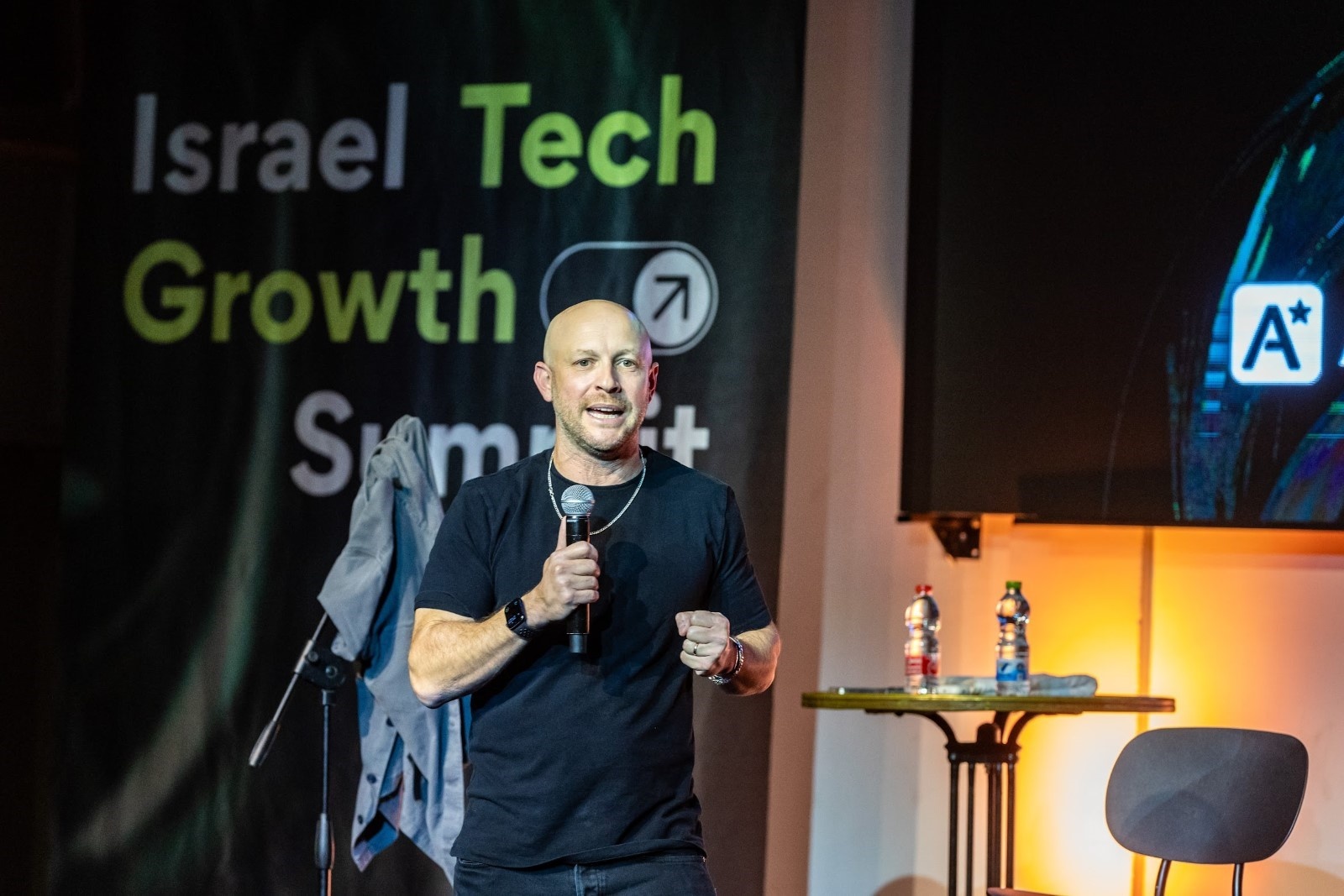
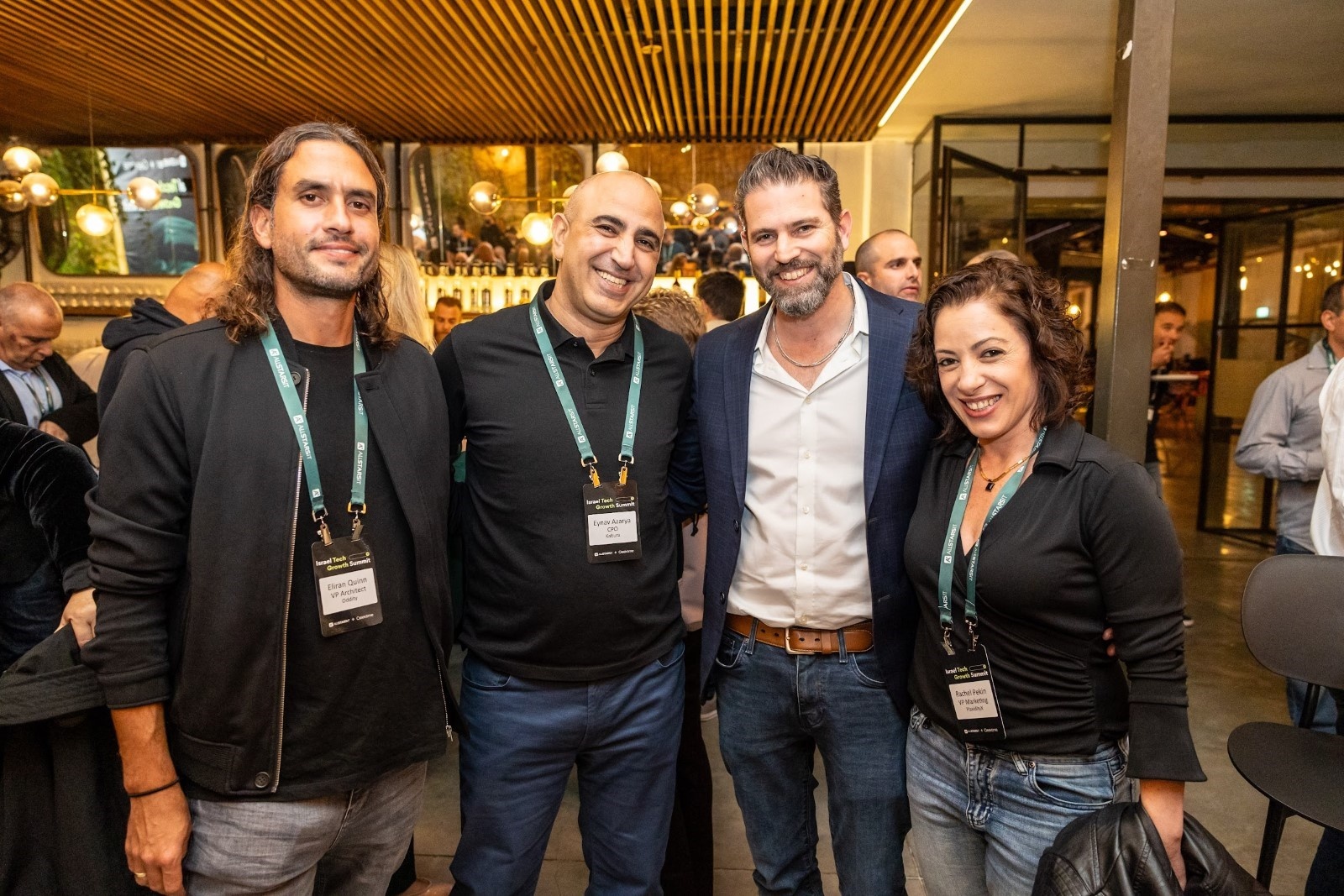
The Israel Tech Growth Summit gives Amar another way to bring people together. At the gathering looking ahead to 2025, organized by ALLSTARSIT and Geektime, he welcomed participants and joined a program featuring executives from companies including Microsoft Israel, AI21 Labs, JFrog and Kaltura.
The subjects ranged from AI to the practical economics of growth. The event placed a staffing founder in conversation with the people building products, running engineering organizations and deciding where their companies would expand.
ALLSTARSIT’s October 2025 announcement described another summit planned for November 3 in Tel Aviv, with opening remarks from Amar and an AI session by NVIDIA Israel’s Nati Amsterdam. The recurring format fits a career built around introductions that need to become working relationships.
There is something apt about a distributed-work entrepreneur organizing a roomful of people. The calendar invitation still has its uses. So does a conversation that continues after the formal program ends.
The candidate gets a vote
Amar’s advice to employers also asks them to examine what they demand from candidates. In his writing on IT recruitment, he questions degree requirements that have little connection to the actual job. Demonstrated ability should matter when the paperwork has stopped saying much about the work.
He treats an offer as more than its salary figure, too. Company culture, benefits and the prospect of salary reviews all influence the decision. The person being recruited is evaluating an employer while the employer evaluates them.
That is a fitting place to leave his story. The student who worked alongside his studies eventually built a business around other people’s employment decisions. Across his writing, the recurring concerns are practical: a fair agreement, useful tools, a manageable working day, a reason to stay.
Those concerns give the international ambition its scale in human terms. A company can announce another country in a sentence. For the person joining on Monday, the question is what happens next.
Continue the conversation
Explore Amar’s writing, interviews and the company he founded.