A photographer is an odd thing to put in a shopping cart. The customer must choose a stranger, agree on a time and place, explain what the picture should accomplish, then hope the finished files arrive before the occasion has lost its point. In 2016, Matt Schiller and Ed Kearney looked at that awkward little chain and saw a booking problem. They founded Snappr in Sydney to make hiring a professional photographer feel routine.
The booking problem was real. It was also only the first one. When a family wants portraits, a successful shoot is the end of the story. When a food delivery platform needs a photograph for every menu, the shoot is merely one line in a production schedule. That difference has become the most useful way to understand Snappr: a marketplace that grew into machinery for making pictures arrive where a business needs them.
- Snappr books vetted photographers and videographers for personal and commercial shoots.
- Its enterprise tools coordinate briefs, editing, approvals and delivery across many locations.
- Self-serve bookings helped build the local network that large customers later needed.
- AI tools make variants from real images, while a human still has to capture what is actually there.
The useful accident
The founders did not arrive at Y Combinator with a grand plan to sell content infrastructure. Schiller had worked on a graduation retail business, and graduation photography supplied an early opening. In 2017 Snappr pitched a simpler proposition in the United States: pick a photographer, see the price, book the shoot. The company also launched a photo analyzer. By May that year, its own account said more than 60,000 people had tried the tool.
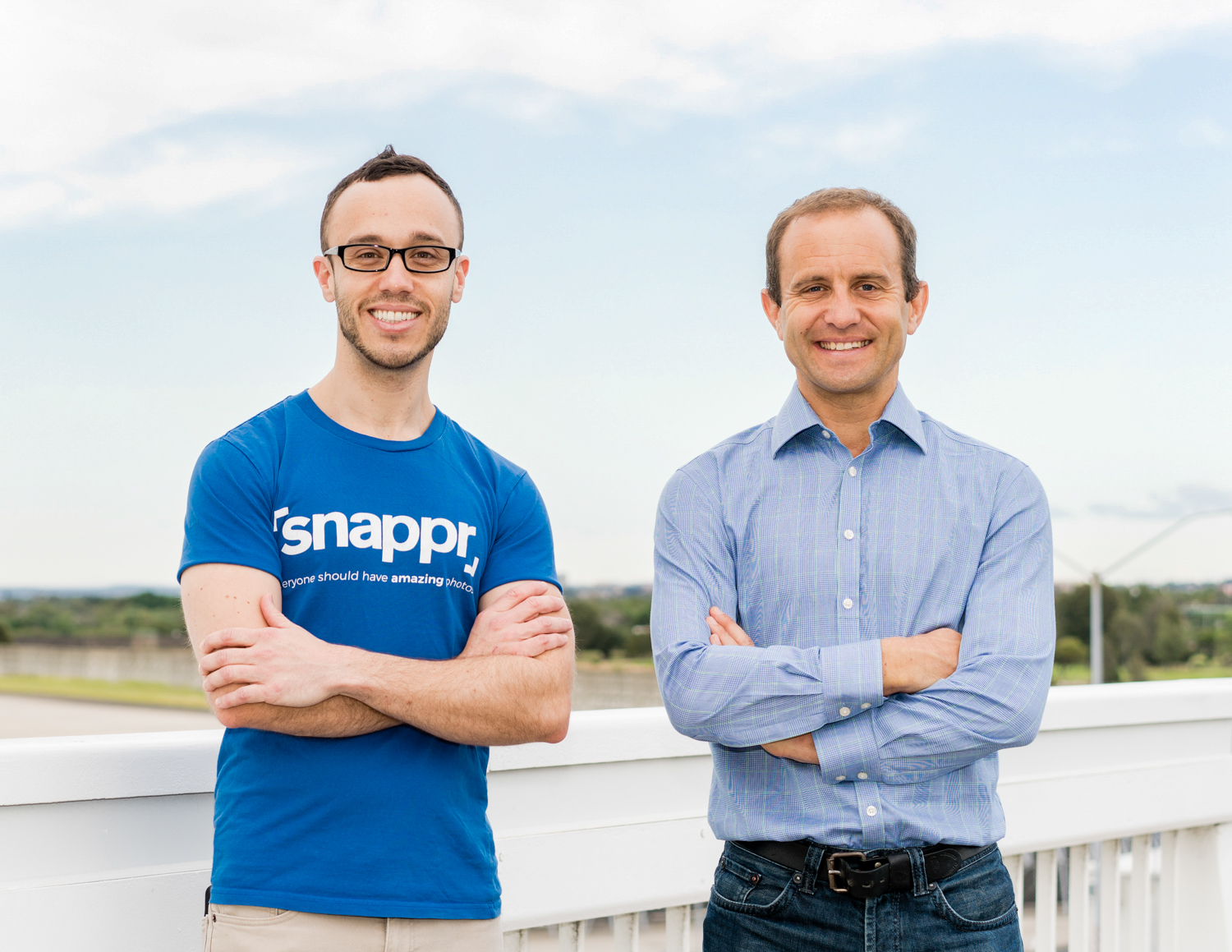
Snappr also bought its way into useful corners of the market. It acquired the Australian directory Photographers.com.au in 2018, event photo service Eversnap in 2020, and enterprise photography company Pretty Instant in 2021. Those deals expanded the network and customer base, but they did not remove the basic coordination problem: a customer still needed the right person, in the right place, with the right brief.
The marketplace had an unglamorous virtue: it kept photographers busy. A large customer can promise a thousand jobs in theory, but a photographer cannot pay rent with theoretical jobs. Individual bookings created work in more places and gave Snappr a reason to recruit and vet a local network before a national contract appeared. A 2022 account, written by an investor in the company, reported that 48% of its Workflows enterprise customers had first made a self-serve booking. Treat that as a historical snapshot, not a permanent conversion rate.
Business customers began asking for something the consumer booking page could not do. One office could book one headshot session; a brokerage needed consistent headshots for agents in dozens of cities. A restaurant platform needed menu photographs in hundreds. Snappr initially pushed some of those requests away, then tested a rougher enterprise service. It added central editing and software to manage the handoffs. Demand from companies became substantial in 2019.
The first product found the photographer. The second product had to find the photograph after everyone had forgotten who took it.Snappr's move from Shoots to Workflows
The day the calendar split in two
Then 2020 made a strange experiment of the business. Parties, graduations and other personal gatherings stopped. Consumer shoots fell sharply. Snappr laid off 25 employees, according to that 2022 account. Meanwhile merchants moved more of their selling online, where a restaurant dish, a car or a rental listing needed an image before it could compete for attention. Enterprise demand rose; the company later rehired the positions it had cut. The shock exposed the difference between photography as an occasion and photography as operating expense.
What changed Snappr's mind was the customer workflow. A platform cannot solve its image shortage simply by placing photographers on a map. It needs a brief that survives handoff, editing standards that survive the next city, and files that can be found and published. Snappr built tools for those jobs, then packaged them as Workflows: software and API access for scheduling, editing, quality control, storage and delivery. It now sells an enterprise system supported by the same network that handles everyday bookings.
The enterprise examples give that diagram some weight. Snappr says it has completed more than 30,000 shoots and delivered more than four million assets for Bring a Trailer. It reports more than 1,400 headshot shoots for Redfin across over 150 cities, and more than 1,200 shoots for Zumper across over 160. Those are company-reported figures. The operational point is easier to verify by inspection: each job requires a local photographer, a consistent brief, and a usable file at the end.
What the customer pays for
Snappr's public tiers make the business model unusually legible. Pay-as-you-go customers book a job and pay a 15% service fee. Pro, currently offered only in the United States, lists an annual membership at $99, promoted at $49 at the time of writing, and cuts the service fee to 9%. It adds a small team workspace, saved creative guidelines, preferred photographers and searchable galleries. Enterprise pricing is custom, with annual commitments, volume credits, advanced permissions, automation, APIs and support.
A person organizing one wedding or birthday can use the booking service without buying the operating system. A marketing agency with shoots every month gets value from reusable guidelines and shared access. A marketplace processing thousands of listings needs more: automated triggers, predictable turnaround, permissions and a way to move finished files into its own software. The alternative at each level differs too - an independent local photographer, an agency roster, an in-house studio, or separate tools for digital asset management and image generation.
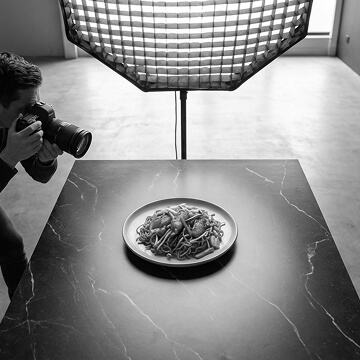
The real thing, then its many versions
Snappr has added photo editing, videography and AI image tools, but its most interesting AI idea begins with a camera. Magic Studio can take delivered shoot images or an uploaded reference and generate new settings, crops or seasonal treatments. Its September 2026 product explanation gives the example of one photographed loafer turned into nine visual variants. The logic is practical: an ecommerce shopper should recognize the object that arrives in the box. A generator starting from text alone might invent the stitching, the color or the logo.

This is also where the limits become useful. Food imagery cannot promise a dish the kitchen does not serve. A product image must preserve the product, and a listing photograph must not misrepresent a property. AI can vary a background or format; it cannot substitute for accurate capture when the subject is evidence. Snappr's combination of real shoots, editors and software is better suited to repetitive commercial work than to campaigns where a single distinctive image is the entire point.
The company raised a $28 million Series B led by Foundry in October 2025 and expanded into 57 new European cities, adding five languages. Snappr says 74% of Fortune 500 companies have used its services. That broad usage claim says less about current contracts than the detailed cases do. What makes Snappr different is the attempt to connect an actual person with a camera to a repeatable production pipeline. The clever part was recognizing that the humble booking page had already begun assembling the hard part: people who could show up.
There is a lesson to borrow, provided a business has frequent, geographically scattered demand. Start with the smallest transaction that keeps supply active. Watch which customers repeat it. Build the missing handoffs only when those customers reveal them. Snappr did not begin by selling a diagram of the future. It began by getting someone to take a picture.