The easiest way to waste a quarter is to buy the right category of software for the wrong problem. A product team sees users skipping a new feature and asks for “customer success software.” A CS leader sees renewals wobble and asks for “product adoption.” Both phrases sound reasonable. Neither is specific enough to make a purchase.
Product Fruits, SmartKarrot, Chameleon, Totango, Inline Manual and Cast inhabit the same broad post-sale neighborhood. They all want customers to find value, keep using the product and stay. But they do not knock on the same door. Three work closest to the interface, two are centered on the customer-success operating team, and one turns company data into customer-facing AI conversations and presentations.
That difference is more useful than a grid of checkmarks. It tells you who operates the tool, which unit it watches, and where it can change behavior. A tooltip can rescue a lost user. It cannot negotiate an account plan. A health score can reveal risk. It cannot make a cluttered button easier to find.
Start with the moment, not the market
Imagine a new administrator has invited a teammate but has not connected the data source that makes the product useful. That is a user-level, in-product moment. Product Fruits, Chameleon or Inline Manual can watch for context and show a checklist, tour, tooltip or launcher close to the action. Their canvas is the product itself.
Now imagine the same customer's usage has declined across several seats, a support ticket is unresolved and renewal is 90 days away. That is an account-level operating problem. SmartKarrot or Totango can bring signals together, score health, segment accounts and trigger work for a CSM. Their canvas is the book of business.
Finally, imagine 2,000 smaller accounts deserve a useful business review, but the team cannot hold 2,000 meetings. Cast approaches that coverage problem by connecting post-sale sources and producing personalized, AI-presented experiences through inbox, in-app and chat channels. Its canvas is the conversation a customer receives.
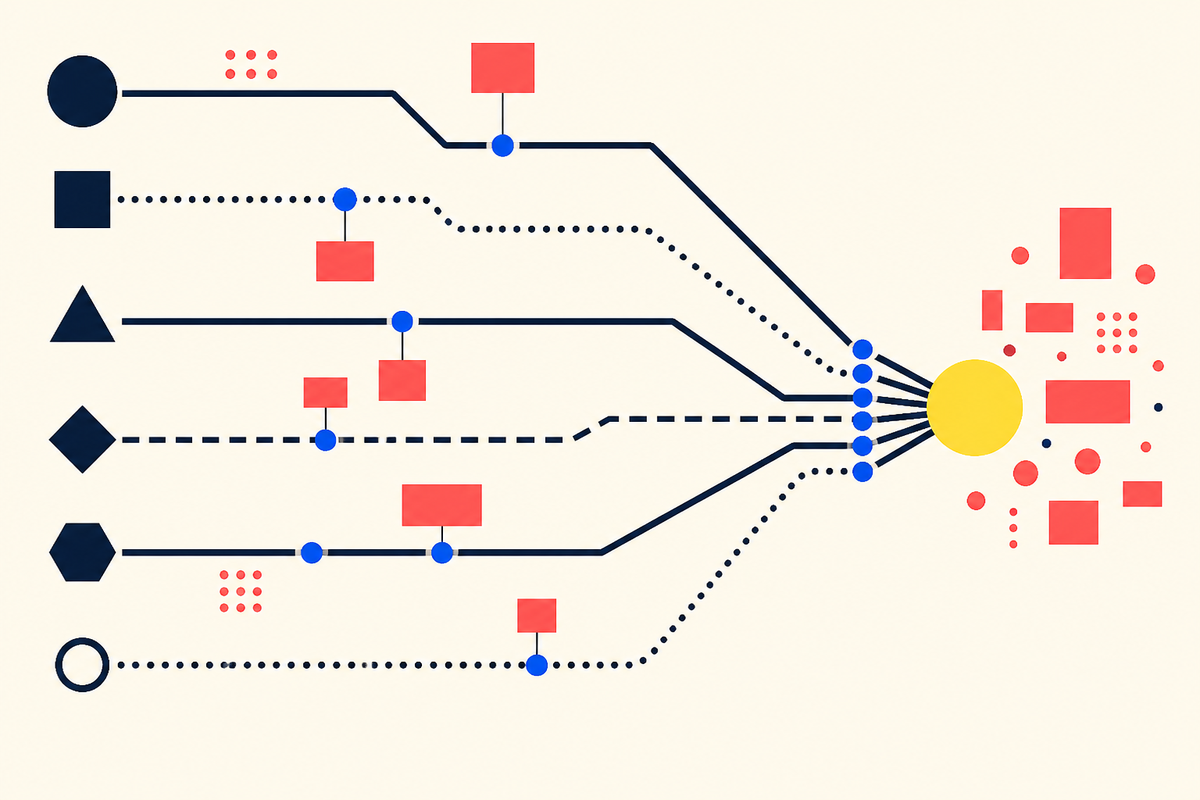
The product category matters less than the distance between the signal and the intervention.YesPress analysis
The interface layer
Product Fruits
Product Fruits combines tours, checklists, hints, announcements, surveys, a knowledge base and in-product help. Its current pitch leans into adaptive onboarding and Elvin AI, including generated experiences and support answers. It also advertises a read-only MCP connection that lets teams query Product Fruits data through AI assistants.
Chameleon
Chameleon centers on targeted in-product UX: tours, microsurveys, tooltips and launchers. Its public material emphasizes segmentation, element selection and page-level triggers, the controls that matter when a product team wants an experience to feel native rather than sprayed across every user.
Inline Manual
Inline Manual offers the familiar digital-adoption toolkit: walkthroughs, tooltips, checklists, announcements and embedded help. Its public pricing begins at $158 per month, and it advertises a trial without a credit card. That makes it relatively straightforward to test against a defined onboarding journey before committing to a larger operating system.
All three still need care. Chameleon's own buyer guide notes that digital-adoption platforms require code on the relevant pages so experiences can load. More importantly, somebody must maintain selectors, segments, content and event definitions as the product changes. “No-code” describes authoring. It does not remove ownership.
The operations layer
SmartKarrot
SmartKarrot brings together customer 360 views, health scores, early warnings, playbooks, touchpoints, tasks, dynamic segmentation, product analytics and automation. Its product-adoption material emphasizes usage scores across products and drill-downs into features, users and personas. The platform is designed to help a CS organization decide which account needs attention and standardize what happens next.
Totango
Totango is the more established enterprise platform in this set. Founded in 2010, it has expanded through the acquisition of Lou, a merger with Catalyst and the addition of Unison, its AI-powered customer-intelligence engine. Its current portfolio covers enterprise customer-success management, customer growth and predictive intelligence, with packages designed around account volume, teams and practitioner seats.
These tools demand a different kind of implementation. The hard work is less about placing a tooltip and more about resolving identities, joining CRM and product data, agreeing on lifecycle stages, defining a useful health model and assigning ownership. A red account with no agreed response is decoration. A playbook with no trusted trigger becomes administrative theater.
The conversation layer
Cast stands apart because its output is not mainly another workspace for an employee. The company says it connects with more than 60 data sources, including CRM, customer-success, service and warehouse systems, then delivers personalized presentations and question answering to customers. It supports inbox, embedded in-app and chat experiences, with multilingual voice and text.
The proposition is useful when coverage is the constraint: smaller accounts receive thin service, executives ignore generic health emails, or business reviews consume too many preparation hours. Cast's startup pricing is published by customer account rather than CSM seat, which makes its intended unit unusually clear.
AI changes the risk as well as the reach. A polished but poorly grounded account summary can damage trust faster than a clumsy dashboard. Buyers should test permissions, source traceability, stale data, conflicting fields and what happens when the system does not know. Fluency is the easy demo. Restraint is the important one.
You may need two layers
There is no rule that one platform must own the entire journey. A company might use Chameleon to trigger a contextual launcher for individual users and Totango to manage renewal risk at the account level. Another might pair Product Fruits' in-app support with SmartKarrot's playbooks. Cast can sit on top of post-sale data and distribute a customer-facing experience without replacing every underlying system.
The benefit is precision. The cost is integration. User identity must roll up to the correct account. Events need stable names. Consent and communication rules must travel between systems. Two platforms without a data contract create two versions of the customer.
Five questions to take into every demo
The clean shortlist is now smaller. Choose Product Fruits, Chameleon or Inline Manual when the moment of friction lives in the interface. Look at SmartKarrot or Totango when the bottleneck is account intelligence and repeatable team action. Consider Cast when post-sale knowledge exists but useful customer conversations cannot scale.
Then resist the final shortcut. A tool does not create an adoption strategy. It makes one executable. Write the behavior, signal, owner and outcome first. The software can take it from there.
Frequently asked questions
What is a product adoption platform?
It helps users discover, learn and repeatedly use valuable product capabilities, often through tours, tooltips, checklists, messages, feedback and behavioral targeting.
Are product adoption and customer success platforms the same?
No. They overlap around adoption, but in-product tools primarily shape behavior inside an interface, while customer-success platforms organize account data, health, workflows, renewals and team action.
Which products here focus on in-app guidance?
Product Fruits, Chameleon and Inline Manual most directly focus on in-product experiences. Totango has in-app capabilities too, but its broader center of gravity is enterprise customer-success management.
When should a company consider SmartKarrot or Totango?
When the central constraint is account-level orchestration: scattered customer data, inconsistent playbooks, weak health signals, renewal risk or a CS team that needs repeatable workflows.
How should teams evaluate these tools?
Start with one measurable bottleneck, identify its signal, define the intervention and success metric, then test each vendor on that complete loop using real data and a real segment.