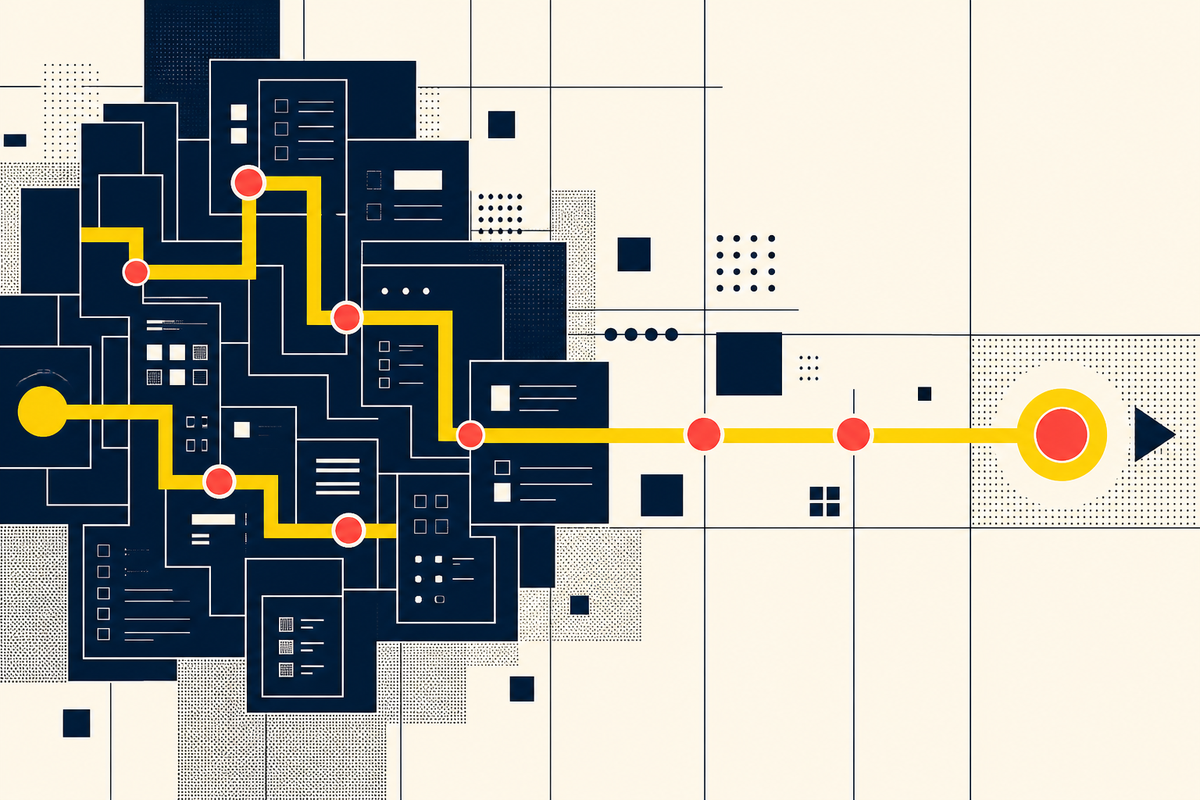
The most expensive software problem often arrives after the contract is signed. The system is configured. The migration is declared complete. The training deck has been uploaded somewhere respectable. Then a person opens the application, pauses over an unfamiliar field, and asks a colleague what to do next. Value leaks out one hesitation at a time.
SAP put a conspicuous price on that gap when it completed the acquisition of WalkMe in September 2024. The all-cash transaction valued the digital adoption company at about $1.5 billion, or $14 a share. That was roughly 45 percent above WalkMe’s closing price before the deal was announced. WalkMe became a wholly owned SAP subsidiary, although SAP said its guidance would continue to work across non-SAP applications.
The purchase looked like a software deal. It was also a bet on human behavior. WalkMe sits over business applications and gives users contextual help, guided steps, and automation while they work. SAP said WalkMe’s AI would add proactive, context-aware assistance to Joule, its copilot. Put beside SAP Signavio, which examines business processes, and LeanIX, which maps enterprise architecture, the logic becomes clearer: understand the systems, understand the process, then help a person execute it.
The last mile has four addresses
“Digital adoption” is a broad label for a narrow moment: somebody needs to do something useful in software and has not done it yet. But the reason changes. A new employee may not know where to click. A trial user may not see why a feature matters. A procurement manager may complete a task in the wrong order. A customer may slowly stop using the product before canceling.
Those are four different failures: navigation, activation, execution, and retention. The products grouped around this market overlap, yet their centers of gravity are distinct. Treating them as identical creates elaborate shortlists and disappointing rollouts.
WalkMe and Apty address the enterprise side of the problem. Both emphasize guidance across complex applications. Apty also stresses workflow monitoring, validations, standard operating procedure enforcement, and evidence that adoption changed a business result. These are useful traits when a task is regulated, repeated across thousands of employees, or costly when performed incorrectly.
UserGuiding and Candu live closer to product and growth teams. UserGuiding combines interactive guides, checklists, tooltips, surveys, analytics, announcements, a knowledge base, and product updates. Candu lets teams build embedded onboarding, empty states, banners, and tours without repeatedly asking engineers to hard-code each experience. Candu says developers install a React or JavaScript snippet once; teams can then use its visual editor to ship changes.
Their promise is speed near the product surface. A team can notice that users miss an integration, test a new empty state, segment the experience, and watch whether activation changes. This work is less about teaching an employee a sprawling ERP and more about helping a customer reach a useful moment before curiosity expires.
SmartKarrot and Churned move farther downstream. SmartKarrot presents itself as a customer-success and key-account management platform. Churned unifies CRM, support, usage, financial, and marketing data, then uses predictive and prescriptive models to identify risk and recommend retention, reactivation, or expansion actions. Neither begins with an arrow pointing at a button. They begin with the account: Is it healthy? What changed? Which intervention is worth making?
The category is easier to buy when the team names the failed behavior before it names a vendor.YesPress analysis
A tooltip is not an outcome
Adoption software can produce wonderfully reassuring numbers: guide starts, tooltip views, checklist completions. They are easy to count and dangerously easy to confuse with value. A guide can be viewed because it is helpful, because it is unavoidable, or because the close button was hard to find.
The stronger measure sits one level below the interface. Did purchase orders contain fewer errors? Did a new account connect its first data source sooner? Did support tickets about a changed workflow fall? Did a customer use more of the capability associated with renewal? The right metric depends on the failure that justified the purchase.
Instrumentation matters here. If the underlying event data is incomplete, a platform may optimize against a partial picture. If identity is fragmented across applications, personalization can become guesswork. If the team has no owner for guidance after launch, helpful prompts decay as the product changes. The overlay itself becomes legacy software.
Ownership is frequently the quiet fault line. Product may write the prompt, customer success may know the recurring confusion, learning and development may own the training material, and IT may control the extension that makes the guidance appear. Each group can do its part while the overall experience drifts. A practical operating model gives one person authority over the workflow, then asks subject-matter experts to review changes on a visible cadence. The owner should be able to retire an intervention as readily as adding one.
There is also a limit to guidance. If users repeatedly need a twelve-step overlay to finish a common task, the underlying product or process may be poorly designed. The adoption layer can reveal that defect, but it should not disguise it forever. Teams need a route for sending recurring friction back to product managers and process owners. Sometimes the best-performing guide is the one that disappears after the form is simplified.
AI sharpens both the opportunity and the risk. It can draft guidance, detect friction patterns, recommend a next action, and personalize support. It can also produce a confident intervention from noisy data. An adoption copilot still needs permissions, accessibility review, change control, and a human who can explain why a recommendation exists.
Steal this four-week pilot
A useful evaluation does not begin with an enterprise-wide rollout. Choose one workflow with visible cost and enough volume to measure. It might be a new-user setup path, an expense approval, a CRM update, or a renewal-risk handoff. Record the baseline before adding guidance.
Keep the intervention small. A validation at one costly field may outperform a twelve-step tour. A better empty state may do more than a video library. An early-warning model is useful only if a customer team can act before the account’s decision is settled. Ask vendors to demonstrate the exact moment, the data required, and the maintenance burden.
Segment the test with care. A first-time user and a weekly operator should not receive the same interruption. Nor should a finance approver and a salesperson merely because both open the same application. Role, experience, account state, language, and assistive-technology needs can change what useful help looks like. Good targeting reduces noise. Bad targeting trains people to dismiss every message on sight.
Then compare total operating cost. No-code reduces dependence on developers, but content still needs design, writing, testing, translation, governance, and upkeep. Enterprise control brings consistency, but it can slow experimentation. Predictive retention can focus a team, but its recommendations depend on connected data and a clear playbook. The license is merely the visible part of the system.
What SAP really bought
WalkMe went public in 2021 at $31 a share. SAP’s $14 offer was well below that debut, even with the 45 percent premium to the unaffected 2024 price. That contrast is a useful brake on acquisition mythology. The deal did not certify every digital adoption promise. It showed that a large enterprise vendor considered the behavior layer valuable enough to own.
For SAP, the prize is proximity to the user across a messy application estate. For the rest of the market, the deal is permission to be more specific. Apty can press workflow assurance. UserGuiding and Candu can move at product-team speed. SmartKarrot and Churned can focus on account health and the economics of retention. Buyers benefit when those distinctions sharpen.
The humble hesitation inside a piece of software has become strategic territory. It is where training meets product design, where process policy meets actual behavior, and where a promised return on software either materializes or disappears. SAP bought a route into that moment. Every other team still has to decide where its users are getting lost.
Questions buyers ask
What is a digital adoption platform?
It is a software layer that provides in-app guidance, support, and analytics so people can learn and complete tasks inside another application.
How much did SAP pay for WalkMe?
SAP completed the all-cash acquisition in September 2024 at $14 a share, an equity value of about $1.5 billion.
Did WalkMe stop supporting non-SAP software?
No. SAP said WalkMe would continue supporting workflows across SAP and non-SAP applications.
Are all six products direct substitutes?
No. They overlap, but their public positioning spans in-product onboarding, enterprise workflow execution, customer-success operations, and predictive retention.
What should an adoption pilot measure?
Measure a business behavior such as completion time, error rate, activation, support demand, or retention against a baseline. Guide views alone do not prove adoption.