A customer gets stuck at 10:42 on a Tuesday morning. The button is visible, the intention is clear, but the next step is not. They could open a ticket. They could search the web. They could also close the tab. In software, that small pause is often filed under support. It belongs just as much to product design.
Archbee has built its business around this neglected interval. Founded in 2019 by Romanian software entrepreneur Dragoș Bulugean, the company gives product and engineering teams a place to write, review, publish and search technical knowledge. Its pitch has evolved from a documentation hub into something closer to a knowledge portal: a public or private surface where product guides, API references and developer instructions can answer a question while the question still matters.
The company is independent. There is no public evidence that Upland Software owns Archbee, a distinction worth making because the two names appear together in the source trail behind this story. The link runs through Localytics, the mobile analytics and personalization company that Upland acquired in 2020. An Archbee article on user adoption cites Upland-linked Localytics research reporting that roughly one in four users abandoned an app after a single use. The figure came from an older analysis of 37,000 apps across 2.7 billion devices, so it is better read as a historical signal than a current universal benchmark. The behavior it describes remains familiar: when value is hard to reach, people leave.
The answer is part of the interface
Documentation used to be treated like packaging. Engineers shipped the product; someone else explained it. That separation creates a predictable delay. The software changes in hours, the help center changes in weeks, and users learn to distrust whichever page ranks first. A stale answer is worse than no answer because it sends a confident user in the wrong direction.
Archbee's product choices address that maintenance problem as much as the act of writing. Teams can reuse content blocks, keep document histories, manage versions, collaborate in real time and connect Markdown-based engineering workflows with an editor that non-engineers can use. API references, product guides and internal notes can sit within one system while access controls determine who sees what. The useful idea to steal is not a feature. It is the loop: the people closest to a change need a short path to correcting the explanation of that change.
“We are talking about the knowledge that makes your business what it is.”Dragoș Bulugean, founder of Archbee, quoted by Forbes in 2021
Bulugean arrived at the problem through software consulting. He and his colleagues repeatedly struggled to get easy access to essential company knowledge. The frustration was mundane, which is precisely why it was promising. A spectacular failure gets a postmortem. Ten daily interruptions become culture. Archbee packages an alternative: make the answer findable, then make its upkeep part of normal work.
Retention begins before the dashboard
Upland's role in this story is useful because Localytics measures the outcome that documentation can influence but cannot claim on its own. Its retention dashboard tracks whether first-time users return and lets teams compare that behavior across sessions or events. Documentation operates upstream. It can clarify setup, expose a capability, explain an error and help someone complete a task. None of those actions guarantees retention. Each removes a reason to quit.
That distinction matters. Documentation vendors are tempted to promise lower tickets, faster onboarding and higher conversion in one breath. The honest version is more conditional. A good portal creates the possibility of self-service. Teams still need accurate content, sensible navigation, useful examples and an owner who notices when reality changes. AI search does not remove this work. It raises the cost of neglect because a system can now deliver an outdated instruction with impressive speed.
Archbee says its AI answers draw on a company's own documentation. It also says customer data is not used to train machine-learning models. Those are practical assurances, but they do not solve the editorial question: which source deserves trust? The best implementation gives every important page an owner, a review date and a path back to the product team. When an answer fails, the failure should produce a content task, not disappear into a search log.
What teams can borrow today
A company does not need to buy Archbee to adopt the underlying discipline. Start with the 20 questions that produce the most support work. Pair each with the product action the user is trying to complete. Then test the path as a stranger would: search, scan, act. If the answer requires internal vocabulary the user has never seen, the page is organized around the company rather than the task.
Next, separate source material from presentation. One fact, such as a rate limit or authentication requirement, may appear in a guide, an API reference and an onboarding checklist. Reusable content reduces drift, but only if the shared block has a clear owner. Versioning matters for the same reason. A correct answer for release 4 can be an error in release 5.
Finally, measure recovery rather than attention. Page views show demand, not success. Useful signals include whether a reader returns to the product, completes the intended event, repeats the search, opens a ticket or reports that the answer failed. Localytics' event-based retention model offers a helpful mental frame: define the first event and the return event. Documentation should help explain what happened in between.
There is also a useful weekly ritual hiding here. Put one product manager, one support lead and one engineer in the same 30-minute review. Bring the failed searches, repeated tickets and pages attached to a recent release. Pick three fixes, assign each to a person and publish them before the next meeting. The exercise links customer language to technical truth. Over time, it also reveals which parts of the interface repeatedly require explanation. Some questions deserve a better article. Others are evidence that the product itself should change.
A portal, not a pile
Archbee lists product and engineering teams at companies including Adobe, Cisco and Bosch among its users and showcases public portals from a range of software, fintech and hardware businesses. Customer stories describe familiar gains: non-engineers can update material, API documentation looks more professional, and support teams receive fewer elementary questions. These accounts are selected by the vendor, so they are evidence of possible use cases rather than a neutral performance study.
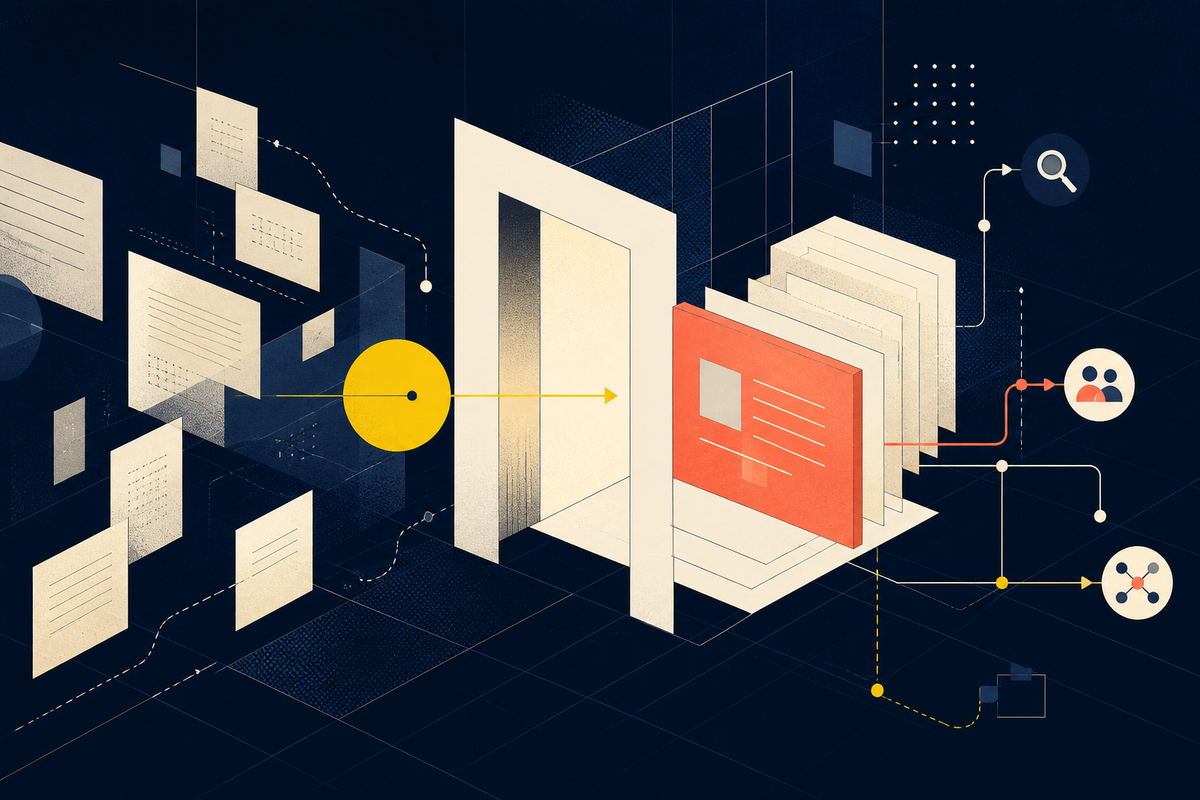
The product also reflects a wider shift in technical communication. Documentation is becoming less like a shelf of manuals and more like a service layer. It appears inside apps, feeds search and answer systems, supports multiple languages and changes alongside releases. Archbee's app widget, docs-as-code synchronization, conditional content and AI-assisted search all follow that direction. The portal becomes a view over living knowledge rather than the final destination of a PDF.
There is a risk in this framing. Once documentation becomes infrastructure, teams can mistake infrastructure for understanding. A polished portal can still bury the crucial sentence. An instant answer can still answer the wrong question. The editorial work remains stubbornly human: observe confusion, choose what matters, explain it plainly and revise when the explanation fails.
That may be Archbee's most durable opportunity. Software keeps acquiring more features, more interfaces and now more agents. Users do not need another place to admire the complexity. They need a reliable route through it. The winning documentation system will be the one that helps a person return to the product with enough confidence to finish the job.
Frequently asked questions
What is Archbee?
Archbee is a cloud-based platform for creating, publishing and searching product documentation, developer guides, API references and knowledge portals.
Is Archbee owned by Upland Software?
No public source reviewed for this profile shows that Upland owns Archbee. The connection is Archbee's citation of retention research associated with Localytics, which Upland acquired in 2020.
Who founded Archbee?
Dragoș Bulugean founded Archbee in 2019 after encountering knowledge-access problems during his software consulting work.
What can a team do with Archbee?
Teams can write and review docs, publish branded portals, maintain API references, reuse content, manage versions and offer AI-assisted answers grounded in their documentation.
Is Archbee part of Y Combinator?
Yes. Archbee participated in Y Combinator's Summer 2021 batch and remains listed as active in its company directory.