A pill looks like an object. To the body, it is an itinerary. It must dissolve, pass through biological barriers, reach the bloodstream, visit the right tissues and survive long enough to do something useful. Each stage offers an opportunity for disappointment. A molecule can be beautifully designed and still be a dreadful traveller.
Simulations Plus makes software for that itinerary. Its customers are the pharmaceutical scientists, biotechnology teams and regulatory researchers trying to work out what a compound will do before they spend more time and money discovering it experimentally. The company also supplies the scientists who can help build, interpret and defend the models. A convincing graph requires rather more than attractive axes.
- The job: model drug properties, absorption, patient variability and safety.
- The tools: GastroPlus, ADMET Predictor, MonolixSuite and DILIsym, alongside QSP and training products.
- The business: software licences plus scientific services.
- The turn: Altaris agreed to buy it for about $375 million in June 2026; the latest verified August update still described a pending deal.
A pill is a journey, not an object
Consider a practical question: should a developer change a tablet’s formulation? The active ingredient may be unchanged, but the way it dissolves can alter exposure. A meal can complicate the picture. So can another medicine. The useful question is no longer simply whether the molecule works. It is whether the proposed product delivers the right amount under the conditions in which people will take it.
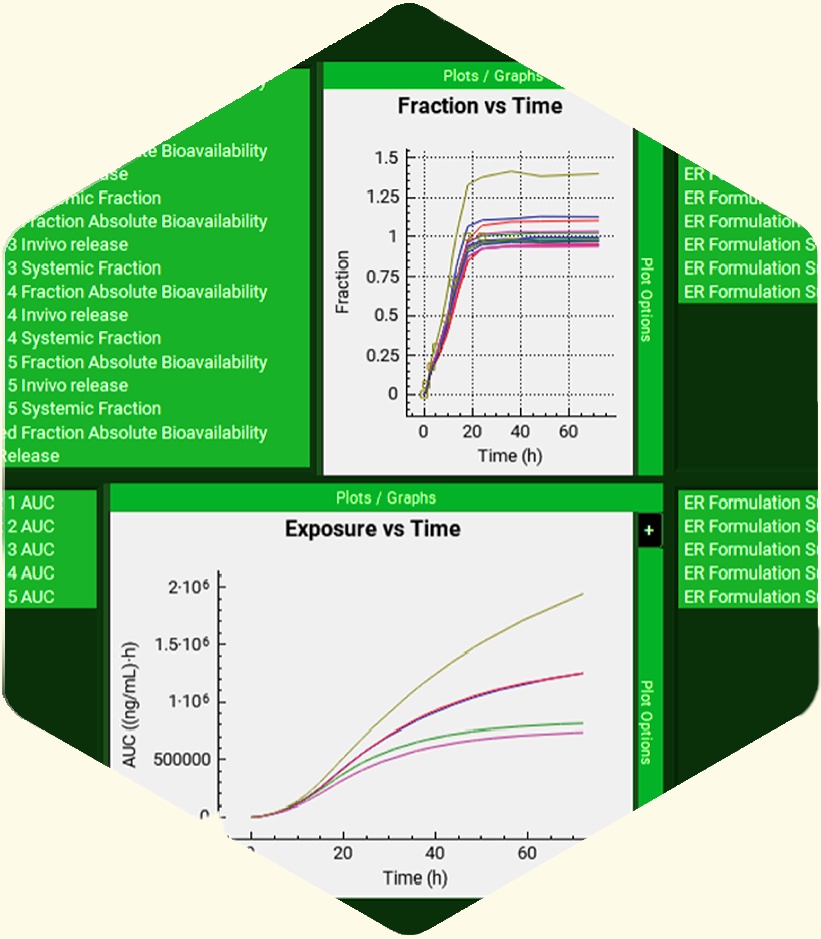
GastroPlus addresses questions like these through physiologically based pharmacokinetic modeling, usually shortened to PBPK. The software represents physiological processes and the properties of the drug, then calculates their consequences. Its advertised uses include anticipating food effects, comparing formulations, planning first-in-human doses and assessing drug interactions. It covers several administration routes, including oral, intravenous and inhaled delivery.
The appeal is practical: explore alternatives while changing a parameter is still easier than changing a study. A model can help decide which experiment would be informative, or which dosing scenario deserves scrutiny. The experiment then supplies evidence with which to question the model. That exchange is where the work becomes scientific.
The rocket engineer and the gut
There is an agreeable peculiarity in the company’s origins. Walter Woltosz worked on space-shuttle ascent trajectory simulation before helping establish a business concerned with a very different kind of journey. The analogy is irresistible, though the scientific problems are distinct: write down the system, account for its constraints, and calculate how it might behave.
Walter and Virginia Woltosz cofounded Simulations Plus in California in 1996. The company credits Michael Bolger, who joined that year, with programming the first version of GastroPlus in 1997. This was software built around a particular scientific problem, years before today’s enthusiasm for putting an AI assistant beside every spreadsheet.

Woltosz also established Words+, the communication-technology company whose systems included one formerly used by Stephen Hawking. That history gives the founder an unusually varied relationship with computers: calculating motion, enabling expression, and helping researchers reason about medicines. It is an origin with more substance than the customary garage anecdote.
Four different ways to ask what could go wrong
A drug-development team does not have one modeling problem. It has a succession of them. ADMET Predictor starts with molecular structure and estimates properties associated with absorption, distribution, metabolism, excretion and toxicity. Its machine-learning tools help chemists prioritise compounds and can be refined using an organisation’s own experimental data. Choosing which molecule to make is already a decision about development risk.
MonolixSuite tackles variability among individuals. It joins PKanalix for analysis, Monolix for population modeling and Simulx for simulation. Researchers can examine relationships between exposure and response, investigate patient characteristics and compare trial scenarios. The point is to learn something that a reassuring average may conceal. Patients have a tiresome habit of being different from one another.
DILIsym concentrates on drug-induced liver injury. It combines biological pathways, laboratory data and clinical context to investigate mechanisms and evaluate dosing or mitigation scenarios. The company’s product page describes work involving Astellas and Biohaven and reports use in regulatory submissions for 38 compounds. Those are examples of support for development decisions, rather than a promise that a simulated liver can certify a drug’s safety.
Quantitative systems pharmacology, or QSP, extends the portfolio into disease biology and treatment effects. Thales and the company’s library models belong here. Across the portfolio, the distinction is useful: predicting a molecular property, calculating exposure, estimating population variability and modeling a biological mechanism are related jobs, with different data and assumptions.
The business of explaining the equation
Customers can license the tools, engage consultants, or combine the two. Services cover discovery, clinical pharmacology, pharmacometrics, mechanistic modeling and regulatory work. Training and coaching help teams acquire the expertise to use the products. The commercial logic is straightforward: the calculation is valuable, and so is knowing which calculation the question requires.
That places Simulations Plus within specialist scientific software and outsourced expertise. Certara’s Simcyp and Phoenix products offer alternatives in overlapping workflows; Optibrium, ICON and Metrum Research Group appear among the alternatives identified in company filings. A comparison needs a specific job description. Buying software for a formulation problem is a different exercise from hiring support for a population analysis.
The company’s customers include pharmaceutical and biotech organisations, academic researchers and regulatory agencies. Allucent and LYO-X appear in public MonolixSuite testimonials. In January 2025, Simulations Plus said its software and consulting had supported development of a majority of drugs approved by the FDA in 2024. The operative word is “supported”: many teams and technologies contribute to an approval.
There is also a less conspicuous source of product development. In January 2025, the Enabling Technologies Consortium agreed to a funded collaboration supplying industry data and support for improvements to GastroPlus’s absorption model. It connects a shared practical problem with the evidence needed to improve the software. That is a more tangible relationship than a partnership logo wall.
A $100 million lesson in expansion
Simulations Plus widened its remit in June 2024 by purchasing Pro-ficiency for approximately $100 million in cash. The addition brought simulation-enabled learning and clinical and commercial support. Here, simulation meant rehearsing people’s decisions and execution as well as calculating a compound’s behaviour. The company was reaching further across drug development.
The expansion disappointed. Its fiscal 2025 filing records $72.2 million in impairment charges attributable to the Pro-ficiency acquisition. Underperformance against revenue forecasts was among the triggers for the broader impairment assessment. An impairment is an accounting reduction in asset value, not another cheque for the same amount. It is nevertheless a public admission that previous expectations no longer hold.
Pro-ficiency · 2024
Pro-ficiency · fiscal 2025
Altaris proposal · 2026
In June 2026, Altaris agreed to acquire Simulations Plus for $18.50 per share, approximately $375 million. It anticipated combining the company with Chemical Computing Group, which supplies molecular design software. The proposed fit joins earlier molecular-design work with development modeling. Management’s stated rationale included integrated AI platforms, cloud infrastructure and more predictable subscription models.
The August 13 announcement reported expiry of the US antitrust waiting period but listed remaining conditions, including shareholder approval and certain French regulatory approvals. It still described the acquisition as pending. The strategic story can be discussed without awarding the transaction a finish line it had not yet publicly crossed in that update.
AI must bring its working
Composer is the company’s attempt to connect scientific engines through an AI workflow layer. Its public page offers a waitlist and describes natural-language requests, model setup, parameter exploration and auditable execution. The promise is to reduce the manual traffic between tools while keeping the calculations inspectable.
In June 2026, Simulations Plus announced that it was building Composer’s agentic layer using NVIDIA’s BioNeMo Agent Toolkit. The collaboration includes evidence extraction from scientific literature and work on GPU-accelerated QSP solvers. These are development initiatives, not proof of a fully autonomous drug-development process.
“Our goal is to help researchers move from question to insight more efficiently while keeping validated science at the center of decision-making.”
Shawn O’Connor, CEO · June 2026
Borrow the habit of a rehearsal
A reader need not buy the whole portfolio to borrow the method. Start with a decision: which formulation, which dose, which experiment? Choose a model that addresses it. Compare predictions with observations. Examine inputs that move the result. Record the assumptions so someone else can challenge them. These are practical lessons suggested by the company’s workflows, rather than a guaranteed recipe for success.
The approach becomes less useful when the data are poor, the chemistry sits outside a predictive model’s experience, or the biological mechanism that matters is missing. A persuasive interface cannot supply absent evidence. Scientific judgment remains part of the purchase, whether it sits inside the customer’s team or arrives through consulting.
Simulations Plus sells a way to make uncertainty visible early enough to act on it. Its own acquisition history supplies a fitting reminder: forecasts deserve testing in business as well as biology. The most valuable rehearsal leaves the people running it better prepared to discover that they were wrong.