A small change in a laboratory protocol can make a large claim look foolish. In a Crystal Bio Solutions case study, scientists changed the minimum required dilution of a neutralizing-antibody assay from 1:4 to 1:2. Detection of the positive control improved from 200 nanograms per milliliter to 50. Drug tolerance rose from 1 to 5 micrograms per milliliter. The test had not acquired a more expensive instrument. Someone had asked whether the sample was being diluted out of the conversation.
- Crystal Bio Solutions is a contract research organization serving biotech and pharmaceutical drug developers.
- Its two U.S. labs handle bioanalysis, biomarkers, immunogenicity, and biologics CMC characterization.
- In 2025 it added quantitative clinical pharmacology, linking laboratory measurements to dose and trial decisions.
- The company sells scoped scientific services; it publishes no standard project price.
The result is interesting because the work sounds so unromantic. Minimum required dilution is the kind of phrase that empties a dinner party. Yet a neutralizing-antibody test helps determine whether a patient’s immune system is interfering with a treatment. A false or weak signal can cloud a drug program’s understanding of safety and efficacy. The useful lesson is not that every team should halve its dilution. It is that every team should test whether the assay is fit for the drug, the biological matrix, and the decision at hand.
The company behind the sample
Crystal Bio Solutions is a U.S. CRO owned by Crystal Pharmatech. It operates a 10,000-square-foot GLP/GcLP bioanalytical and biomarker lab in Pleasanton, California, and a 5,300-square-foot biologics CMC analytical lab in Cranbury, New Jersey. The former asks what a drug and its biological effects look like in samples. The latter asks what the drug itself is, how it varies, and whether manufacturing changes alter it. Those questions meet at a sponsor’s most uncomfortable moments: choosing a dose, explaining an unexpected immune response, or defending a product before a regulator.
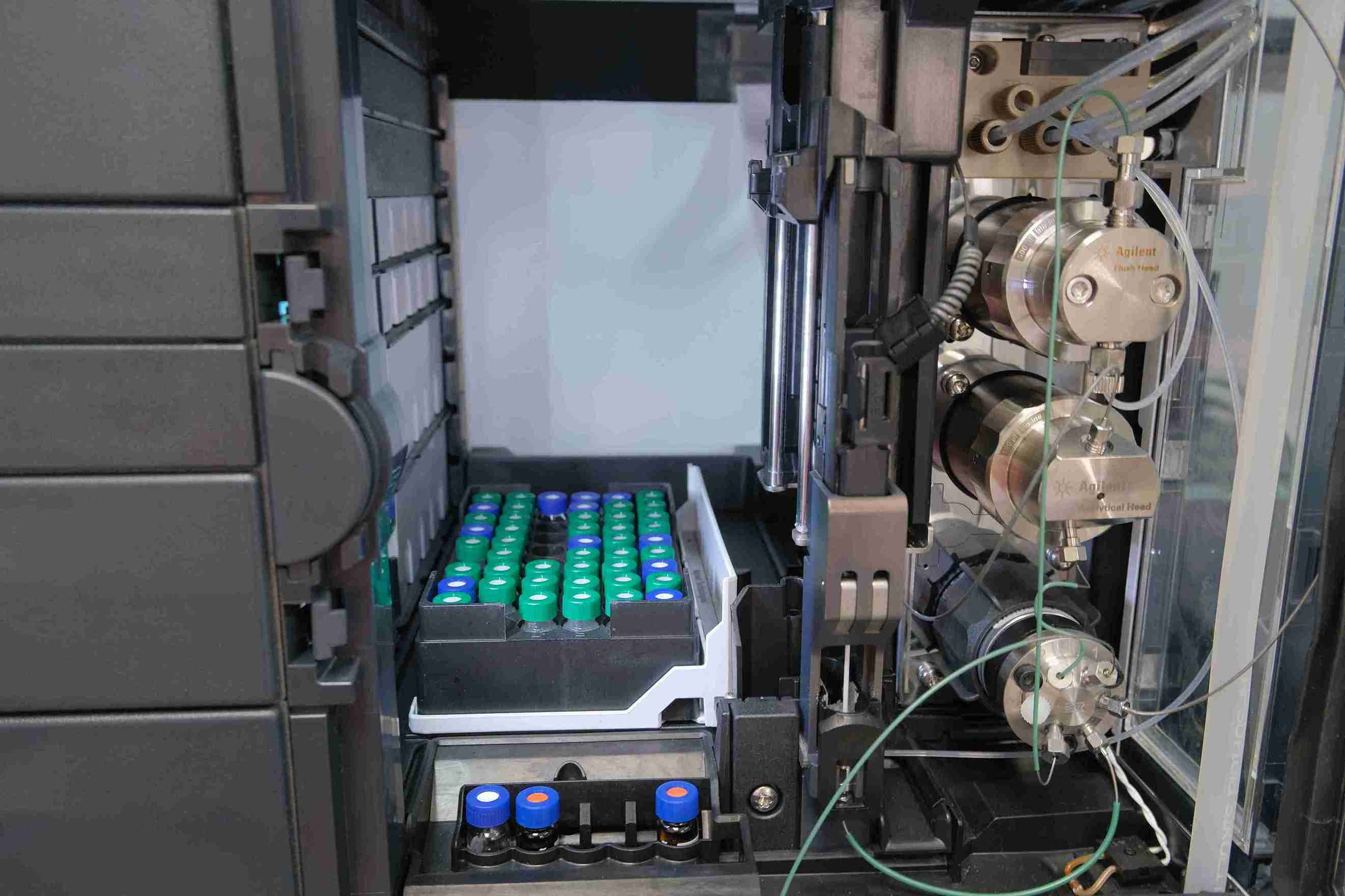
Customers are pharmaceutical companies and biotechnology teams, especially developers of biologics, antibody-drug conjugates, cell and gene therapies, and nucleic-acid medicines. A small biotech with one complicated molecule may need an assay its own staff cannot validate in time. A large sponsor may need extra capacity or a particular technique. Crystal Bio Solutions supplies scientists, methods, laboratory work, interpretation, and documentation under a project-based contract. There is no public menu of fixed prices. Cost depends on the molecule, method, validation standard, sample volume, timeline, and reporting obligations.
Its laboratory menu is broad but concrete. Immunoassays measure drugs and anti-drug antibodies. LC-MS can quantify payloads, peptides, oligonucleotides, and other analytes when a ligand-binding assay is the wrong tool. Flow cytometry reads immune-cell populations; ELISpot counts cellular responses; molecular methods include qPCR and ddPCR. For CMC work, chromatography, electrophoresis, mass spectrometry, and potency assays characterize identity, purity, structural variation, aggregation, stability, and function. This is not a software product. The product is a defensible measurement and the expertise to interpret it.
What failed first?
In the published assay example, the first weak point was not the drug candidate. It was the assay setting: the original dilution limited positive-control detection and drug tolerance. Crystal Bio Solutions reports that the adjusted setting improved both measures without unacceptable matrix interference. The company has also described a different immunogenicity problem in which an unrepresentative pooled matrix skewed an anti-drug-antibody screening cut point, producing excessive false positives. These are case studies, not comparative clinical outcomes. Still, they reveal the same habit: inspect the measurement before treating it as reality.
A dose model is a splendid calculator. It cannot rescue a bad number.
For the reader running a program, this is immediately copyable. Ask what decision the assay must support; define acceptable sensitivity and drug tolerance for the expected concentration range; challenge the choice of control matrix; then test dilution and interference before locking the method. A smaller dilution is not automatically better. It can increase matrix effects, and different drugs bring different interference. The point is to make the tradeoff visible while changes are still cheap.
Why the company changed its brief
The corporate story has several birthdays. Crystal Pharmatech began in small-molecule solid-form research in 2010. The Crystal Bio operation had recruited biologics leaders by 2024: Shiaw-Lin “Billy” Wu joined as co-founder and scientific chief; Ye Gu followed as co-founder and technology chief. That year it announced a joint laboratory with CATUG for nucleic-acid analytical services. In 2025, the parent said it had acquired U.S. GLP bioanalytical laboratories and combined them with its New Jersey biologics CMC capability under the Crystal Bio Solutions brand. The company’s LinkedIn profile lists 2018 as its founding year. These dates describe different layers of the business, not one tidy origin scene.

The more revealing turn came in September 2025. Crystal Bio Solutions launched a quantitative clinical pharmacology group and appointed Lorin Roskos, a veteran of Amgen, AstraZeneca, and Exelixis, to lead it. That service adds population pharmacokinetic and pharmacodynamic modeling, exposure-response analysis, dose optimization, trial simulation, biostatistics, and regulatory-ready outputs. Alex Chen, the company’s CEO, described the ambition this way: “By integrating quantitative clinical pharmacology, bioanalysis, and CMC capabilities, we are building an advanced decision-support system.” It changes the pitch from “we can measure your sample” to “we can help decide what the measurements mean for the next study.”
That is its clearest difference in a crowded CRO market. Many vendors can perform an assay or build a model. Crystal Bio Solutions is assembling bioanalysis, biomarkers, CMC analytics, modeling, and regulatory writing around the same development question. Its parent adds small-molecule solid-form and formulation capabilities, while a global network connects U.S., China, and European expertise. The claim should be judged project by project: integration is valuable only if the teams really exchange assumptions, data definitions, and timing. A logo spanning services does not by itself remove handoffs.
The price of being wrong
Biologics are untidy objects. An antibody-drug conjugate, for instance, is an antibody carrying a payload through a linker. A sponsor may need to measure the conjugated antibody, total antibody, free payload, drug-to-antibody ratio, immune response, and the material’s structural stability. A single test cannot answer all of that. CMC data describe the product; bioanalysis describes exposure and biological response; clinical pharmacology connects those observations to dose. Regulatory staff then make the argument legible to an agency.
This is where Crystal Bio Solutions fits: between the sponsor’s molecule and the sponsor’s next expensive commitment. It cannot promise that a drug will work, and the public record does not establish a universal cost or time saving. It can help a team find whether its evidence is adequate before a weak assay, an uncharacterized variant, or a fragile dose rationale travels further. In drug development, certainty is rarely available for purchase. Better questions sometimes are.