The Mission Pivot
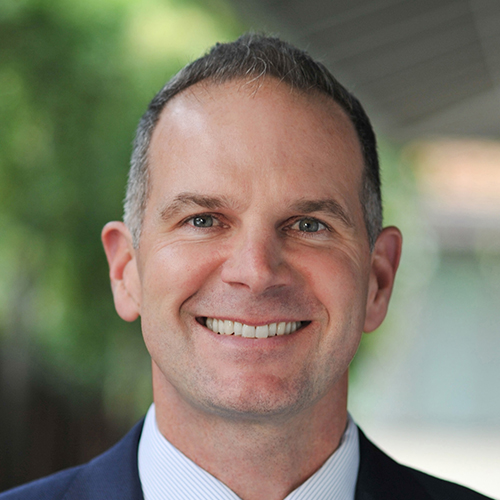
Somewhere between selling a controlling stake in GoHealth Urgent Care to TPG Growth in 2014 and staring at California's Medicaid-covered senior population, Si France made a calculation that most operators avoid. He had built and sold a company. He had the resume, the network, the exit. And he chose to walk toward the harder problem.
The problem was this: frail, low-income seniors with complex medical needs were being funneled into nursing homes not because nursing homes were good for them - but because nothing else existed at scale. France knew the data. He had seen the research at McKinsey. PACE (Program of All-Inclusive Care for the Elderly) kept people in their homes, improved clinical outcomes, and cost Medicare and Medicaid less than residential care. It was well-documented, widely praised, and chronically underfunded. And until a Medicare rule change opened the program to for-profit operators, it had been structurally unavailable to the entrepreneurs who might actually scale it.
France saw the rule change. He called two doctors he had worked with at McKinsey - Vaneesh Soni and Matt Patterson. In 2015, they founded WelbeHealth together and opened the first four for-profit PACE organizations in United States history.
I wanted to go create this organization where people weren't resources in some kind of capitalist plan. We cared about people.
- Si France, Entrepreneur.com interviewFrom the Football Field to Two Medical Schools
France arrived at college on a football scholarship. He was a better student than he was a quarterback - a fact he apparently recognized quickly enough to redirect his energy toward academics. His undergraduate degree in Business Administration from University of Puget Sound was followed by pre-med coursework at Harvard and then the dual MD/MBA at Dartmouth: the Geisel School of Medicine for the MD, Tuck School of Business for the MBA.
At Dartmouth he found mentors who changed the shape of his career. Dr. Michael Zubkoff, director of the MD/MBA program, pushed him toward the joint degree. Geisel faculty including Dr. Jack Wennberg and Dr. Elliott Fisher - both giants in health services research - gave him the empirical foundation for thinking about healthcare outcomes at a population level. It was, he has said, at Geisel that he developed the sense of calling that would eventually lead to WelbeHealth.
A single lecture at Tuck on industry rollups planted the seed for GoHealth. France recognized that independent urgent care centers were fragmented, under-branded, and poorly positioned relative to the major health systems that wanted to expand access without building their own ambulatory infrastructure. He saw a consolidation play. He executed it.
"It was at Geisel that I developed this sense of calling to follow in [doctors'] footsteps. And when I came over to Tuck, I learned how."
GoHealth: The Practice Run
Between 2011 and 2014, France built GoHealth Urgent Care into a network of urgent care centers that partnered with leading nonprofit health systems. The model was straightforward in theory - bring independent facilities into branded networks, tie them to hospital systems that needed ambulatory reach, and deliver consistent quality and patient experience across the footprint. Executing it was less straightforward.
By 2014 the company had scaled to more than 150 centers. TPG Growth bought a controlling stake. France stepped away. GoHealth continued to grow - it now operates more than 200 centers across the country. But France had already moved on, not toward the next exit, but toward something different.
He has said it plainly: GoHealth was a business. WelbeHealth is a mission. The difference, for France, is not rhetorical. It shapes how WelbeHealth recruits, compensates, makes decisions, and measures itself. He describes it as a "courage to love" culture - a phrase that reads slightly strange in a Silicon Valley context, which is exactly the point.
We started the company to create a culture based on a mission and values system different from what is more traditional in Silicon Valley.
- Si France, WelbeHealthWelbeHealth: What PACE Actually Means
PACE - Program of All-Inclusive Care for the Elderly - was designed for people nursing home administrators quietly refer to as their target population: adults 55 and older who are medically complex, low-income, and frail enough to require nursing home-level care but who, given the right support, can continue living at home. PACE wraps them in an 11-person integrated care team. Medical care, dental care, physical therapy, occupational therapy, transportation to appointments, meals, personal care, home health support - all coordinated. All covered under Medicare and Medicaid capitation payments.
The outcomes data is striking. When seniors enroll in PACE, their life expectancy increases by one-third. Clinical scores improve. And the per-patient cost to the government drops by $10,000 annually compared to nursing home placement. France knows this number. He leads with it. It is the clearest possible case that WelbeHealth's model is good for patients and good for taxpayers simultaneously.
Before WelbeHealth, PACE was entirely nonprofit. The model worked but didn't scale. France's thesis was that for-profit PACE could bring the capital efficiency and operational rigor needed to expand into communities that nonprofits had never reached. He picked expansion markets not by population density or revenue potential, but by ranking western US communities by unmet senior care need. The first Coachella Valley PACE center WelbeHealth opened had no competing program within 70 miles in any direction.
Building the Culture He Described
France has been deliberate about culture in ways that are unusual for a growth-stage healthcare operator. The phrase "courage to love" - which appears throughout WelbeHealth's communications - comes from France's conviction that caring for medically frail seniors requires a kind of organizational courage that most healthcare companies don't ask of their teams. Nurses, therapists, drivers, and care coordinators are asked not just to meet clinical targets, but to see patients "through the eyes of their loved ones."
He credits McKinsey for giving him tools: how to build a principles-driven organization, how to communicate clearly across functions, how to translate analytical rigor into operational decisions. But he distinguishes between those tools and the values that animate WelbeHealth. The tools came from McKinsey. The values came from somewhere else.
WelbeHealth now employs more than 900 people across California. Annual revenue has reached $150.6 million. The company has raised $61.2 million across multiple funding rounds, including a $30 million Series C in early 2020. France serves simultaneously as CEO and as a Health Commissioner for San Mateo County's 145,000-member Medicaid plan - a role that puts him inside the policy machinery that shapes the very program WelbeHealth operates.
When people enroll in PACE, their life expectancy goes up by one-third, clinical scores improve, and it even saves taxpayers $10,000 per patient annually.
- Si France, WelbeHealthThe Expansion Map
WelbeHealth's California expansion has followed France's original playbook of matching need to geography. Los Angeles County, where the senior population is projected to grow 25 percent by 2030, got centers in Rosemead, North Hollywood, Long Beach, and Carson. The Bay Area was a natural anchor. Then came Fresno, Modesto, Stockton, Pasadena. In 2024, Riverside and Coachella Valley. In 2025, Elk Grove and San Bernardino.
Each opening is a bet on a specific community's unmet need - and on the PACE model's ability to serve seniors who would otherwise cycle through emergency rooms, short-term rehabilitation facilities, and eventually nursing homes. France has said the goal is to serve seniors with "better quality and compassion" through what he calls WelbeHealth's dedicated care teams. The language is deliberate, repeated, and operationalized.
France also returns to Dartmouth as a guest lecturer and serves on the MD-MBA Advisory Committee at Tuck, maintaining the connection to the school where his career took its shape. It is the kind of loop that characterizes how he builds: find the mentors, become the model, train the next generation.
What He Is Building Toward
France's stated aspiration is to unlock the full potential of vulnerable seniors through PACE - to make it possible for every frail senior, regardless of income, to live in their own home and community rather than a nursing facility. That aspiration is both personal and structural. Personal, because he has described a shift in his own values that drove him away from pure business optimization. Structural, because WelbeHealth's model only works if the organizational culture, the care team design, the technology infrastructure, and the policy environment align.
He has spent a decade proving that for-profit PACE can be done with integrity. The data says it works. The expansion map says it scales. And the culture he has built around a phrase as unusual as "courage to love" suggests that France is not optimizing for the exit. He is optimizing for something harder to measure and considerably more durable.