By the third reminder, Shihab Muhammed had become a small administrative problem. His HR team wanted an employee satisfaction survey completed. He understood the purpose. He appreciated the effort. He still did not particularly want to do it. Meanwhile, a colleague could send him a message on WhatsApp or Google Hangouts and get a prompt reply. The same person, the same phone, quite different levels of enthusiasm.
This is a pleasingly awkward place for a software business to begin. The future founder of SurveySparrow was among the people creating the problem he would eventually sell a solution to. He had no objection to giving an opinion. The invitation was putting him off. Somewhere between a questionnaire and a conversation, a willing participant had disappeared.
Muhammed paid attention to that disappearance. He had spent years building software at Zoho and Freshworks. Now he was considering the experience of the person at the other end of it: someone with a few minutes, a small screen and several better offers for their attention. A survey had to earn its answers.
An engineer learns to change jobs without leaving
His route into software was less orderly than a polished founder biography might suggest. He studied electronics and communication engineering at Cochin University of Science and Technology, attending from 2002 to 2006. A computer science degree was absent from the equipment he brought to his first product job.
At Zoho, he learned Java and encountered the people who would shape the next part of his working life. Among them was Girish Mathrubootham. Muhammed subsequently became employee number three at Freshdesk, the company later known as Freshworks, joining the venture built by Mathrubootham and Shan Krishnasamy.
The early operation was physically modest. Muhammed has described six people working in a small space above a workshop. At first, earning enough to match their previous salaries was an ambition in itself. Later descriptions of startup success tend to leave such arithmetic outside the frame. For the people doing the work, it belongs near the centre.
As Freshworks grew, his responsibilities expanded from development to product and business leadership. He eventually ran the Freshservice business unit. Coding was one part of an increasingly crowded job description. Sales, marketing, demonstrations and support became practical subjects, learned while a business was expecting him to deliver.
His advice to other founders has included the instruction to change roles as the company grows. Familiar work can become an attachment. A task that once demanded the founder's attention may eventually need someone else's ownership. There is a peculiar promotion involved: doing well enough at a job to make yourself leave it.
- ZohoLearn the craft
- FreshworksRun the business
- SurveySparrowBuild his own
A hundred square feet, and room for a question
In 2017, he started SurveySparrow with Subin Sebastian, a college friend and former Zoho engineer. They built in Kochi. Chennai had given Muhammed a close view of the software business; Kerala offered a place to make the next one.
There was a household decision in the move as well as a business decision. He and his wife wanted to return to Kochi. In explaining the choice, he also described a hiring pool of programmers, writers and designers who could contribute to a software company without necessarily arriving with a SaaS career already behind them.
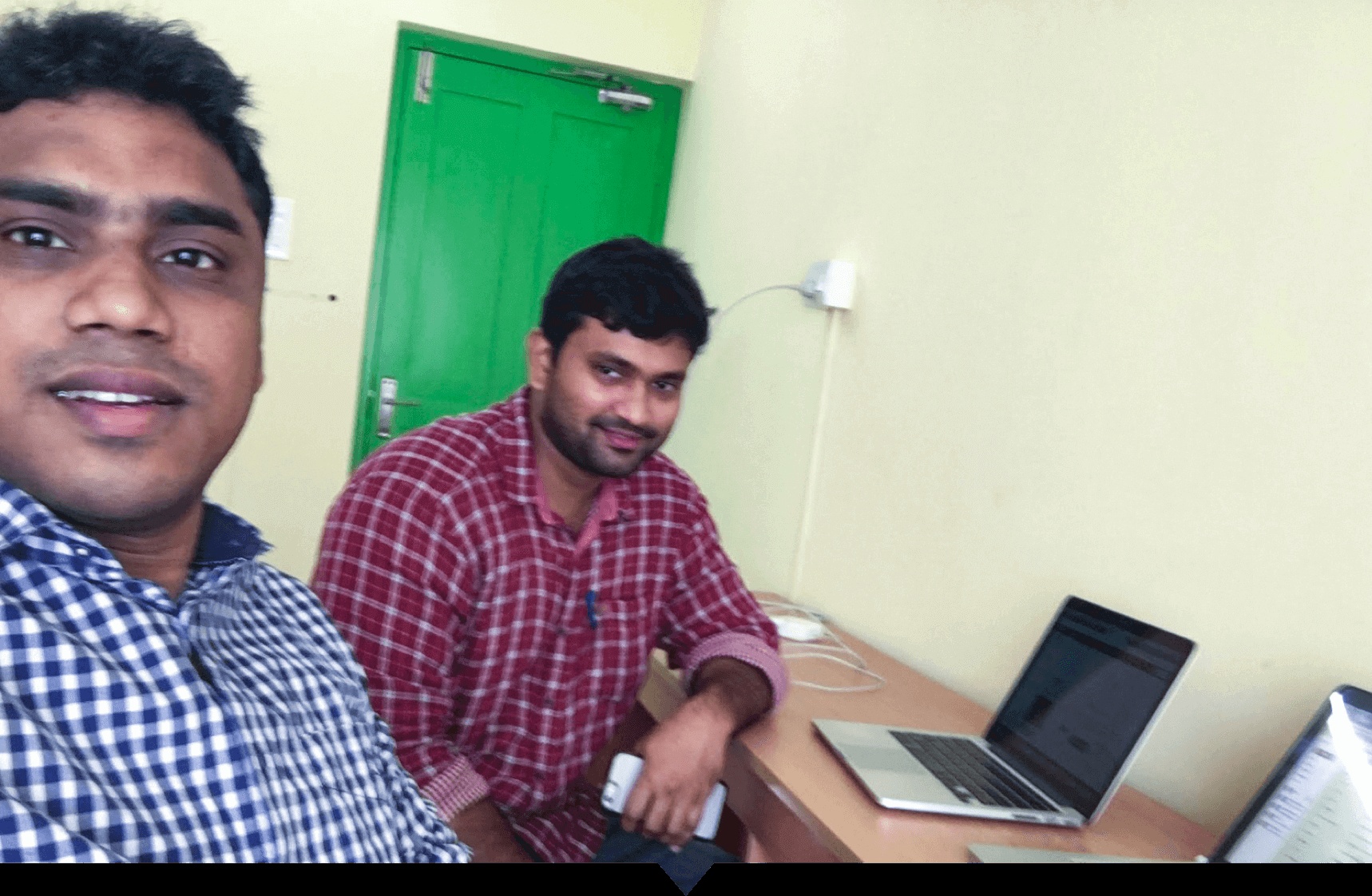
The earliest office occupied 100 square feet. Sebastian had been preparing to leave for Australia when Muhammed put the idea to him. He stayed. The first-office photograph has desks, laptops and a conspicuously green door. It has very little need of a real-estate brochure.
The product launched in October 2017. Its central proposition was straightforward: a survey could arrive with the rhythm and familiarity of a conversation. People were already comfortable answering questions in messaging apps. A business requesting feedback could take a little more care over how it asked.
That choice put the respondent's experience beside the buyer's needs. The company purchasing survey software wants information. The person providing it usually has no reason to admire the purchasing decision. They experience the questions, the screen and the time required. Their willingness to continue is part of the product.
The useful word in “minimum usable”
Muhammed favours the idea of a minimum usable product. The distinction concerns the point at which a customer can comfortably put the software to work. A demonstration may establish that something functions. Daily use asks rather more of it.
SurveySparrow's first version took about six months to build. A telling detail was support for a customer's own branding. A business sending questions to its customers wanted the experience to look like its own. That requirement might seem peripheral beside the survey engine; for the company actually distributing a survey, it mattered.
His competitive judgment followed a similar line. SurveyMonkey and Qualtrics had already established that people would buy survey software. Muhammed saw room to compete on usability and to serve the middle of the market. Entering a populated category meant the need was visible. It also meant customers had alternatives, and could compare the experience directly.
“employees, customers, and investors in that order”
Shihab Muhammed, describing the people he wanted his company to be loved by, 2020
In April 2019, SurveySparrow announced $1.4 million in seed funding from Prime Venture Partners. At the time, the company reported more than 8,000 customers across 108 countries. The figures describe that particular stage of the business, when a company conceived in a small Kochi room was already serving users well beyond it.
The funding was intended to support product development and a broader ambition: collecting feedback repeatedly and helping customers improve what they did with it. A survey could open the conversation. The commercial opportunity extended into what happened after someone pressed submit.
Listening has an operating cost
By 2021, Muhammed was explaining workflows that went beyond sending out questions. Employees could respond inside Slack. Managers could receive reports. Feedback could lead to a case or a task assigned to a person or department. That last step is where an opinion begins to acquire consequences.
The distinction matters to anyone who has ever supplied thoughtful feedback and then wondered where it went. A dashboard can display dissatisfaction very elegantly. Someone still has to change the process, answer the customer or take responsibility for the next move. SurveySparrow was building software around that unglamorous handoff.
He applied similar attention to the organisation doing the building. SurveySparrow wrote its culture codes early. In his account, those values were meant to influence hiring, performance reviews and recognition. The company identified people who represented each principle, giving the language an owner in everyday work.
There is plenty of room for corporate culture to become a decorating expense. Muhammed's writing is concerned with making it operational: simple wording, visible expectations and recognition from peers. He emphasises ownership, experiments and execution. These are claims about the company he wants to run, and standards against which its conduct can be judged.
The founder is still on the call
His account of his own habits is unusually practical. In 2021, he said he continued to give product demonstrations and answer customer chats. He had also written code, blog posts and marketing material. Learning a function meant attempting its work.
Then he added a small item to the list: “I have done it including tea making for my early employees.” It is an agreeably concrete contribution to the literature of leadership. There are occasions when serving a team involves an actual cup.
These details help explain the continuity between his jobs. At Freshworks, taking on new responsibilities broadened his view of a software company. At SurveySparrow, staying close to demonstrations and support kept customers within reach. Delegation and direct contact have different purposes; the difficulty is choosing when each is useful.
Another screen asking for your time
By September 2026, the company was extending its attention to sales software. It launched SparrowCRM, following its move into employee experience with ThriveSparrow and customer support with SparrowDesk. Muhammed was now leading a company with several products, each meeting people in a different part of their working day.
The CRM announcement described software intended to bring together sales conversations, activity and deal context, then help teams act on it. It is a familiar concern in a new setting: the gap between the work someone needs to do and the administrative steps a system asks them to perform.
That expansion increases the demands on his own argument. Each additional product must justify the attention it requests. The founder who noticed his reluctance to complete a form is now responsible for more screens, more workflows and more invitations to spend time with software.
His first useful observation remains available as a test. Put the product in front of someone with a phone, a few spare minutes and another message waiting. See whether they want to continue. Years before there was a product family, there was an unanswered questionnaire. Muhammed had the courtesy to wonder whether the questionnaire might share some of the blame.