Shelley Hartman’s career has a before and an after, and the hinge is a sentence she delivered with the economy of someone trained to make decisions for a living. Presented with research from a University of Miami dermatologist’s lab, she reviewed it and thought the science was “brilliant and very elegant.” The verdict sounds tidy. The consequences were not. It helped turn a university technology into Aegle Therapeutics, a clinical-stage biotechnology company, and turned a longtime adviser to healthcare businesses into the person responsible for building one.
Hartman had already spent nineteen years in investment banking, first at First Boston and then at Goldman Sachs. Her work centered on life-sciences and healthcare-services clients: advising executives, raising capital, navigating mergers and acquisitions. She spent her last seven banking years as a Goldman managing director. It was a career made of other companies’ turning points. By 2004, she was ready to occupy one herself.
That year, she was recruited to Florida to lead the enterprise that became LifeSync, an incubator and medical-device business backed by large institutional investors. The move put her on the operating side of the table, where recommendations become payroll, products and consequences. A banker can leave a meeting after explaining the options. A chief executive wakes up the next morning still owning the choice.
01 / The openingSeeing the hole
There is a family story Hartman tells before she tells the company story. Her daughter Sofia was a starting running back on a boys’ varsity high-school football team. Before the season, the coach pulled Hartman aside and explained why Sofia was so effective: “She can see the hole and run through it.” The daughter played all season.
The anecdote is charming because it arrives without a leadership seminar attached. Still, it offers a useful way to read Hartman’s own route. After winding down her LifeSync role, she wanted to remain in Florida because of her daughter’s football, weightlifting and lacrosse career. She became an entrepreneur-in-residence at the University of Miami Miller School of Medicine. The personal constraint led to the professional opening.
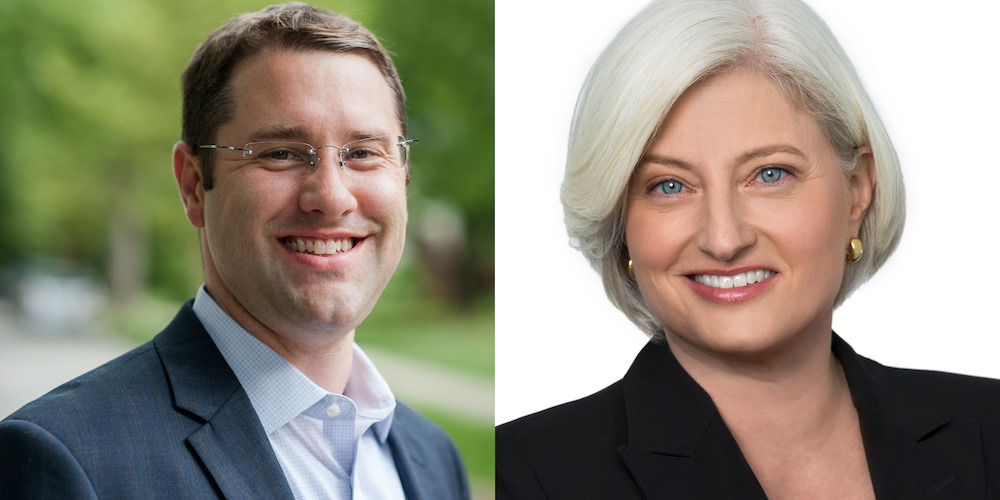
Through the university’s technology-transfer office, Hartman met Bob Williamson, a life-sciences entrepreneur evaluating technology related to stem cells. The work came from the lab of Evangelos Badiavas, a dermatologist and researcher studying how stem cells support repair. The proposition was unusual: perhaps the useful part could be captured without making the living stem cell itself the product.
“I reviewed it and thought the science was brilliant and very elegant.”Shelley Hartman on the research behind Aegle
Hartman helped license the technology. Aegle took shape around it, with Badiavas as scientific co-founder and Hartman eventually joining full-time as CEO in 2019. Her leap was not from finance into pretending to be a bench scientist. It was from advising enterprises to constructing the commercial and organizational machine around a scientific thesis.
02 / The translationTiny parcels, large to-do list
The thesis begins with extracellular vesicles, or EVs. Cells release these tiny membrane-bound parcels to carry proteins, nucleic acids and other biological material to other cells. Aegle isolates a natural composite of EVs from donor mesenchymal stem cells. Its lead investigational product, AGLE-102, is designed as an off-the-shelf topical therapy. Hartman’s favorite first move when explaining it is to admit that “the science does get pretty deep.” This is true. It is also an effective invitation to keep listening.
For a founder, however, “tiny parcels” generate a warehouse of grown-up problems. How do you isolate them consistently? How do you preserve a complex biological product without damaging it? What is protected by patents? Can the process meet manufacturing standards? What data will persuade regulators, clinicians and investors? Aegle’s public materials stress its isolation method and the fact that its EV composite is naturally derived rather than engineered. Hartman, characteristically, points to manufacturing as the differentiator.
This is where her first career becomes legible as an apprenticeship for the second. Investment banking could not answer the laboratory questions. It did teach her how capital follows milestones, how investors interrogate risk and how a persuasive story collapses if its operating assumptions do not survive diligence.
The move also changed the unit of time. Deals announce themselves with a closing date. Drug development proceeds through dependencies: the manufacturing process must support the study material; the study design must answer the right question; enrollment must happen before results can be read. A company can execute well and still wait on biology. For someone formed in transactions, this is a different kind of negotiation. The counterparty is evidence, and evidence cannot be hurried into agreement.
03 / The long middleMilestones are the plot
Biotechnology compresses beautifully in a press release and expands mercilessly in a calendar. Aegle’s journey has included intellectual-property work, repeated manufacturing runs, regulatory preparation, first-in-human testing and a Phase 1/2a program. The company has pursued early clinical work while continuing to finance the next piece of evidence.
Hartman has been frank about the financing environment. In a 2024 investor conversation, she acknowledged that fundraising for biotech startups was difficult while explaining the capital needed to continue clinical programs. A year later, New World Angels announced another $697,500 investment through convertible notes. In March 2026, an SEC filing signed by Hartman reported $455,695 sold in a separate $700,000 offering.
Numbers like those are not glamour figures. They are bridge planks. In a small clinical-stage company, each financing must carry the work far enough for the next technical or clinical result to exist. Hartman’s old world priced risk. Her new one wakes up inside it.
Public speaking is part of that job. She has presented Aegle at industry gatherings, joined a BioWorld discussion about a punishing 2023 financing market and appeared in programming focused on rare-disease development. A conference biography can make the route seem predestined: Wellesley, Wall Street, CEO. Her own account is better. It contains geography, family logistics, a technology-transfer introduction and an idea compelling enough to change the shape of her work.
It also contains a partnership of unlike résumés. Badiavas brought the laboratory and clinical research behind the platform. Williamson brought experience in life-sciences entrepreneurship and technology transfer. Hartman brought the eyes of a financier and the obligations of an operator. Biotech companies often celebrate the lone inventor because the image is clean. The actual institution is a relay: knowledge passes from a lab to a license, from a manufacturing team to a trial site, from a technical expert to an investor who must understand enough to decide. Hartman’s role sits at those handoffs.
“The science does get pretty deep, but here’s the elevator version.”Hartman, before doing what operators must do: translate
04 / The operating lessonElegance needs scaffolding
The temptation in founder profiles is to frame the career switch as a repudiation. Hartman’s story is more interesting because it looks cumulative. The banker learned to read companies. The medical-device chief learned to run one. The entrepreneur-in-residence learned how university research meets licensing. The biotech founder combined those views around a product that still had to earn every claim through evidence.
Her most revealing word may be “elegant.” Scientific elegance describes an idea with surprising explanatory economy. Company building moves in the opposite direction. It takes the concise insight and surrounds it with contracts, controls, trial sites, investors, manufacturing protocols and people who can disagree productively. Aegle’s therapy may be measured in particles far below the eye’s resolution. Hartman’s work is visible in the scaffolding.
This makes her career less a reinvention than a sequence of widening accountability. At the bank, she advised. At LifeSync, she operated. At the university, she evaluated what might leave the lab. At Aegle, those functions converged. The same person has to make a technical argument intelligible, make a financing plan credible and make the company durable enough to discover whether the original scientific argument holds.
There is also restraint in the stage of the story. Aegle remains a clinical-stage company. Its investigational product is still being studied. Early observations and financing announcements are milestones, not endings. Hartman’s aspiration, stated publicly, is to build the clinical data and examine where else the platform might apply. The wager is alive, which means uncertainty is still doing its job.
The coach’s phrase about Sofia works once more. Seeing the opening was only the first skill. Running through it required all season. Hartman saw a path from stem-cell communication to a cell-free product, but the biography worth watching is the run after recognition: licensing the science, assembling the company, funding the next experiment and returning, year after year, to the disciplined inconvenience of proof.