On August 27, 2001, Shane Parrish started work at a Canadian intelligence agency. He was a freshly minted computer-science graduate with an appetite for problems too large to be tidied up by lunchtime. Two weeks later came September 11. The work changed, the stakes changed, and the comfortable interval in which a junior employee learns to look competent disappeared.
Responsibility arrived before mastery. Parrish found himself making decisions that touched his team, his country, and troops in the field. After one difficult operation, he told his boss that he did not think he was ready. The answer was not upholstered for morale: “You’re all we’ve got.” He was told, in effect, to do his best and return to work.
It may be the least soothing origin story in the productivity business. No sunrise routine. No epiphany over expensive coffee. Just a young employee noticing that credentials and judgment were not the same object.
The education of a reluctant decision-maker
Parrish began shadowing experienced colleagues. How did they separate signal from noise? What did they notice that he missed? He wanted an outside view too, so he enrolled in an MBA at Royal Roads University. The program gave him a degree in 2009. It did not give him the operating manual he wanted.
Warren Buffett and Charlie Munger proved more useful to his particular problem. Their appeal was not that they never erred. It was that they treated judgment as a discipline: gather ideas across fields, understand incentives, avoid predictable stupidity, and place each choice inside a wider system. Parrish had first encountered Buffett at university. Now he returned with sharper questions.
His own path to university had hardly advertised a future authority on thought. A Grade 9 teacher wrote that he would be lucky to finish high school. Later, in first-year physics, Parrish met an online assignment system that permitted unlimited guesses. Students with money hired a tutor. The computer-science student with a job wrote a program that guessed answers in tiny increments while he slept. It worked until a professor displayed a chart: everyone else had submitted a modest number of guesses; Parrish’s count rose into the millions. The rules changed, his marks vanished, and he failed the course.
The story is funny because the machine was literal and the humans were not. It also contains a preview of his later preoccupations: read the rules, inspect the incentives, find the hidden system, then notice how reality behaves when someone exploits it.
“The greatest aid to judgment is starting from a good position.”Shane Parrish
The URL nobody was supposed to find
To force reflection on what he was learning, Parrish created an anonymous blog. Its address was 68131-1440.blogger.com, a small code for fellow devotees: Berkshire Hathaway’s Omaha ZIP code and suite number. It was also, usefully, a dreadful thing to type. An intelligence employee was not supposed to maintain a public persona. Obscurity was a feature.
The intended audience was Shane Parrish. He read, connected ideas, compressed them into notes, and wrote to discover whether he actually understood them. Other people nevertheless arrived. One RSS subscriber became hundreds. By the time the readership approached 25,000, the camouflage had become faintly comic. In 2013, he attached his identity to the work and adopted a more humane name: Farnam Street, after the Omaha street linked to Buffett and Munger.
This was not a master plan for a media company. Parrish has been disarmingly plain about his role: he sees himself less as an inventor of grand theories than as someone who compresses other people’s useful ideas. The humility has a practical edge. A curator is obliged to keep looking. A guru, by contrast, eventually faces the terrible burden of having to remain one.
The audience vanished
Then a platform lesson arrived without an appointment. Google shut down FeedBurner, the service through which many people followed the site. Parrish lost roughly three quarters of his audience overnight. He had readers but not the relationship. A company between them could erase the connection.
The response was Brain Food, a direct email list sent on Sundays. Its manner fits the larger project: short, calm, allergic to political churn, and interested in ideas that should still work after the browser tabs have been closed. Farnam Street now describes the letter as reaching nearly one million people. Its memorable self-description is “noise-cancelling headphones for the internet.” This is both a promise and a sly acknowledgment that the internet is usually operating the leaf blower.
The newsletter also demonstrates one of Parrish’s central ideas. Better decisions often begin before the obvious decision. Own the connection before a platform changes its mind. Preserve time before a crisis asks for it. Arrange the environment before willpower is tired. A choice made from a good position has room in it; a choice made from a corner mostly has walls.
A podcast saved by its last episode
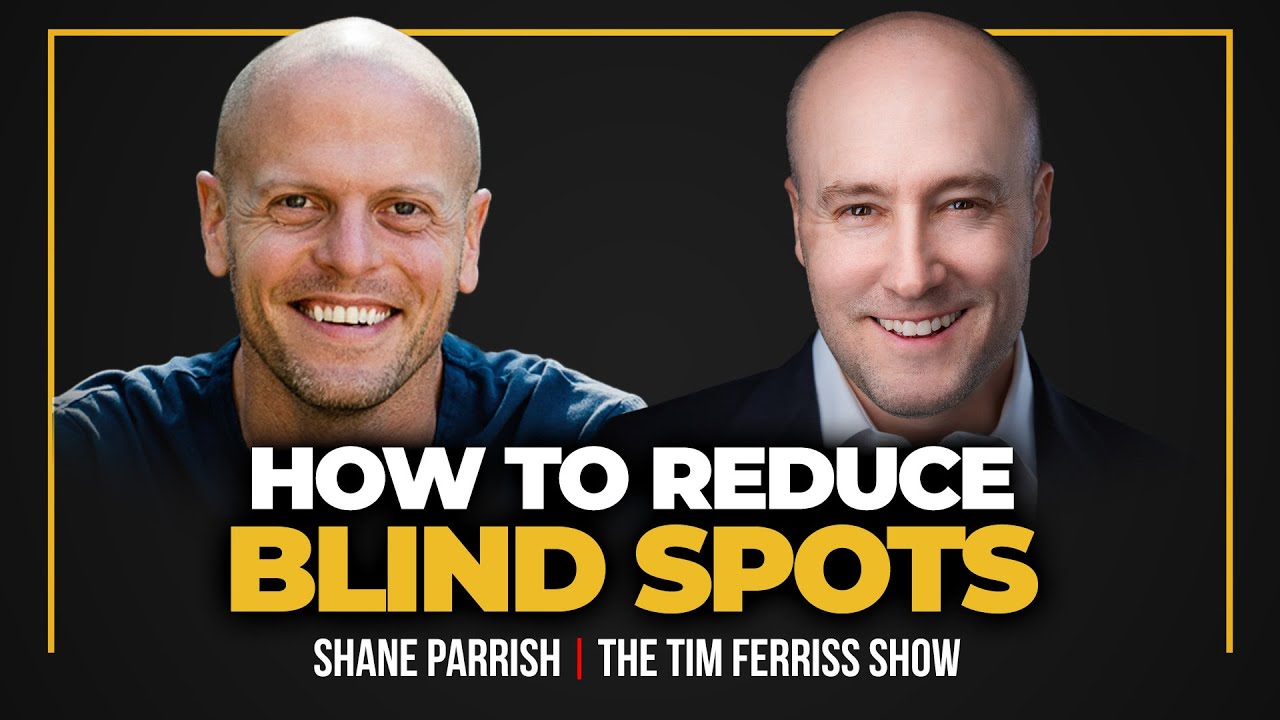
The Knowledge Project extended the method from essays to conversation. Parrish interviewed people who had paid for their lessons in experience: investors, founders, psychologists, coaches, writers, athletes, and scientists. Michael Mauboussin appeared on the first episode. Later guests included Annie Duke, Daniel Kahneman, Reid Hoffman, Kat Cole, and Patrick Collison.
The show nearly stopped. Parrish was not enjoying it and few people were listening. He had just recorded a conversation with Naval Ravikant and decided it would be the final episode. Then that interview travelled far beyond the show’s previous reach. The audience supplied new evidence, and Parrish revised the decision.
There is a pleasing lack of myth in this episode. Perseverance did not descend as a character virtue. Feedback changed the calculation. The lesson is subtler than “never quit,” one of those slogans that can keep a bad restaurant open for years. Stay in the game long enough to receive honest information. Then use it.
From a latticework to a field guide
Farnam Street’s Great Mental Models series organized ideas from physics, biology, mathematics, economics, systems, and the arts into four volumes. A mental model is simply a useful representation of how something works. Inversion asks what would guarantee failure. Second-order thinking asks what happens after the immediate result. Margin of safety allows for error. The point is not to collect clever labels. It is to have more than one lens when the world refuses to resemble the department that issued your degree.
In 2023, Parrish published Clear Thinking. Its subject is the short interval between stimulus and response, the moment when emotion, ego, social pressure, or inertia can seize the controls. The book argues for safeguards and defaults that make a desired response easier before pressure arrives. It became a New York Times bestseller. The success was visible; the long apprenticeship behind it was not. By then Parrish had spent more than two decades worrying the same question from different angles.
His professional life had widened too. He left government in 2016, even choosing to cash out a valuable pension. His accountant considered that financially unwise. Parrish considered the absence of rescue psychologically useful: he wanted the next result to depend on his own commitment. He went on to lead Syrus Partners, a private investment company that acquires and operates businesses, while continuing as founder and CEO of Farnam Street Media. The writer about decisions became an owner required to live with them.
Good judgment is less a flash of brilliance than a life arranged so panic rarely gets the deciding vote.The practical thread through Parrish’s work
The useful pause
Parrish’s appeal is not that he promises certainty. His origin depends on its absence. He speaks openly about luck, the messiness of progress, old newsletters that make him wince, and a podcast he nearly abandoned. The personality visible across his work is curious, systematic, and unusually willing to put his own thinking on the examining table.
He also remains suspicious of knowledge that never reaches conduct. Retention is not understanding. A shelf of books is not a latticework. A decision journal is useful because memory is an accomplished defense attorney: months later it will explain that you knew all along. Writing down the expectation, assumptions, and emotional state denies hindsight a few of its favorite costumes.
The arc from intelligence desk to Sunday inbox is not really a reinvention. It is one inquiry pursued in public after years in private. How do we see the situation more clearly? How do we keep ego from impersonating judgment? How do we prepare while options are plentiful, rather than perform intelligence after they disappear?
Those questions have no final answer, which is fortunate for a man attracted to gnarly problems. Farnam Street has become a newsletter, a podcast, courses, books, and a membership. The machinery expanded. The original gesture stayed small: pause, admit what you do not know, and make a little room to think before circumstances think for you.