Shane Michael had one complaint about the Agenda Show in Long Beach: several of the bars took cash only. Around him were Vans, Hurley, small brands working their way out of garages, and enough booths to make the whole thing feel enormous. He was there in July 2013, absorbing the action-sports business and listening to people who had built companies around their creative instincts. The bars, apparently, had neglected the customer experience.
It is a small detail, but a useful introduction. Michael likes the grand ambition of making things. He also notices the awkward moment when someone wants to participate and the arrangements make it inconvenient. Today, as founder and CEO of Mittun, he works on nonprofit websites and fundraising tools. The ambition remains generous; the work often comes down to whether a person understands what to do next.
His career brings together lettering, websites, WordPress, fundraising campaigns, and a rather literal willingness to go upside down on a bicycle. There is plenty of personality in the combination. Yet one of his clearest design arguments asks clients to put their own personalities aside long enough to look at the visitor.
A designer walks into the action-sports business
At Agenda's Emerge conference, Michael listened to Jeff Staple, Johnny Cupcakes, Bobby Hundreds, and Marc Ecko. He was particularly taken with the idea that enjoying the work belonged in any serious definition of success. He still acknowledged the need to earn money. His enthusiasm was for a business life in which the doing itself could be satisfying.
The account reads like someone returning from a good show, rather than someone preparing a solemn declaration of corporate values. He admired some speakers more than others. He left refueled. He wanted to come back. Creative entrepreneurship, in that telling, had people in it, including people with opinions about the bar.
That world also supplied actual work. In 2014, Michael designed and developed a video platform for We Are Famous. In 2015, he built a custom WordPress website for MAHFIA.TV, the women's action-sports media destination. Another project, a New York filmmaker's site, appeared on Awwwards. His portfolio crossed between culture, media, and the practical business of making a site behave.
Mittun dates to 2010, when it was called Mitten United; the shorter name arrived in 2016. The early work helps explain the company that followed. Before nonprofit fundraising became the central specialty, there was already a designer comfortable moving among identities, audiences, and kinds of content.
There were obstacles before there were plugins
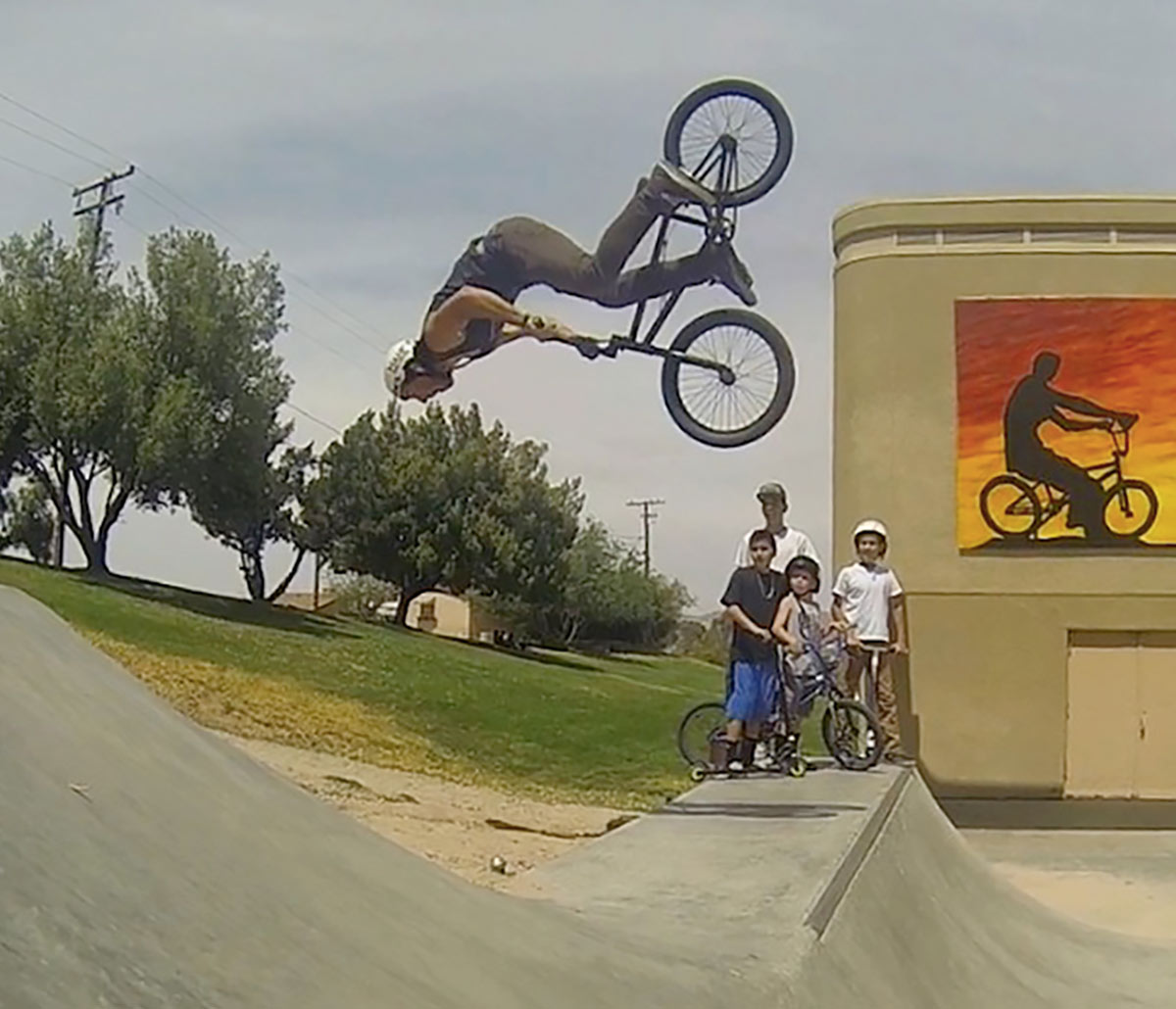
Michael's sporting life includes an appearance on NBC's American Ninja Warrior at the Venice City Finals in 2015. BMX, snowboarding, and mountain biking also belong to his public account of himself. The bicycle photograph makes the point with admirable economy: the wheels are overhead, and the spectators appear to have found something more interesting than a screen.
It would be convenient to claim that an obstacle course explains a software company. Lives seldom arrange themselves so tidily. What the sporting record does establish is that the physical side of his life has substance. Action sports were both an interest and a setting for his design work.
His move toward nonprofits therefore did not require him to invent a completely separate creative identity. The same portfolio could contain a media destination, a brand, and an organization trying to persuade people to take part. Each had its own audience. Michael's later writing would make understanding that audience the starting point.
The unglamorous pleasure of a well-named file
One of Michael's early tutorials concerned something unlikely to make an entrepreneur's highlight reel: naming image files. In September 2013, he explained why a useful filename should say what the image contains, include relevant words, avoid spaces, and remain consistent. Dimensions could help. A number at the end could distinguish one photograph from another.
His reasoning was thoroughly practical. A searchable image library saves time. Someone can retrieve a photograph without opening half a folder. Search engines have something intelligible to read. The next person working on the website has a chance of understanding what the last person did.
There is a particular generosity in that kind of instruction. A finished design receives the applause; a sensible filename helps the person who inherits the files. Michael was writing for people who needed to keep using their websites after the exciting part was over. In his work, maintenance and presentation were already sharing a desk.
The founder has a vote. So does the visitor.
By April 2020, he had sharpened a recurring argument about ownership and taste. A founder looks at a website constantly. A visitor may be encountering it for the first time. Those two people can have entirely different needs, even when they are staring at exactly the same page.
Michael's prescription was to examine the audience before redesigning for the owner's fatigue. A site mostly attracting newcomers needs a clear explanation and an obvious next action. A site used mainly by returning visitors should help them get back to their tasks. When the audience is mixed, the design has to account for both.
“Your personal feedback isn’t as relevant as you might think.”
Shane Michael, writing about website design
That is a mildly dangerous thing for a designer to tell a paying client. It is also a useful professional position. An owner's boredom provides one piece of information; sign-ups, completed actions, and user feedback provide others. Michael argued for comparing results, trying changes, and continuing to adjust.
The position has a certain comic fairness. Someone may have paid for the website, but that does not confer the power to decide how every stranger experiences it. A visitor arrives with a purpose and a limited amount of patience. The design has to meet them there.
Make the useful work available twice
The same concern with other people's time appears in Michael's software work. In November 2016, he listed a WordPress donation plugin for the Classy fundraising platform among his projects. It connected campaign information with an organization's WordPress website, giving teams a way to bring fundraising activity into a site they already operated.
Classy's own account of creative uses for its API described Mittun's plugin as a route to donation forms, campaign pages, leaderboards, event listings, activity feeds, and progress bars. The attraction was practical: organizations could use those features without having to learn the underlying programming interface themselves.
Michael pointed to the development and testing already invested in the product. That is the economic idea behind the tool. Once a difficult connection has been built, other organizations can benefit from the work. A fundraiser can spend less time specifying an integration and more time deciding what supporters need to see.
His current work includes GFM Suite, a collection of tools and integrations for GoFundMe Pro campaigns. The product vocabulary has grown, but the recurring job remains recognizable: help an organization present its fundraising activity in a form people can understand and use.
A brand should survive its next campaign
Michael's advice also extended beyond individual pages. In 2018, he addressed a problem familiar to organizations running several initiatives: how to give each campaign a distinct character while keeping the overall identity recognizable. Separate logos, landing pages, videos, and social graphics can create a surprisingly crowded family portrait.
He recommended beginning with the organization's values, mission, and identity, then making those decisions usable through a style guide. Colors, typography, voice, approved logos, and guidance for print and digital would give different contributors something concrete to follow.
He also urged teams to think ahead. An initiative might expand into another country or acquire related programs. Design decisions made for the first launch would have consequences later. Even then, consistency should leave room for evidence: ask donors, test alternatives, and change an approach that fails to connect.
In 2017, his enthusiasm for faster mobile pages had expressed a related concern from another direction. He wanted nonprofit websites to load promptly and work well on phones. A recognizable identity, a usable page, and a short wait all serve the person trying to get something done.
The work continues in a room full of fundraisers
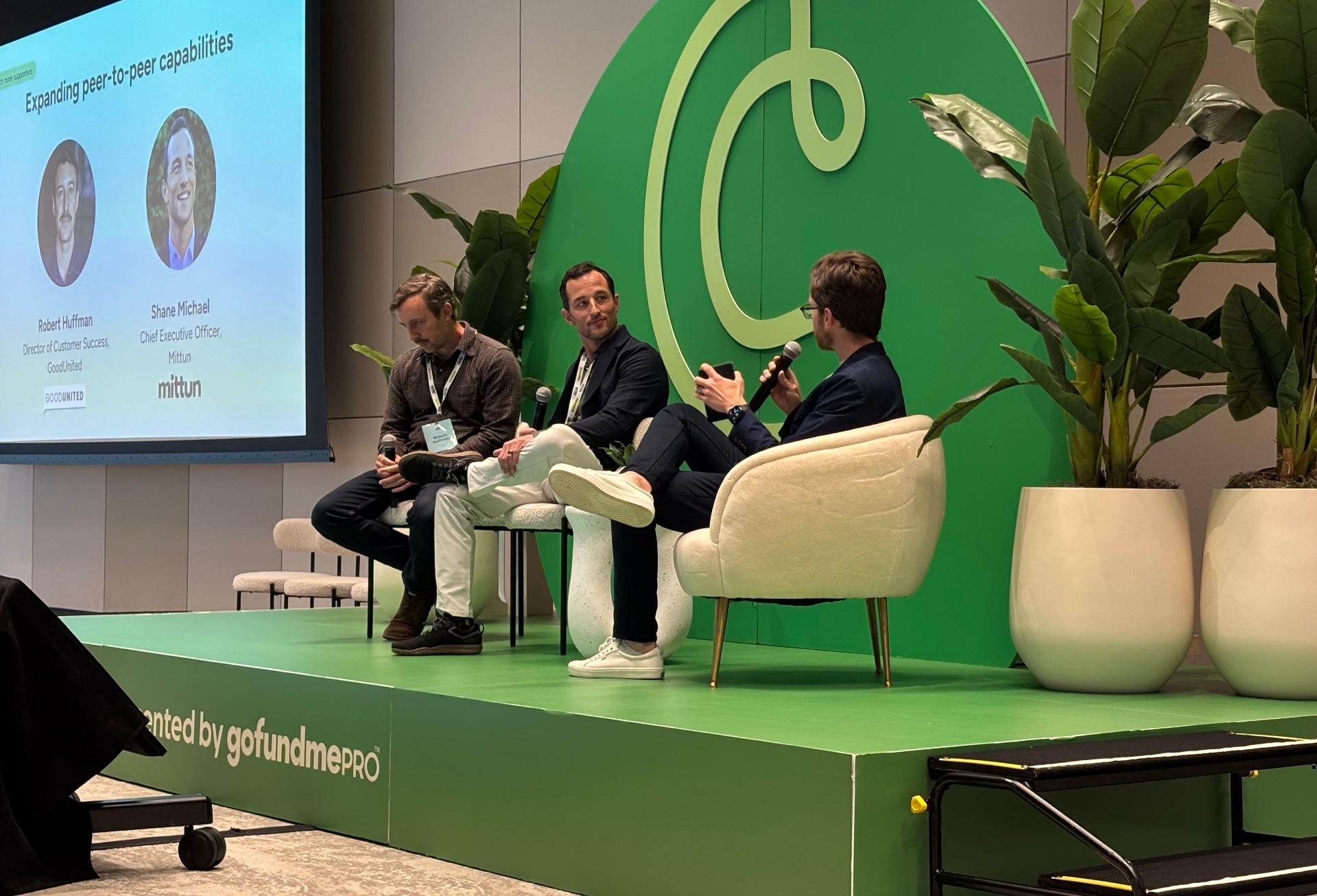
Michael has taken these concerns onto conference stages and into workshops. A fundraising symposium program describes his session in terms of bottlenecks, website tests, and recurring revenue. A Classy and Mittun webinar pairs him with customer marketing manager Keith Blazek to discuss giving-day websites and their usefulness throughout the year.
In July 2020, he also appeared on the Successful Nonprofits podcast with Dolph Goldenburg to discuss online donations. These are different rooms for a similar conversation: what happens when someone reaches the website, and what makes the next step easier?
The people around the business matter too. In 2014, Michael welcomed Melissa Monte as director of operations, giving her the cheerful alternative title of “Chief of Efficiency.” He emphasized her marketing and user-experience knowledge. The announcement treated growth as a reason to bring in complementary skills, with enough informality to let a colleague sound like a person.
The resulting portrait has fewer sharp divisions than a conventional job title suggests. Michael can be interested in a brand's appearance, the naming of its image files, a visitor's first impression, and the plumbing behind a donation page. He has spent years working across those seams. His useful contribution is often to make the seam less noticeable, so someone else can carry on with what they came to do.