Thirteen people walk into a song. In lesser hands, this is the beginning of an administrative crisis. There are lines to divide, bodies to place, tastes to reconcile and only a few minutes before the final chorus. SEVENTEEN made the crowd the point. Their music is designed around the pleasure of many moving parts clicking into place - a voice crossing a beat, a formation opening, a joke passing from one member to another before the camera catches up.
The group's name contains the blueprint. Thirteen members work through three specialist units - hip-hop, vocal and performance - and return as one team. Thirteen plus three plus one equals seventeen. It is cheerful arithmetic, but also rather shrewd organizational design. A group this large needs smaller rooms. Each unit gives members a place to concentrate on a craft; the full ensemble gives that work scale.
The room before the spotlight
Before the debut album, there was a small, brightly lit training room and an online broadcast called Seventeen TV. Prospective members rehearsed, took part in missions and appeared in showcases while the shape of the future group was still being settled. Audiences did not meet a finished object. They watched a working team learn how to stand together.
SEVENTEEN officially debuted on May 26, 2015, with the EP 17 Carat and the buoyant single “Adore U.” The credits already offered a clue. Woozi contributed to every song on the EP, while Hoshi helped shape choreography. Other members wrote lyrics, particularly within the hip-hop unit. “Self-producing idols” became the convenient label. Convenient labels, like convenient jackets, sometimes pinch at the shoulders.
The phrase can suggest thirteen people operating without collaborators. That is not how the group describes the work. Producers, choreographers, stylists and staff remain part of it. The distinctive element is the members' sustained participation - not a sealed workshop, but a busy editorial meeting. S.Coups has described self-production as the job of managing opinions and reflecting them in the team's identity, down to music videos, sets and clothes. The useful word is managing. Inspiration gets the poster; coordination catches the early train.
“Managing everyone's opinions and reflecting them to better suit the image and identity of the team.”S.Coups on how his definition of self-production changed
Three workshops, one front door
The permanent units clarify the arrangement. S.Coups, Wonwoo, Mingyu and Vernon form the hip-hop unit. Woozi, Jeonghan, Joshua, DK and Seungkwan make up the vocal unit. Hoshi, Jun, The8 and Dino form the performance unit. Their album tracks can narrow the frame to four or five people, giving timbres and ideas room to breathe before the full group rushes back in.
Then there are temporary combinations. The leaders unit joins S.Coups, Woozi and Hoshi, each responsible for one of the three main units. BSS gathers Seungkwan, DK and Hoshi into a trio with an appetite for exuberance. These offshoots do not weaken the central identity. They keep it from becoming a uniform. One can leave the house for a while without changing the address.
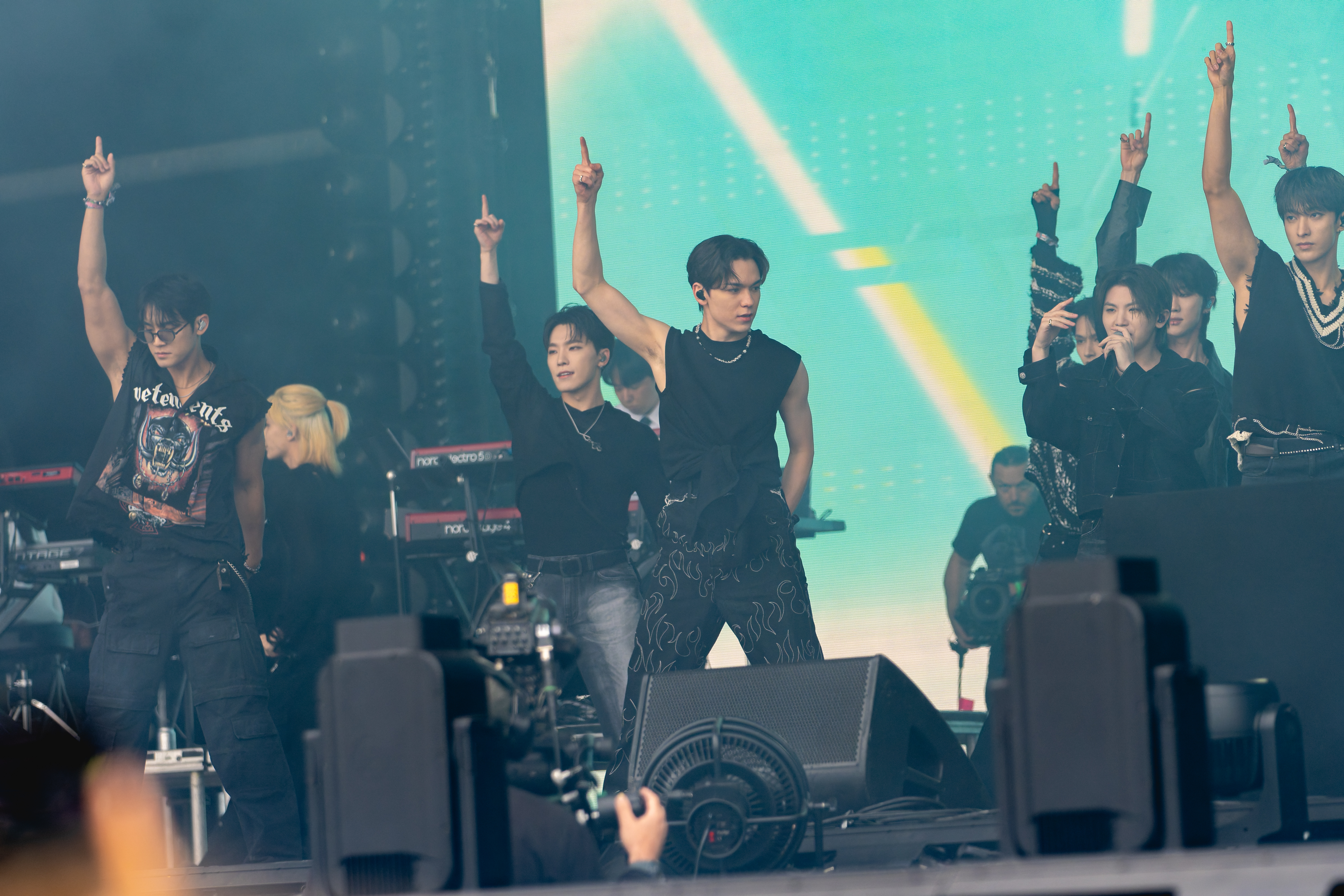
Onstage, this architecture becomes visual. Thirteen bodies can create a doorway, a wheel, a wave or an argument in motion. A member may occupy the center for seconds, then disappear into a diagonal as someone else inherits the lyric. The appeal is not simply synchronization. It is the exchange of attention. The choreography continually answers the question posed by a large group: who should we look at now?
Polish with its tie loosened
The immaculate stagecraft only explains half the bond with viewers. The other half is GOING SEVENTEEN, the group's long-running online variety series. What began as behind-the-scenes video grew into an elastic comic universe: debates, sports days, mysteries, mock offices and games whose rules occasionally seem less important than the members' determination to bend them.
Here, precision reappears wearing a fake moustache. Comedy depends on timing, status and the ability to predict another person's next move. So does choreography. The member who knows exactly when to cross a stage also knows when a raised eyebrow will undo the room. The show lets the audience see expertise sideways. A polished group becomes thirteen recognizable temperaments, complete with alliances, vanities and recurring bits.
This looseness is not an accidental break from the “real” work. It helps explain why the work holds. People who can tease one another on camera have built a dense archive of shared references. The variety show turns institutional memory into entertainment. It also gives a viewer an entry point that requires no knowledge of chart positions or Korean music television. One good game can do the work of a dozen biographies.
When the numbers became very large
The commercial climb was cumulative. In 2020, Heng:garae passed one million physical copies in its first week on Hanteo. Three years later, the EP FML moved 6.4 million units worldwide and led both of IFPI's 2023 global album rankings. Another EP, SEVENTEENTH HEAVEN, landed fourth on the year's album-sales chart with 4.5 million units. It is possible to admire the totals while also finding them faintly absurd, like learning the population of a city devoted to photocards.
A figure like 6.4 million can make a career look inevitable. It was not. The early proposition was complicated: a large group from PLEDIS Entertainment asking audiences to learn thirteen names and a new internal map. The route to FML ran through steady releases, Japanese expansion, tours, unit projects and the weekly intimacy of video. Repetition did not make the group smaller. It made the scale familiar.
In 2021, every member renewed his contract with PLEDIS before the original agreements expired. Their public statement returned to the language of trust, teamwork and remaining “One Team.” Contract news is rarely romantic reading. In a thirteen-member act, however, continuity is part of the art. “All thirteen members agreed that we will continue to be together,” they said. In 2026, PLEDIS announced another renewal by all thirteen.
The defining production may be the team itself: revised constantly, credited collectively, still in rehearsal.Thirteen careers held inside one frame
Paris on Wednesday, Pilton on Friday
June 2024 compressed SEVENTEEN's range into three days. On the 26th, UNESCO appointed the group its first Goodwill Ambassador for Youth in Paris, following its speech and performance at the previous year's Youth Forum. The role formalized a message the group had often attached to its music: solidarity is not a misty feeling but an action people take together.
On the 28th, they appeared on Glastonbury's Pyramid Stage. The setting supplied a fresh test. Festival crowds are not fan meetings; mud is a famous enemy of choreography; many listeners were meeting the group in real time. SEVENTEEN arrived with a live band, brisk introductions and the confidence of performers used to translating scale. Their stated hope was plain: “We want to show the world K-pop.” The set made the introduction without asking the audience to study first.
17 Carat and “Adore U” establish the group and its three-unit system.
All thirteen members renew with PLEDIS ahead of schedule.
FML leads IFPI's annual global album chart with 6.4 million units.
UNESCO appointment in Paris, followed two days later by the Pyramid Stage.
Happy Burstday marks ten years and places third on IFPI's global sales chart.
PLEDIS confirms another contract renewal for all thirteen members.
The edit continues
The tenth-anniversary album Happy Burstday arrived on May 26, 2025, exactly a decade after debut. Its design made room for a solo song from each member as well as full-group material. The structure suited the anniversary: thirteen individual careers, none required to vanish in the celebration of the whole. IFPI later placed the record third on its 2025 global album-sales chart with 2.63 million units.
Longevity changes the question facing a group. At first, the task is to become recognizable. Later, it is to remain surprising without behaving like strangers to one's own history. SEVENTEEN's unit system gives them a practical answer. Different combinations can move forward, individual members can sharpen their own work and the complete formation can still carry a particular emotional voltage when it returns.
There is an old fantasy that collaboration means the disappearance of ego. SEVENTEEN's career proposes something more workable. Thirteen points of view do not disappear. They are assigned rooms, given microphones and asked to listen for the moment when another voice should take the center. The audience hears unity, but unity is not the absence of difference. It is difference with excellent timing.
That is why the little equation has lasted. The 13 are visible. The three units are useful. The one team is a decision, made again in every meeting, rehearsal, contract and count-in. Arithmetic has seldom looked so pleased with itself.
Continue listening