At Flight Club in Washington, D.C., Seth Meyer stands beside his fellow founder Jeff Hutcheson and a group of industry partners. There are dartboards behind them, rather more woodwork than a lending dashboard requires, and the unmistakable appearance of colleagues having stepped away from their desks. The company’s account of the evening also gives a mention to the cotton candy stand. Finance, it seems, can occasionally manage a little spun sugar.
The gathering offers a useful entrance to Meyer’s working life. He co-founded AUTOPAY and now shares the chief executive’s office at The Savings Group with Hutcheson. Their business connects drivers and financial institutions. The screen is the public face of that arrangement; people, partnerships, and a considerable amount of transaction work sit behind it.
At its center is an ordinary object with an easily overlooked companion: a car and its loan. The vehicle is visible every morning. The borrowing agreement tends to become familiar by repetition. Meyer’s business gives that agreement another occasion for scrutiny. A driver may keep the keys while considering different financing. There is no new paintwork to admire, but the numbers deserve their own inspection.
Before the group, the connections
AUTOPAY dates to 2007. Meyer’s public LinkedIn profile places him in Denver and lists Northwestern University. The business he co-founded grew around automotive financing and refinancing, working with banks, credit unions, and other lending institutions. His professional story is best followed through the connections that made that marketplace function.
In July 2017, SWBC announced a partnership with AUTOPAY to help financial institutions reach borrowers through a mobile lending platform. Its distribution included online financial destinations such as Credit Karma and NerdWallet. Customers could approach financing before buying a vehicle or look again at an existing loan. A lender could present the experience under its own branding.
That arrangement explains an easily missed part of Meyer’s business. A driver might encounter the service through another company’s doorway. Behind that doorway, the platform had to match applications with a financial institution’s requirements and pass them into the lender’s systems. The attractive simplicity of a mobile screen depended on rather less decorative work underneath.
Another connection followed in December 2018, when AUTOPAY partnered with Open Lending. The latter supplied analytics, pricing, modeling, and automated decision technology for automotive lenders. Bringing the systems together addressed the lender’s side of the transaction as well as the consumer’s. Meyer was identified at the time as AUTOPAY’s co-founder and managing partner.
Partnerships of this kind put the founder’s task in perspective. The borrower wants an intelligible route through a financial decision. The institution wants an application that fits its lending process. A marketplace has to make those two journeys meet. Calling that an ecosystem is convenient; making it behave like one is the occupation.
A driver needs financing. A lender needs suitable applicants. The marketplace connects the two and supports the transaction.
Two founders, a shared chief executive’s office
By May 2021, the next step was a combination with RateGenius. The two businesses announced an agreement to merge, bringing together their platforms and operations. Meyer described the opportunity around three developments: greater awareness of refinancing, growing acceptance of digital lending, and partnerships between financial institutions and technology companies.
There is a pleasing lack of science fiction in that list. People need to know a service exists. They need to feel comfortable using it. The organizations providing it need to work together. Much of financial technology becomes easier to understand when its longer nouns are returned to those everyday requirements.
The transaction closed in July. AUTOPAY and RateGenius became operating units of a new parent, The Savings Group. Meyer and Hutcheson took the co-CEO roles. Christopher Speltz, previously RateGenius’s chief executive, became executive chairman. The combination was structured as an all-stock merger of equals.
Meyer’s explanation of the consumer proposition was direct:
“More options increase a consumer’s confidence in making the right decision when picking the best loan terms.”
Seth Meyer · July 2021
Confidence is an interesting word to choose in a market usually advertised with a percentage sign. A list of possibilities is useful only when someone can make sense of it. Meyer’s stated ambition connected the breadth of the marketplace to the borrower’s decision. The choice was supposed to become more manageable as the business became larger.
A third name on the door
In April 2022, The Savings Group acquired Tresl. That brought a third consumer brand alongside AUTOPAY and RateGenius. Tresl’s work included helping people purchase vehicles coming out of leases and fleets, as well as refinancing loans. The addition widened the kinds of automotive transactions gathered under the parent company.
Meyer said his team had watched Tresl’s progress for years. He also described the first conversation with its executives as revealing shared priorities around saving drivers time and money. That is a more specific account of an acquisition than the customary suggestion that everyone is delighted to have met everyone else.
The people arrangement mattered too. Christine Pierson remained Tresl’s CEO and took on the newly created role of president of The Savings Group. The announcement described continuity in customer service as the acquisition took effect. Established names and teams were being brought into a larger business.
For a reader following Meyer’s career, the sequence is revealing. AUTOPAY came first. A combination created the parent company. An acquisition then broadened its range of transactions. These are different acts of company building, each with its own work after the announcement has been filed away.
- 2007AUTOPAY is established.
- 2021AUTOPAY + RateGenius form The Savings Group.
- 2022Tresl joins through acquisition.
The phone still rings
The digital description can obscure an appealingly practical detail. AUTOPAY’s 2018 account of its service described staff following up when a borrower did not finish an application online. Assistance could arrive by email, text, or telephone. The company called these staff members Loan Champions, a title with rather more ceremony than the act of asking whether someone needs help.
The underlying task is familiar. A person starts something, encounters a question, and stops. A financial application has ample opportunities for that little drama. Human follow-up gives the customer somewhere to take the question. Software may keep office hours of its own choosing; the usefulness of an explanation remains thoroughly human.
RateGenius’s description of its work adds another view of the same operation: gathering payoff information, coordinating with the new lender, and handling title paperwork. Those details help explain the service around the quote. A loan offer begins a transaction whose completion still requires documents and coordination.
This is an editorial reading of the business Meyer co-leads: its usefulness depends on the handoffs. Between an application and a lender. Between an offer and a decision. Between a signature and the work that follows. Each handoff is a chance for a process to become confusing or to become clear.
The group’s current consumer brands cover vehicle purchases, refinancing, and lease buyouts. That range gives the same basic marketplace idea several occasions to be useful. Different drivers arrive with different transactions in mind. The organizational task is to make the relevant route understandable when they arrive.
Questions with ordinary names
Meyer’s AUTOPAY author archive returns to the questions a driver might actually type. Its 2025 entries include refinancing to remove a cosigner, refinancing with bad credit, and what happens during a refinance. In April and May 2026, the listed subjects turn to the cost and purchase of gap insurance.
The titles are practical and unornamented. They belong to the same world as the unfinished application and the person looking for an explanation. The archive connects his public name to consumer education as well as corporate announcements. It gives the business’s subject matter a vocabulary outside the boardroom.
There is a useful discipline in those ordinary questions. The customer has an occasion, a concern, and a limited amount of patience. An answer has to meet all three. For a founder leading a financing marketplace, clear language belongs close to the product itself.
Darts, partners, and cotton candy
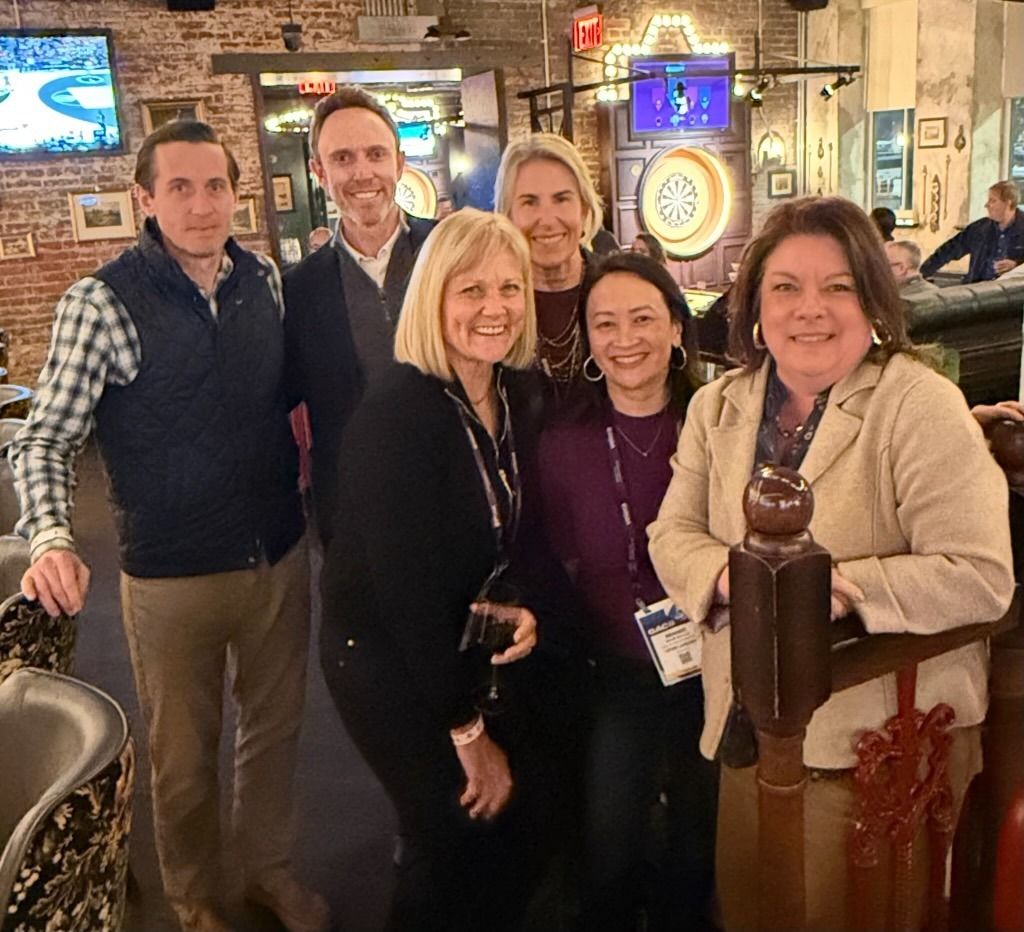
Return to that Washington photograph. The gathering brought The Savings Group together with partners from businesses including Open Lending and CRIF. The company also named credit union guests. Here, the relationships behind the digital platform briefly acquire faces, jackets, and somewhere to stand.
It would be excessive to ask a party photograph to explain a whole enterprise. It can, however, supply a useful correction to the lonely-founder portrait. Meyer’s career runs alongside Hutcheson’s and through organizations with their own histories, teams, and customers. His work has repeatedly involved getting those parties into a working arrangement.
The financing business has plenty of large numbers. Its daily purpose is more intimate: a person considering what to do about a car and the agreement attached to it. Meyer’s stated interest in consumer choice returns the story to that person. The machinery may become extensive. The decision still happens one borrower at a time.
And the car, indifferent to the organizational chart, waits outside.