Press down on a modern laptop touchpad and you may feel a click. You may also be feeling a very small theatrical production. The surface has barely moved, or has not moved at all. A sensor noticed your finger, measured its force, and an actuator supplied the ending your hand expected. Sensel spent more than a decade improving that exchange: the pressure, the interpretation, and the convincing little thump.
- Sensel began with the Morph, a modular controller for musicians, artists and makers.
- It later supplied touch and haptic technology for Lenovo, Dell and Microsoft laptop programs.
- The Morph stopped production in 2022; Sensel moved toward enterprise licensing.
- In 2025, Cirque took over notebook development and support under a technology license.
The company’s lesson is unusually portable. A public gadget can teach you what people want; the valuable business may live several layers below the gadget. In Sensel’s case it lived beneath a plain-looking rectangle, precisely where ordinary users never think to look.
The instrument that could not make up its mind
Ilya Rosenberg and Aaron Zarraga, former engineers at Amazon’s Lab126, founded Sensel in 2013. Two years later they took the Morph to Kickstarter. It was a pressure-sensitive slab whose magnetic overlays could make it a piano keyboard, a drum grid, a drawing surface, a game controller or something its owner invented. The campaign raised $442,648 from 1,612 backers. The amount was modest beside later venture rounds, but the experiment was exact: would people bother to learn a new physical language for a computer?
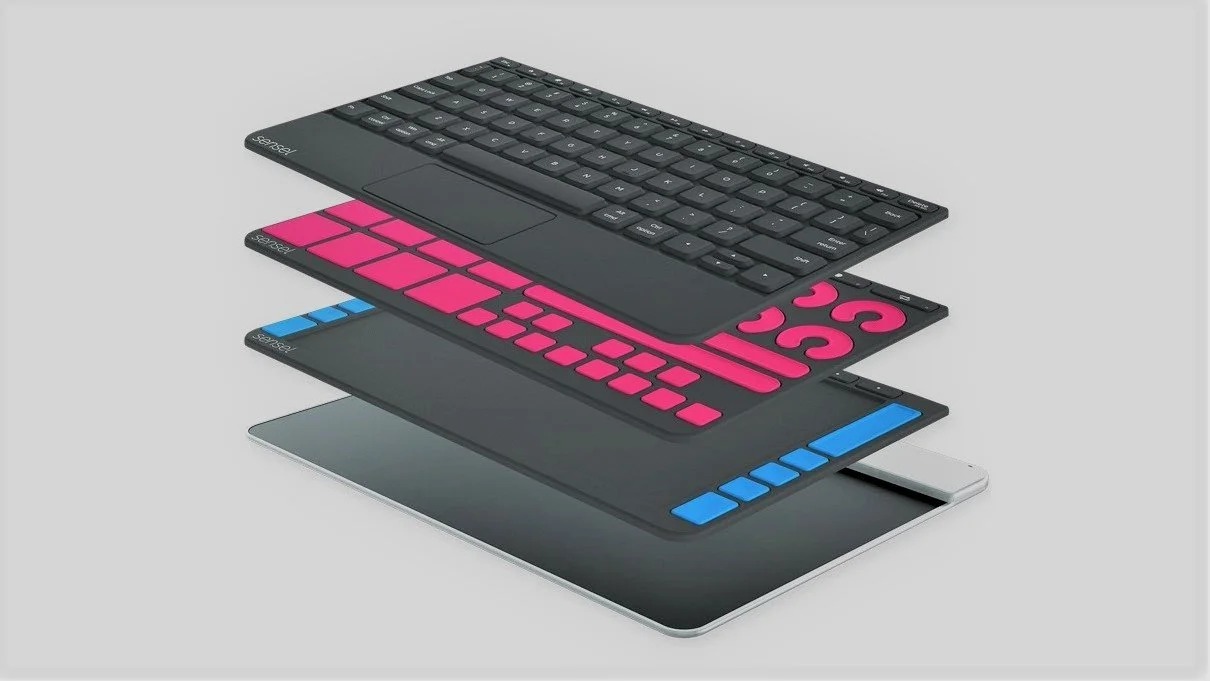
The sensor underneath was the interesting bit. Sensel’s documentation describes the Morph as a grid of 185 by 105 sensing positions. Software assembled those readings into a pressure image, then identified individual contacts and their force. A brush could register differently from a fingertip; a musician could vary a note by pressing harder. Sensel supplied an app for remapping controls and an API for people inclined to build stranger instruments still.
The Morph shipped, earned awards, and found an audience among creators. Sensel’s LinkedIn page says it reached thousands of customers. Yet a device that invites everyone to customize it also asks its maker to maintain hardware, overlays, firmware, distribution and customer support for many small use cases. The public record does not provide a Morph profit figure. It does show the consequential decision: Sensel stopped producing the controller in 2022 and put its effort into touchpads for other companies’ machines.
The hard part of a soft click
The ordinary touchpad is a compromise between area, thickness, click consistency and the laptop parts squeezed beneath it. A mechanical pad pivots. Its feel can change depending on where you push. Sensel’s answer joined touch sensing, force sensing and haptic feedback. The pad can register a press near an edge and respond with a programmable pulse. That matters more in daily use than the vocabulary suggests: a user can click where the finger already is, while a designer can devote less space to the hinge and its travel.
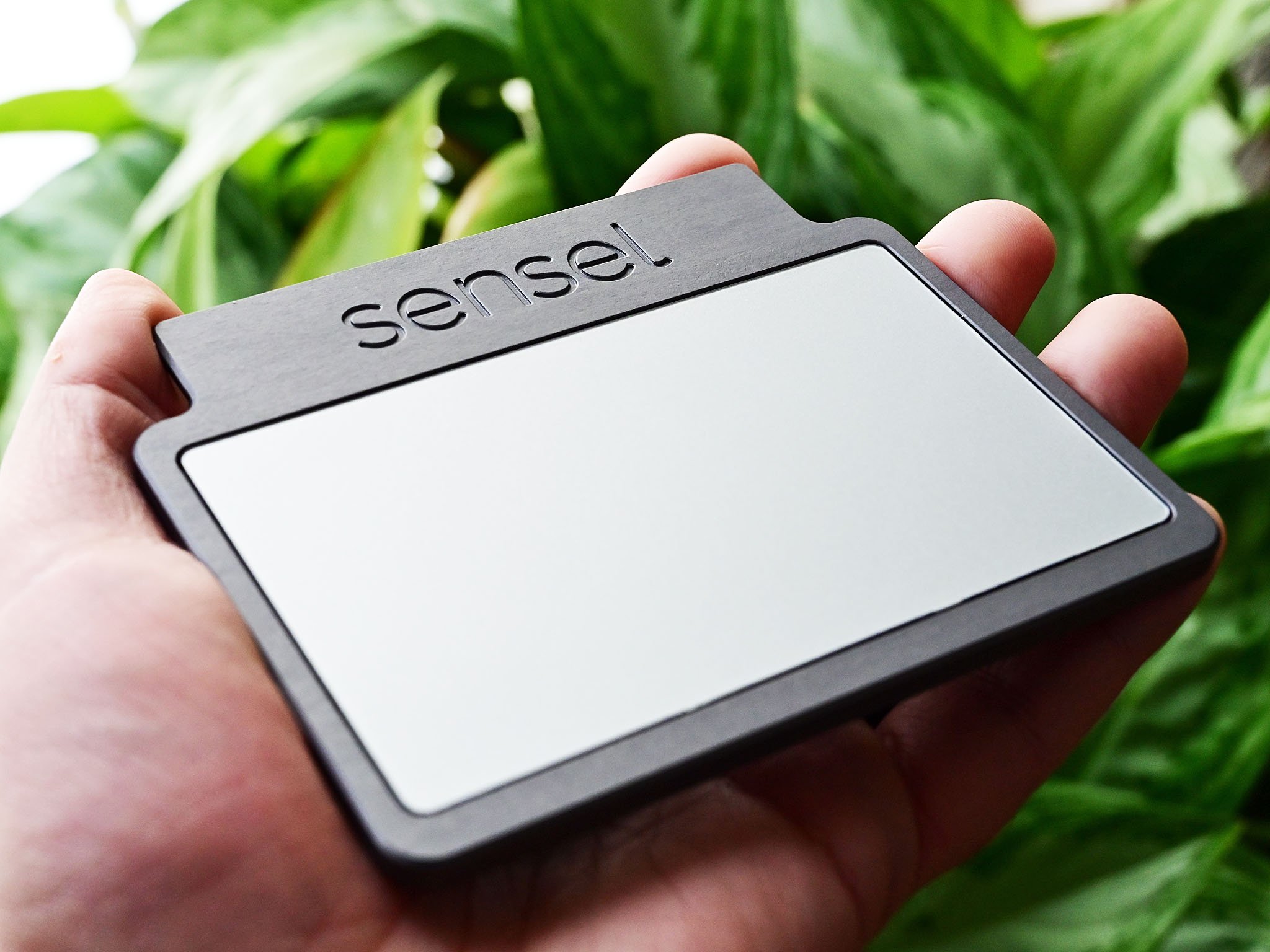
In 2021 Sensel technology reached the ThinkPad X1 Titanium Yoga. By 2024, Sensel said six announced ThinkPad models used its haptic touchpad. On the X1 Carbon Gen 12 and X1 2-in-1 Gen 9, Lenovo and Sensel co-designed an optional pad with a 120 × 70.5 mm active area, 37% larger than the previous generation. They preserved ThinkPad’s beloved TrackPoint buttons as programmable haptic zones. That is a clever concession to habit: the buttons could become virtual without asking the user to abandon the red nub.
“We heard from our customers that many wanted larger touchpads.”Jerry Paradise / Lenovo / 2024
Dell XPS 14 and 16 and Microsoft Surface laptop programs later appeared in Sensel’s customer record. These names make the business seem inevitable in retrospect. They also expose the real difficulty. An OEM component has to meet mechanical, electrical, software and manufacturing requirements at a volume no Kickstarter campaign could simulate. A promising demo and a reliable part on a production line are different achievements.
What scale costs
Sensel raised a $28 million Series A, completed in 2020, while working with device makers. In June 2022 it announced an $18.8 million Series B led by Global Lighting Technologies, a module manufacturing partner; Lenovo invested as well. Contemporary reporting put total funding at roughly $57 million. Those sums paid for the unromantic work that separates a lab effect from a notebook component: design integration, manufacturing processes and continued research. A precise unit price for Sensel’s touchpads has not been published.
Make the sensor tangible with Morph and its overlays.
Adapt sensing and haptics to OEM notebooks.
Let a scaled component supplier carry notebook development.
There is a method here worth copying: give users a complete object that proves the sensation, then show manufacturers the component beneath it. But put a factory partner in the room before promising millions of copies. This route works only when the core part solves a problem a large buyer already has; an admired demo alone cannot create an OEM market.
Sensel tested other surfaces, too. In 2021 Motherson described a joint proof of concept for a buttonless touchpad beneath premium leather in a car interior. It is an alluring idea: a console that becomes a control only when touched. It is also a reminder that every new material adds another layer of difficulty. A device maker must care about the feel, but also heat, moisture, calibration and the behavior of the surface after years of use. The public announcement described an ongoing prototype, not a production vehicle.
An invention looks for its next custodian
In April 2025 Cirque, the touchpad specialist owned by Alps Alpine, licensed Sensel’s haptic forcepad technology and took over direct customer support and development for the notebook market. Some Sensel employees joined Cirque. Sensel described a broader shift from providing complete solutions to licensing proprietary technology to established partners. Cirque’s current Sensel page goes further: it says Cirque has acquired key intellectual property, physical assets and trademarks, and is combining Sensel haptics with its own capacitive touch architecture for a GlideSense roadmap. The page gives no date for that later asset transaction.
There is a useful distinction here for anyone building hardware. The Morph told a memorable story about possibility; the ThinkPad contracts demanded repeatability. Cirque’s role acknowledges a third requirement: continuity after the startup’s original team and business model change. A touchpad embedded in somebody else’s laptop cannot depend forever on the romance of its inventor. It needs support, revisions and a supplier able to pick up the phone.
Sensel’s competitive difference was its combination of a fine pressure grid, touch location and programmable haptic response. A conventional clickpad can be cheaper and familiar. Rival haptic systems from established suppliers compete for the same cramped space. Sensel’s approach pays off when a maker values a thin rigid pad, consistent click force or virtual zones enough to absorb the integration work. It is less compelling when the price and simplicity of a mechanical pad settle the argument.
The Morph is no longer on store shelves. A great many people who use a laptop containing its descendants will never hear the company’s name. That may be the most exact measure of Sensel’s influence. The hand notices a click; the machinery stays out of sight.