The useful idea arrived in traffic. In May 2015, Sean Greene was driving home to Pacific Palisades after a long day at MatchCraft, the local-search company he ran in Santa Monica. He wanted a quiet dinner out. What he had instead was a domestic relay race: calls, texts, dead ends, and no babysitter. On the streets around him, teenagers played basketball and baseball. Any one of them might have been exactly the capable sitter his household needed. Yet they were socially close and practically invisible.
Greene knew this particular species of frustration well. He was a father, and between his children and his girlfriend's children, the proposed dinner involved arranging care for five. But he also knew something about making local supply discoverable. At Dex, he had worked across strategy, product, and interactive businesses while local directories made their uneasy migration to the web. At MatchCraft, he led a company that helped local businesses reach customers through search marketing. The babysitting problem looked different only until it did not.
The neighborhood did not lack sitters. It lacked a reliable map between families and the people they might trust. Greene searched for an app that could draw that map. Finding none, he decided to build it.
“What we're trying to do is take the stress out of finding a babysitter.”Sean Greene, at Bambino's 2016 launch
An old ritual, made visible
Bambino's central wager was almost stubbornly traditional. Parents already found sitters by asking friends and neighbors. The method was personal and persuasive, but inefficient. Recommendations lived in private text threads, school-gate conversations, and half-remembered phone contacts. Greene did not want to replace that ritual with an endless catalogue of unfamiliar profiles. He wanted software to reveal the recommendations already present in a community.
So the app organized sitters by social connection and distance. Parents could see whom their friends had used, examine rates and reviews, contact several sitters for a specific time, confirm a booking, track its duration, and pay without the traditional late-night excavation for cash. Sitters could set their own prices and see how a requesting family connected to people they already knew. Every practical feature served a more delicate task: giving both sides enough context to say yes.
The trust loop
This was a marketplace, but not one selling a fungible hour. Leaving one's children with another person is a transaction only to the payment processor. To everyone else, it is a small act of nerve. Bambino had to make the machinery easy without pretending the decision was casual. Recommendations became the bridge between those two facts.
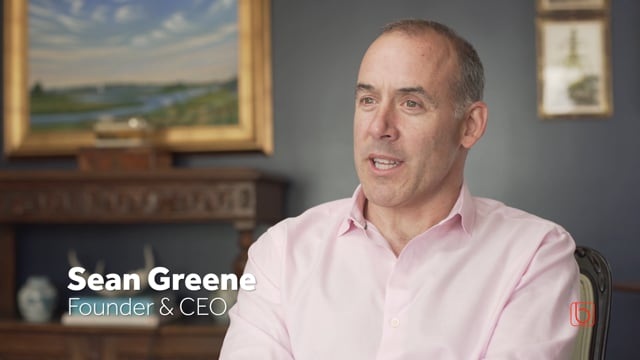
First, one ZIP code
Greene left MatchCraft in September 2015. Roughly six months of development and fundraising followed. When Bambino launched on June 10, 2016, its universe was intentionally tiny. A booking could happen only in Pacific Palisades, inside ZIP code 90272. In a startup culture fond of maps covered in pins, there was something bracing about beginning with one postal boundary.
The constraint suited the product. A recommendation network becomes useful when connections overlap, not when users are scattered like confetti. Pacific Palisades gave Bambino a place where families knew one another and local teenagers already babysat. Greene's own children were among those early sitters. The app was not parachuting a workforce into a community. It was turning on the lights.
Demand soon tugged at the borders. Bambino opened to nearby Santa Monica and Brentwood, then tested a first distant market in Connecticut. In March 2017, the company launched in 30 markets at once. By that summer, it was adding about five new markets a week and had reached 50 communities. Greene attributed the spread to users talking to friends and to local advocates who recruited sitters before introducing the app to parents.
“It's very much through word of mouth and through social networking.”Greene on Bambino's early expansion
The numbers from that period capture both promise and proportion. The first market had a long head start and remained the strongest. In 2017, the company reported about $1 million in revenue. By March 2018, Greene said annualized revenue had reached $2 million, up 20 percent from the previous month, while the company had raised $2 million in total. These are historical snapshots, not current claims. Their value lies in showing that a neighborhood habit had become a repeatable business.
Selected public milestones, shown as distinct measures rather than a single scale.
A career built around the local
Bambino can look like a sharp turn in Greene's career, from advertising technology to childcare. Look closer and the road is straight. At Dex, he worked on performance marketing, ratings and reviews, mobile products, and neighborhood-level search. At MatchCraft, the customers were local businesses trying to be found by nearby consumers. Bambino changed the stakes and the participants, but it kept the central puzzle: how does digital infrastructure make a local relationship easier to begin?
There was also a family precedent for choosing the uncertain road. Greene has described his mother building an in-home monogramming operation into a multi-location linen business, then opening a gourmet kitchen shop in Oklahoma City. His father started companies in biotechnology. From them, Greene says he learned the value of work, innovation, and looking at familiar problems differently. He was born in Chicago, spent his early childhood in its northern suburbs, and moved to Oklahoma before he was ten. Decades later, the startup he founded would take him from California to Fort Lauderdale, with a 2019 alumni interview conducted while he drove across the country toward his new Florida home.
Digital strategy and interactive leadership at Dex.
CEO of MatchCraft, including its acquisition by Advance Digital.
The failed sitter search becomes the idea for Bambino.
Bambino launches in Pacific Palisades.
Greene continues discussing parent support and writing practical guidance for sitters.
Conviction without theater
Greene names three traits as instrumental to leadership: being genuine, doing the right thing, and having conviction. The first two can sound pleasantly framed until placed beside the product. A platform involving children has little room for swagger. Its design must acknowledge vulnerability, and its leaders must resist the temptation to treat trust as marketing copy.
The third trait mattered when early skeptics told Greene they would never use an app to find a babysitter. He did not answer by arguing that software should replace judgment. He built around the way judgment already worked. The sitter would come with a line back to someone the parent knew. The profile would show completed bookings and reviews. Older sitters could qualify for an elite tier after meeting reliability and rating standards and passing a background check. Technology arranged the evidence; the parent still made the choice.
Even the connective tissue produced resistance. The first app asked users to sign in with Facebook because that graph could show which friends had hired which sitters. Some prospective users worried that the access might invite spam or misuse. Greene's answer was practical: the connection existed to identify shared experience, not to turn a family's private life into a billboard. It was an early lesson in the price of convenience. A platform can reduce uncertainty only if people understand what information it uses and why. Bambino's later language broadened beyond a single social network, but the original design question endured. Every extra piece of context had to earn its place by making the introduction safer or clearer.
His favored maxim is the Golden Rule, which he interprets as respect and the discipline of seeing a negotiation, a product, or a difficult decision from the other person's position. That posture is less flashy than disruption. It is also unusually well matched to childcare. Parents want time to themselves. Sitters want worthwhile, safe work. Each needs to know enough about the other to proceed with confidence.
In 2022, Bambino added Kelli Durkin, a customer-service executive with experience at Chewy and GameStop, to its board. Greene described the goal with the familiar proverb about raising a child and the company's ambition to bring that village to life. In 2024, he returned to the themes of parent support and community-building in a 38-minute ParentTech Allies conversation. A year later, his byline appeared in Bambino's journal with advice for sitters: the route to becoming a family's first call begins with communication.
The village, with notifications
Greene lives in Fort Lauderdale with his wife, Rebecca, and their family. Away from the company, he has listed sailing, hiking, and cooking among his pleasures. Each is an activity improved by preparation and spoiled by needless fuss, which may be the most biographically tidy explanation for a founder who spent a decade making the family handoff less awkward.
Bambino's story is not really about persuading parents to trust an app. It is about recognizing that they trust people, then giving those relationships a usable shape. The overlooked teenager down the street becomes visible. A neighbor's experience becomes legible. The booking, clock, message, and payment lose their little frictions. The parents get their evening. The sitter gets the job. The app, if it has behaved itself, gets out of the way.
On that drive home in 2015, Greene saw an abundance that his phone could not yet show him. The company that followed grew because the observation was both mundane and exact: sometimes the answer is already nearby. It just needs an introduction.