Scott Hempy once tried to spare people a stop at the gas station. Now he spends much of his working life thinking about why they would come back for an oil change. Between those two propositions sits a career in which the automobile keeps supplying the same awkward question: how much of a customer's day does this really need to take?
The first proposition arrived on a drive with his wife, Kylie, between San Francisco and Los Angeles. Their car needed gasoline. Hempy brought up aircraft refueling in flight; Kylie suggested a more terrestrial arrangement, with fuel delivered before a driver needed to leave home or work. Marital conversation has produced many impractical schemes. This one acquired a truck.
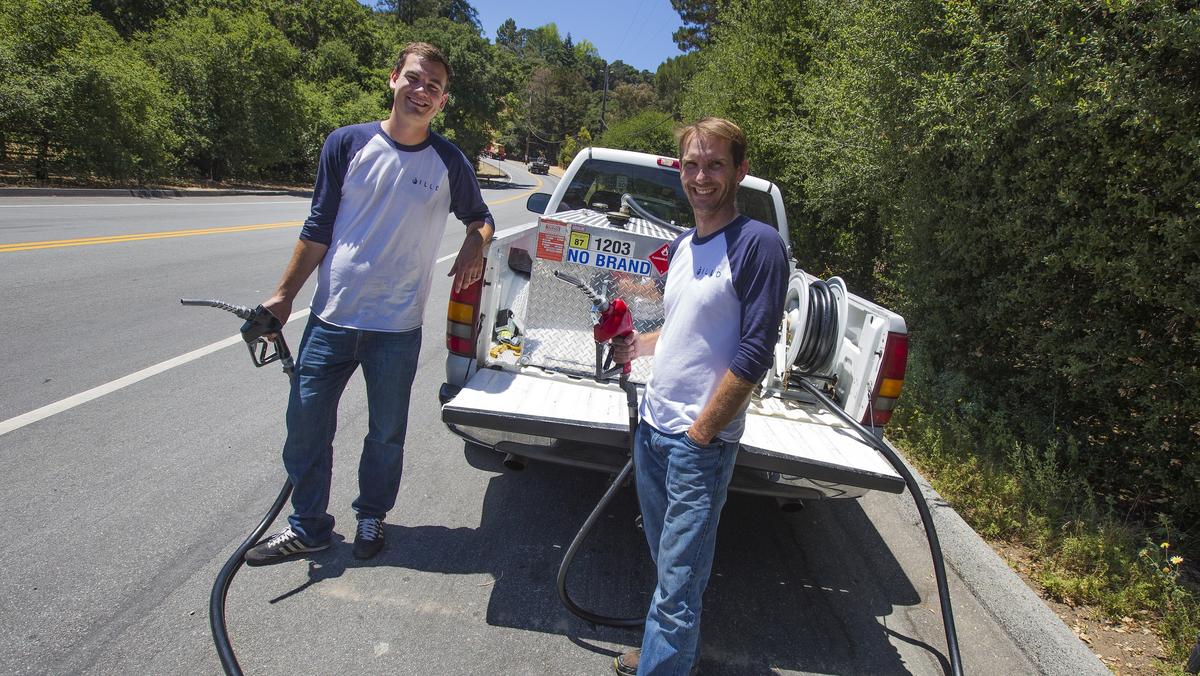
By October 2015, Filld had raised $3.25 million. Its offer was easy to explain over a kitchen table: order gasoline, leave the car accessible, and let someone else handle the pump. Customers could sleep through the transaction. For a business selling convenience, that was an unusually literal demonstration.
A good reason to leave the bank
Hempy graduated from Westmont College in 2014, having studied economics and business. An internship had already helped him narrow his options: banking did not appeal as an all-day occupation. He liked the financial side of business and wanted variety. At college, he had also participated in a Haiti program using microfinance to help launch small businesses.
Venture capital put him near people doing the broader work he wanted to try. At Cote Capital, he helped investigate investments and find new opportunities. Watching founders gave him examples of persistence when a promising idea met established industries and complicated rules. Those lessons would be useful once the investment discussions became his own operating problems.
He took the fuel-delivery idea to Chris Aubuchon, a managing director at the firm and a fellow Westmont alumnus. They researched it, left their jobs and co-founded Filld. Aubuchon brought technical experience; Hempy worked on business development, strategy and partnerships. Crawford Ifland and Jake Allbaugh were also on the original team. The college connection had become a working network.
The car could do the asking
Filld's early pricing put a concrete value on the errand it removed. In 2015, the company used an average of nearby station prices and added a $5 service fee. Its trucks could measure a fill-up rather than deliver only a predetermined quantity. The proposition asked customers to price their own interruption: was avoiding the trip worth five dollars?
There were practical details to remember. A locked fuel flap had to be left accessible. Someone still drove the truck and handled the gasoline. The customer saw a phone screen and, later, a full tank; the company had to arrange everything between the two. The tidiness of the promise made the physical work behind it especially consequential.
In October 2016, Filld announced a pilot with Bentley that pushed the idea further. A connected car could request fuel using information about its tank level and location. The first automated order had taken place in July, from a Bentley Flying Spur. Drivers would no longer have to remember to make the request themselves.
The pilot also allowed a Filld driver to open the gas flap on arrival. Bentley owners could already avoid many of life's small inconveniences; here was an attempt to remove the inconvenience of arranging the removal. Yet the experiment was specific: a connected-car integration that joined vehicle information to a physical delivery.
- 01Read the tankVehicle fuel data
- 02Arrange a stopLocation and dispatch
- 03Send the truckPhysical fuel delivery
A digital request still ended with a hose and a parked car.
The route ran through city hall
The harder expansion questions concerned where a truck could legally do its work. In July 2018, Seattle fire officials ordered Filld to stop mobile fueling until it obtained the required operational permit. Negotiations followed. Fueling on streets mattered particularly to the car-sharing companies whose vehicles were dispersed around the city.
That distinction could shape a market. Permission to fuel in a parking lot did not automatically provide permission to serve a car parked on a street. By late 2018, Filld was operating in places including Vancouver, Washington, D.C., Portland and the Bay Area, while working through disagreements elsewhere. A city boundary could be as consequential as the next product release.
Hempy argued for cooperation with policymakers. In a 2019 interview, he described education and regular communication as part of getting a new service accepted. He wanted entrepreneurs and regulators working toward customer safety together. He also valued employees who could be trusted to finish what they had promised, and preferred working alongside his team because problems could be tackled quickly.
“Every relationship matters.”
Scott Hempy's three-word career advice, 2019
His preferences could be quite ordinary, too: Philz for a coffee meeting in Palo Alto, The Mill in San Francisco, and The Everything Store as a book recommendation. Taken together, the answers suggest someone attentive to both the meeting and the machinery around it. Dependable colleagues and recurring conversations had a place in his account of how work got done.
Ten gallons, immediately useful
In January 2019, Filld found another use for its delivery capability. During the federal government shutdown, it distributed more than 2,500 gallons of gasoline to more than 300 furloughed workers in Bethesda and Washington, D.C. People could receive up to ten gallons each. A further event with iHeart Radio followed in Rockville.
Hempy described being there as a reminder of how useful that amount of gasoline could be. The gesture connected his business to an immediate local need. Fuel delivery's appeal was usually expressed in saved minutes. For those recipients, a truck arriving with free gasoline had a more direct value.
Recognition had arrived early: Forbes included him in its 2016 30 Under 30 class. Westmont named him Young Alumni of the Year in 2019, when he was identified as Filld's founder and chief revenue officer. His title had changed during the company's development; the association with its beginnings remained.
A chapter closes, a family moves north
In a 2022 public post, Hempy explained that the previous summer he and Filld's board had decided to find another home for its technology and team after a difficult period. They found a company to carry the work forward. His account acknowledged the challenge and thanked the people who had joined him.
Lifetime figures from Hempy's 2022 retrospective.
He described thousands of customers, operations in fourteen American and Canadian cities, and more than 250 people who had worked on Filld over its journey. After time off with his family, he joined Oilstop. The move also took the family north to Petaluma, where he welcomed a slower pace and the prospect of building a community.
Oilstop came with a history. Larry Dahl had founded it in 1988, and Cojourn had subsequently taken ownership. Hempy inherited a business with an established team and a service philosophy. His next assignment would involve developing what other people had already built, while expanding its footprint.
Hospitality, with the engine off
As CEO of Oilstop and Happy's Drive-Thru Car Wash, Hempy has made hospitality a recurring subject. He describes teaching it through classes, training and daily conversation. At Oilstop, a colleague keeps watch on whether the company's purpose is receiving enough attention. When discussions drift toward metrics alone, the team tries to correct the balance.
There is a practical edge to that argument. Technicians learn procedures, inspections and payment systems. Hempy wants their interaction with the person in the vehicle to receive comparable attention. A correct oil change is essential; the greeting and explanation also contribute to whether the driver feels comfortable returning.
Expansion gives that philosophy somewhere to prove itself. In July 2025, Oilstop opened two acquired and renovated locations in Eugene and Springfield, Oregon. The changes included equipment and building improvements alongside complimentary beverages and window cleaning. The service proposition extended beyond the contents of the oil tank.
Asked about his team's main victory of 2025, Hempy chose a leadership symposium: 120 managers and leaders, gathered for three days. He emphasized the connections between teams from different states and the confidence people took home. For someone responsible for multiple locations, developing the people who run them is part of making the experience travel.
The return trip is the test
His 2026 writing sharpens the point. In February, he discussed customers trying a new competitor and later returning. A temporary drop in visits, he argued, need not justify panic. Loose standards and neglected training deserved attention. The interesting contest played out over successive visits, after the appeal of a new shop had worn off.
By April, he was urging operators to measure whether first-time guests came back. His suggestions included explaining the process, introducing the team and being willing to tell a customer that a service was not yet needed. Each action gives a driver a reason to trust the next recommendation. The second visit supplies evidence that the first one worked.
He also writes about the less sociable arithmetic of running a shop. In May and a July podcast conversation, he addressed margins, labor efficiency, inventory and pricing. His prescription involved improving many small operating decisions. Warm greetings do not remove costs; a business has to manage both the welcome and the work.
September brought a useful management question: what happens when the leader leaves? Hempy recommended gathering recurring feedback through reviews, surveys and mystery shoppers, then giving a trusted deputy room to lead. In October, he turned to supply reliability, urging operators to understand stock levels, arrange backup suppliers and verify suitable products before shortages interrupt service.
The empty tank still appears in his work. At Filld, it was the starting point for sending a truck. At Oilstop, keeping supplies available helps a team deliver what it promised when a driver arrives. Hempy's attention now extends to whether that driver will return. A car-care business gets its answer one visit at a time.