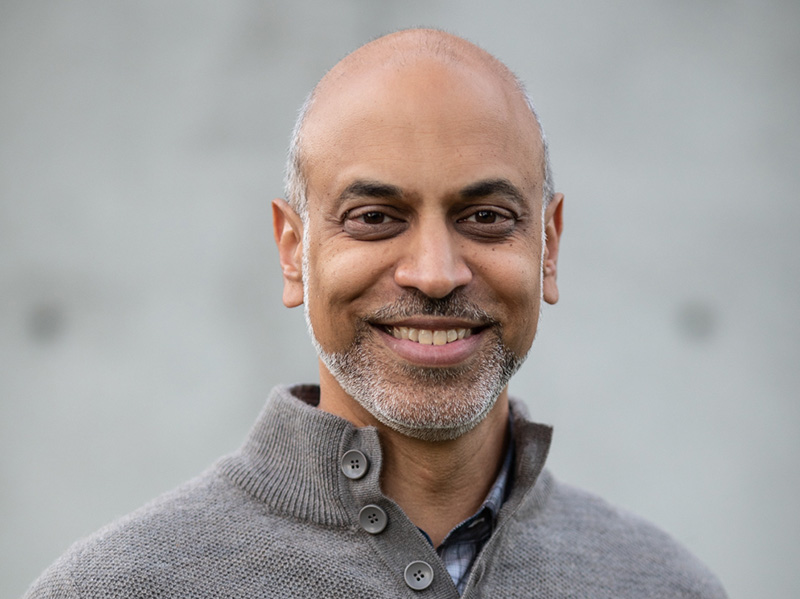
The Man Who Turned "No" Into a Portfolio of Unicorns
Satya Patel grew up in Las Vegas, not Silicon Valley. He studied Finance at Wharton and Psychology at Penn - two degrees that, in hindsight, perfectly predict a career spent reading founders' minds while pricing their companies. He wasn't born into tech. He walked into it.
In 2003, before most people knew what AdSense was, he joined Google to help build it. Early enough to watch the company invent internet advertising from scratch. Early enough to understand, at close range, what a truly generational product looks like when it's still running on duct tape and conviction.
Successful startups say no.
- Satya Patel, Homebrew BlogFrom Google he went to Battery Ventures as a partner, learning how institutional money moves. Then Twitter called - VP of Product, tasked with building not just a product management team but the entire user services function. At Twitter in its hypergrowth years, you either learn to operate under chaos or you don't last. Satya lasted.
But the VP role wasn't the destination. It was the data point. By the time he and Hunter Walk co-founded Homebrew in 2013, Satya had been on every side of the table: builder, operator, investor, advisor. He'd seen what founders need and what they almost never get.
So they built a fund that would actually give it to them.
Small Fund, Inconvenient Track Record
Homebrew was never meant to be large. That was the point. Two partners. Deliberate check sizes. A portfolio you can actually pay attention to. The craft brewing metaphor isn't decorative - it's operational doctrine. Satya and Hunter Walk structured the firm to prevent the drift that hits most seed funds when they scale: the portfolio gets big, the attention gets thin, the value-add gets theoretical.
Meanwhile, the companies they backed turned into some of the most consequential infrastructure of the past decade. Plaid became the nervous system of fintech. Chime went public. Cruise was acquired by GM. Anchor was absorbed into Spotify. eero ended up in every Amazon box. Wealthfront joined UBS. These weren't lucky breaks - they were pattern recognition at work.
Notable Exits
- Plaid - Financial data infrastructure, acquired (Visa attempted, later independent)
- Chime - Consumer banking, NASDAQ: CHYM
- Cruise - Autonomous vehicles, acquired by GM
- Anchor - Podcast platform, acquired by Spotify
- Wealthfront - Robo-advisory, acquired by UBS
- eero - Mesh WiFi, acquired by Amazon
- AngelList - Startup investing infrastructure
The stat that tells the real story: 15 out of 16 Fund I companies successfully raised a Series A. In an industry where most seed portfolios are glorified lottery tickets, that number is unusual. It speaks to something beyond picking - it speaks to portfolio construction, operational support, and the compounding effect of a fund that actually shows up.
And the active portfolio still has room to run. Shield AI raised $2B in March 2026. MatX closed a $500M Series B in February 2026 for LLM-optimized chips. Mercury has become the default banking layer for startups. Headway is attacking the mental health access crisis. Carbon Health is reimagining primary care. These aren't moonshots. They're companies attacking real, durable problems with real business models - exactly the kind Satya has been hunting since 2013.
How Homebrew Actually Works
Satya is a process guy. Not in the bureaucratic sense - in the "founder shouldn't have to guess what we want" sense. Homebrew publishes how it works. Stand-ups are 30-60 minutes, run by the founder, and end with the investor assigned up to three homework items. Board meetings happen every 6-8 weeks and focus on one or two critical questions toward the next milestone. The fund commits to a 24-hour turnaround on candidate conversations for portfolio companies.
This isn't accidental. It comes from Satya's time at Twitter, where ambiguity at scale is how companies fall apart. Clarity, early, is a form of respect.
Screendoor: A Door, Not a Window
In 2021, Satya and Hunter Walk launched Screendoor - a $50M+ fund dedicated to backing underrepresented emerging VC managers. The name is deliberate: not a mentor program, not a pipeline initiative, not a webinar. An actual door into the room. Satya's diagnosis of the problem was characteristically direct: these managers were over-mentored and under-capitalized. The fix was capital, not more advice.
The Investing Philosophy, Stripped Down
Satya looks for three things in every deal: team, product, go-to-market. He is not the investor who backs a slide deck and a vibe. He wants to understand whether the founder can ship, whether the product solves something that can't wait, and whether there's a real path to customers who pay. Integrity, focus, flexibility, collaborative leadership, and data-oriented thinking - those are the traits he's watching for, and they're harder to fake than a pitch.
On fundraising, he's unromantic: two goals only - put money in the bank, maintain optionality. Everything else is noise. He's written that investor decisions are ultimately emotion-driven, which sounds cynical until you realize he's giving founders a tactical edge, not a philosophical complaint.
He exits at Series B. That's not a failure of conviction - that's a feature. Staying beyond your value-add, Satya has argued, crowds the cap table without adding anything. Knowing when to leave is as important as knowing when to enter.
We started Homebrew because we saw that there was a lack of service being provided to founders.
- Satya PatelThe Operator Who Never Forgot He Was an Operator
Most investors who came from operations spend the first few years pretending they still understand what it feels like to build. Satya doesn't perform it. He just does it. His blog - Venture Generated Content - reads like a founder's manual, not a VC's newsletter. The posts are practical, specific, and sometimes uncomfortable: how to fire an employee correctly, how to remove resume bias from hiring, how to run a board meeting that isn't a waste of an afternoon.
When he was at Twitter, Satya redesigned the hiring process to remove resumes from the initial screen - replacing them with video responses. The result: nearly a third of candidates were women, and 55% were from minority backgrounds. He didn't announce a diversity initiative. He changed the process and measured the outcome. That's the operating instinct at work.
He once posted a 33-page Google Doc transcript of his 80-minute Angel podcast appearance with Jason Calacanis - because he figured most people would rather read than listen. That's a small thing that reveals a consistent orientation: what does the person on the other end actually need?
Active Portfolio - Still at Work
The Person Behind the Portfolio
Satya Patel is a New York Giants fan living in San Francisco. He describes himself as "guilty of tweeting food porn." He lists his life philosophy as optimizing for happiness - which, given the company he keeps, is either a joke or the most contrarian position in venture capital. Possibly both.
He went to Wharton for Finance and stayed at Penn for a Psychology degree. Both inform how he reads a room. He joined Google in 2003, before Gmail. He built AdSense partnerships when the internet was still figuring out whether advertising would work online. He was at Twitter during the years when everything was on fire all the time.
Now he runs a two-partner fund by design, writes blog posts by hand, and takes a 24-hour SLA on hiring calls for his portfolio seriously. He is, in the best sense, an operator who became an investor rather than the other way around.
The fund is called Homebrew because the metaphor fits: small-batch, high-conviction, quality over volume. The craft beer industry has proven that bigger isn't better. Satya Patel is betting the same is true for venture capital.