Sarah Franco began with a kitchen table. By the time she retired as JAFCO’s chief executive, the organization had homes, campuses, colleagues and a history long enough for children to grow up and return as adults. Yet the most revealing part of her departure was smaller than any of those things. She wanted to spend more time with her grandson, Atlas. A career devoted to making room for children was making room for one more.
The connection reaches back a generation. Franco’s parents, Abraham and Fay Zalcberg, were orphaned by the Holocaust. They went to Israel, where she was born. She grew up without living grandparents. When she described her retirement, she placed those absences beside the relationship she hoped to have with Atlas. Being there, reliably and repeatedly, had a meaning that no job title could quite contain.
That is a useful way into her story. Nonprofit careers are often measured in funds raised, buildings opened and years served. Franco has those measures. The thread running through them is continuity: how to give a child people who will still be present at the next birthday, the next school year, the next difficult decision. The promise becomes more demanding as the years accumulate. A welcome is a beginning. Staying requires an organization.
A table, then a windowless office
JAFCO took shape in 1992 around founder Ron Simon’s concern for Jewish children entering the child welfare system and losing contact with their community. Sarah Franco and Wendy Jenkins were among the Nova staff associates who helped him develop the idea. Simon brought the founding vision; his family supplied early private support. Franco’s later accounts consistently gave him credit. Her career began within a collaboration, and she continued to describe it that way.
The personnel record gives the beginning an unusually precise date. On October 1, 1992, Franco became executive director. Before accepting the job, she had volunteered as vice-president of JAFCO’s board and resigned that position to take the executive appointment. The document records her master’s degree in counseling. Here was a person moving from helping govern an idea to taking responsibility for its daily operation.
There is something pleasingly unceremonious about that progression. The kitchen table was followed by a tiny office without windows. For an agency trying to establish itself, the furniture was less consequential than the work: foster care, adoption and helping families stay together. The eventual campus makes the early room look modest. At the time, it was a place to begin doing things that needed doing.
Franco’s own childhood had crossed borders. After Israel, her family lived in New York City, where she experienced school desegregation busing in the early 1960s. They later moved to Toronto during the Vietnam War, when her brother was eligible for the draft. She identified the civil rights movement and her parents’ history as influences on her choice of work. The adult vocation had roots she came to articulate more fully when preparing to leave it.
“Without Ron Simon, JAFCO would never exist.”
Sarah Franco
A room of one’s own
The Children’s Village gave the idea an address and a daily rhythm. A 2016 account described six group homes and an emergency shelter, with capacity for fifty-two children. It also described private bedrooms and bathrooms, rooms children could decorate, and house parents present around the clock. Those details tell us more about the ambition than a photograph of a handsome building ever could.
A bedroom is somewhere to put your things and decide how they should look. A shared dinner sets a time to return. Someone driving you to school makes tomorrow a practical expectation. Within a residential program, such arrangements make a claim about the child’s place in the household. You have a room. You have a routine. There are adults who expect to know how your day went.
The same account included homework help, chores, allowances, music lessons and outings. Ordinary family life is full of these small negotiations. Institutions have to organize them deliberately. Behind a child’s chance to learn guitar or visit a friend sits an adult’s schedule, a vehicle, a budget and permission. Belonging has a surprising amount of paperwork. The paperwork matters because it allows the ordinary pleasures to happen.
Franco’s work was to help sustain an agency capable of making those arrangements. Jenkins was a central partner in that effort, leading the professional programs and operations through decades of growth. The homes depended on teams doing daily work; the organization depended on relationships that kept resources and attention coming. A chief executive could connect those circles, but the circles needed many people inside them.
The years after the welcome
For a child entering care, arrival is a consequential day. Franco’s career also directs attention toward what comes much later. In 2019, a program supported by the Greater Miami Jewish Federation worked with girls and young women from twelve to twenty-four. Life coaches began individualized transition planning at twelve. High school graduation was a goal, with continuing preparation for independent adult life.
Starting that early gives adulthood a long runway. The questions arrive gradually: how to make a decision, how to ask for help, how to prepare for work or education. A young person needs opportunities to practice before every choice carries adult consequences. The structure recognizes that independence can be taught and supported, rather than announced on a birthday and assumed to have arrived.
Franco recalled a child adopted at seven who, twelve years later, was studying at Florida International University. The elapsed time is the telling detail. An organization had been part of a life long enough to recognize the distance traveled. It is the sort of news a family remembers: the child you met then, the student you hear about now.
A joint letter from Franco and Jenkins in JAFCO’s 2023 journal celebrated graduates, marriages and alumni having children of their own. Some alumni were becoming board members and donors. That return gives the idea of an extended family a concrete form. People once receiving support could choose to help sustain it for someone else. The relationship had acquired a new direction without losing its history.
The people behind the larger numbers
Growth can make an organization harder to picture. By 2022, Franco’s kitchen-table beginnings sat beside an annual budget reported at $14 million and a staff of two hundred. In its May 2024 retirement announcement, JAFCO described an annual budget above $16 million. These are dated snapshots, rather than figures to carry forward indefinitely. They show the scale of the responsibility her role had come to hold.
ANNUAL BUDGET • DATED SNAPSHOTS
The 2022 budget was 280 times the starting budget. Bars use a linear scale; the starting bar is less than 1% of the track.
There is another way to chart that growth: through one person persuaded to get involved. Stewart Greenberg first heard Franco speak at a parlor meeting in the mid-1990s. He joined the board and led the committee that raised $6 million to build the Children’s Village. The movement from a small gathering to a capital campaign is a reminder that large sums often begin with a conversation someone remembers.
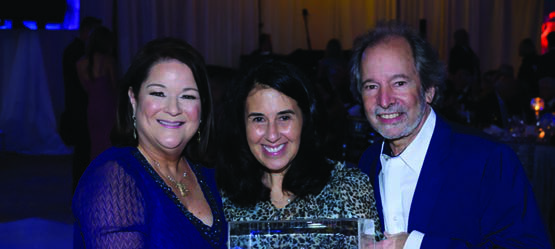
The public life of the agency included luncheons, chapter gatherings and galas. In the 2024 journal, an account of a Miami luncheon described two hundred and fifty guests listening to Franco’s agency update. Events provided a setting in which supporters could hear what their involvement made possible. The dinner and the speech belonged to the same practical chain as the bedrooms and school rides.
In December 2024, Holland & Knight received JAFCO’s Community Partnership Award. Franco’s remarks credited donors, staff and partners together. That distribution of credit fits the longer record of her leadership. A campus might bear a donor’s name, but its purpose required people in many roles to keep doing their part. The work was sustained by a network, and she spoke as someone inside it.
Making room for the next person
Her retirement date was December 31, 2024. JAFCO’s board had spent years preparing for its first change of chief executive. The 2024 journal described a succession committee working over a five-year period, alongside a professional search process. Leaving an institution that has grown around your working life requires its own kind of care. Decisions have to become transferable. Confidence has to travel beyond your office.
Franco’s farewell letter emphasized the team already in place and her intention to remain involved in a supportive capacity. The word supportive deserves attention. An emeritus role allows a relationship to continue while daily authority moves elsewhere. For a founder-level executive, that adjustment asks for trust in the people who will now make the decisions. The organization’s future needs room as well as encouragement.
By the 2025 journal, JAFCO was identifying her as founding CEO Emeritus. Its new leadership continued to recognize the culture she and Jenkins had built. Her legacy had become something colleagues could describe and carry forward. That is a different stage from the early board appointment, but it returns to the same question: can the commitment become durable enough to outlast the person currently holding the title?
Meanwhile, there was Atlas. Franco wrote that her son Evan, his wife Kara and her grandson lived out of town, and that spending more time with them was central to her decision. She was choosing regular presence in a family relationship she had missed in her own childhood. After decades spent helping build an extended family, she wanted time within her own.
A kitchen table is an apt beginning for this story because it can accommodate both kinds of work. It can hold the plans for an agency, and it can hold a child’s place at dinner. Franco spent thirty-two years helping turn an intention into people, rooms and routines. Her next chapter brought the same intention closer: make time, leave a place, be there when the child arrives.
Keep the conversation going
- JAFCO
- Sarah Franco on LinkedIn
- Retirement announcement
- JAFCO’s 2024 journal
- The transition to adulthood
- JAFCO on YouTube
- JAFCO on Instagram
- JAFCO on Facebook
Photographs: Boca Raton Observer (profile); JAFCO 2024 Journal, page 40 (gala).