The Dispatch
A scheduler for the room where minutes cost the most.
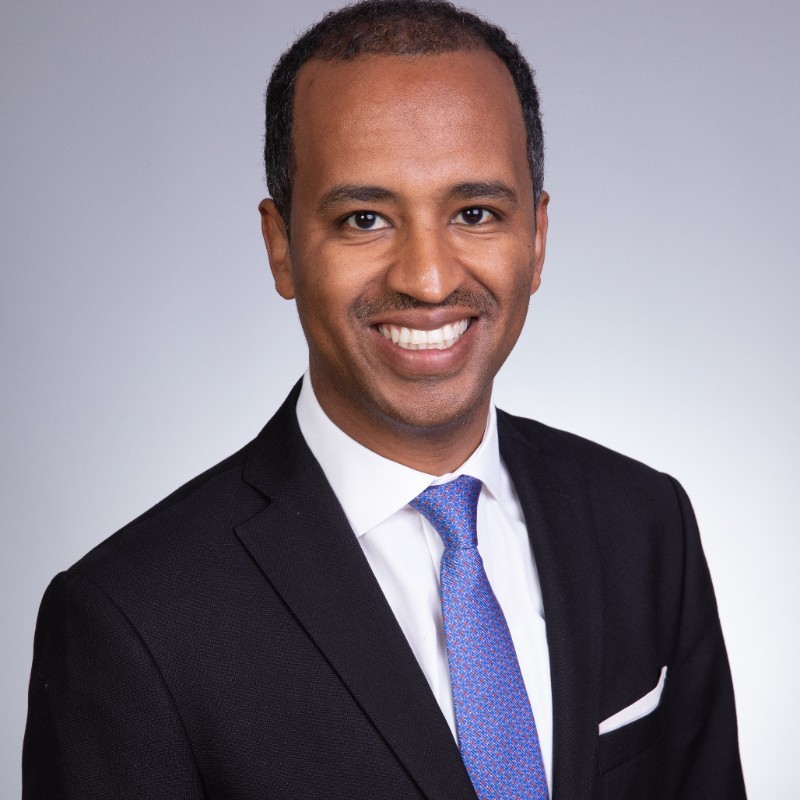
Walk into the back office of a busy surgical practice and you will find the real bottleneck of modern medicine. Not the scalpel. The calendar. A patient is told they need surgery. Then begins a frantic relay - the surgeon's office, the hospital's operating-room board, the medical-device rep who has to physically deliver the right implant on the right day. Drop the baton anywhere along that chain and the case slips. Samuel Ethiopia built a company to make sure nobody drops the baton.
That company is DocSpera, a Silicon Valley surgical coordination platform now embedded across more than 300 health systems, provider practices and ambulatory surgery centers. It speaks to over 30 electronic medical record systems, carries a SOC 2 Type II accreditation, and quietly handles the unglamorous logistics that decide whether an operating room runs on time or burns money idling. Ethiopia has been there since the beginning - first as co-founder and chief operating officer in 2014, then, in 2021, as the chief executive who took the wheel.
What makes the story worth telling is not that he runs a healthtech company. It is the route he took to get there.
Five industries, one obsession
Ethiopia did not start in software, or even in healthcare. He started at a lab bench. His first chapter was at the Dow Chemical Company, where he worked as a senior research engineer and project lead - the kind of role where you learn that a process is only as fast as its slowest, sloppiest step. He holds a B.S. in Chemical Engineering from UC Davis, the foundation for a mind that sees the world as systems, inputs and yields.
From there the path zig-zagged with intent. A stint at Eli Lilly as a global brand associate gave him pharma. A long run at Strategy& (the consulting arm now under PwC) gave him the boardroom - advising Fortune 500 companies and private equity on operational strategy and product development. Then Yahoo handed him consumer-scale technology, where he ran business operations and customer-experience strategy and worked on global data and monetization. Chemistry, medicine, consulting, Big Tech. Most people pick a lane. He collected them.
Surgery is a relay race with no baton. He built the baton.
- The thesis behind DocSpera
Somewhere in that collection of disciplines, a pattern clicked. The same coordination failures he had engineered out of chemical plants and consumer products were rampant in surgery - except here the cost of a dropped handoff was a delayed operation, a wasted implant, a frustrated patient. In 2014 he co-founded DocSpera to attack exactly that gap: the care continuum stretching from the moment of surgical decision all the way to recovery.
The seven-year climb to CEO
Startup founders are famous for impatience. Ethiopia spent roughly seven years as DocSpera's COO before stepping up to chief executive in 2021 - a patient, internal ascent in an industry that prizes overnight coronations. By the time he took the top job, he had also picked up a Professional Scrum Master certification, which tells you something about a CEO: he wanted to understand how the product actually got built, not just how it got sold.
The bet paid off in October 2022, when DocSpera closed a $10 million Series B led by Seattle's Pier 70 Ventures and JJDC, the venture arm of Johnson & Johnson. The money was earmarked to commercialize a suite of automated surgical-workflow tools - SmartSync, an Intelligent Scheduler for hospitals and surgery centers, and SmartEnterprise for the medtech partners who live or die by case volume. When a $400-billion device giant's venture arm writes you a check, it is usually because you have made their world less chaotic.
SmartSync
Keeps surgeons, care teams and device reps reading from the same real-time playbook so cases stop slipping.
Intelligent Scheduler
Built for hospitals and ambulatory surgery centers - the brain that decides what happens, and when.
SmartEnterprise
For medtech and life-science partners who need their inventory and reps synchronized to the case.
Why coordination, not heroics
Ethiopia is a member of the Forbes Technology Council, and his pitch on artificial intelligence is refreshingly un-shiny. He is not selling robot surgeons. He is selling the unsexy idea that better, faster, real-time data shared across everyone in the surgical chain produces better outcomes than any single hero in the room. The promise of AI here is logistics: predicting backlogs, automating rebooking, flagging the missing implant before the patient is already gowned.
We are privileged to work with many of the leading surgical practices, health systems and medical device enterprises to drive operational efficiencies within the complex surgical and implant workflow.
- Samuel Ethiopia, on DocSpera's mission
It is a tidy summary of a decade's conviction. The complexity is the product. Most companies run from the tangle of EMR integrations, device-rep schedules and hospital politics. DocSpera ran toward it, and Ethiopia made the tangle navigable.
The other fund
In 2020, in the middle of building DocSpera, Ethiopia co-founded The Par Fund - a vehicle aimed at backing underrepresented entrepreneurs. It is the kind of side project that reveals priorities. A man who crossed five industries on the strength of his own ambition decided to widen the door behind him. He has also served as an advisor and investor to Sift, the company formerly known as ShopInbox.
Put it together and a coherent figure emerges: an operator who treats access - to the operating room, to capital, to coordinated information - as an engineering problem worth solving. He earned an MMM dual degree from Northwestern's Kellogg School of Management, pairing an MBA with a Master's in Engineering Management, which is exactly the credential you would design for someone who wants to speak fluent business and fluent build at the same time.
In 2021 he returned to Kellogg's orbit as a guest on the student-run Healthscape podcast, talking digital health and the rise of AI - the alum coming back to tell the next cohort what the operating room actually needs. Not magic. Synchronization.
A company built by surgeons and engineers
DocSpera was founded in 2013 by a mix of surgeons and technology innovators - among them executive chairman Sy Fahimi and co-founder Kenneth Trauner - and Ethiopia joined that founding core to run operations. The premise was simple and stubborn: surgeons and surgical staff needed one HIPAA-compliant place to manage the work from the moment of surgical decision through to recovery. Everything since has been an exercise in making that single place talk to everything else in the fragmented world of hospital IT.
The proof of that ambition shows up in the partnerships. Early on, DocSpera plugged into athenahealth's "More Disruption Please" marketplace to streamline pre- and post-operative coordination. When the pandemic forced surgical teams onto video, the company integrated Dolby.io into a surgeon telehealth solution in a single week - a speed that says more about Ethiopia's operating discipline than any slide deck could. It has collaborated with Brainlab to optimize orthopedic inventory-management workflows, and it earned SOC 2 Type II accreditation for its data platform, the security bar that serious health systems demand before they let software near patient data.
Each of those moves rhymes with the chemical engineer's instinct he carried out of Dow: reduce the number of slow, error-prone steps; make the handoffs automatic; measure the yield. In surgery, the yield is a case that starts on time, with the right implant in the room, and a patient who is tracked all the way through recovery instead of vanishing into a paperwork gap.
That is the quiet radicalism of Samuel Ethiopia's career. He never chased the most dramatic problem in the room. He chased the one everyone else found too boring to fix - and discovered it was the one costing surgery the most.