Ryan Wedig’s account of building a software company includes an old F-250. It belonged to his co-founder, Jarrett Taylor, and carried their equipment to trade shows. They would get the gear onto the floor and set it up themselves, saving money wherever they could. The business had executive titles. The executives had a truck to unload.
It is a useful place to begin with Wedig, now the co-founder and chief executive of Vasion. His company works on print infrastructure and business automation, subjects with a limited claim on anyone’s dinner-party attention. Yet his career keeps returning to a surprisingly personal question: how much of the machinery around work do people actually need?
The question has carried him from enterprise networking into entrepreneurship, from doubts about a small Utah city to helping make it a place to build a technology career. More recently, it has taken Vasion into the administrative work of an education nonprofit in Ghana. Along the way, Wedig has had to reconsider his sales model, his company’s name, and his own assumptions about where a software business could grow.
The sales pitch that cost people money
Wedig arrived with experience on both sides of a technology purchase. He had worked in account development at Omniture, in systems engineering and account management at Cisco Systems, and as an independent consultant. He also earned a business management degree at Brigham Young University and an MBA at George Washington University. Engineering certifications from Cisco and VMware accompanied the business education.
That combination gave him a practical vantage point. An infrastructure decision has to work technically, but someone must also explain its value to the person paying for it. In August 2012, he and Taylor partnered to write a business plan, assemble a team, and take PrinterLogic to market. Wedig was formally named CEO at the end of 2014.
The proposition was easy to say: eliminate print servers. Explaining why customers could trust that proposition took considerably more work. A company buying software to remove infrastructure needed confidence that the replacement could handle the responsibilities of the thing being removed. A shorter equipment list still had to produce a working office.
Then came the commercial complication. Wedig wanted a partner distribution model, drawing on his Cisco experience. Removing costly infrastructure, however, could also reduce somebody else’s opportunity to earn money maintaining it. An efficient answer for the customer did not automatically make an attractive business for the intermediary.
“We really wanted to only sell through partners.”
Ryan Wedig, reflecting on the early sales model
PrinterLogic developed a direct sales organization instead. The experience gives Wedig’s story some welcome friction. Technical merit could get the company into a conversation. It could not settle the economics of everyone else in the room. The founders had to find buyers whose incentives matched the change they were offering.
Jarrett Taylor
joins as investor
the Vasion name
Ten employees, then we leave
Wedig initially thought St. George would be temporary. Having lived in San Jose, Raleigh, and Washington, D.C., he understood the reassurance of an established technology employment market. If one job ended, another might be a phone call away. He expected that, once PrinterLogic reached ten employees, Taylor would see the need to relocate.
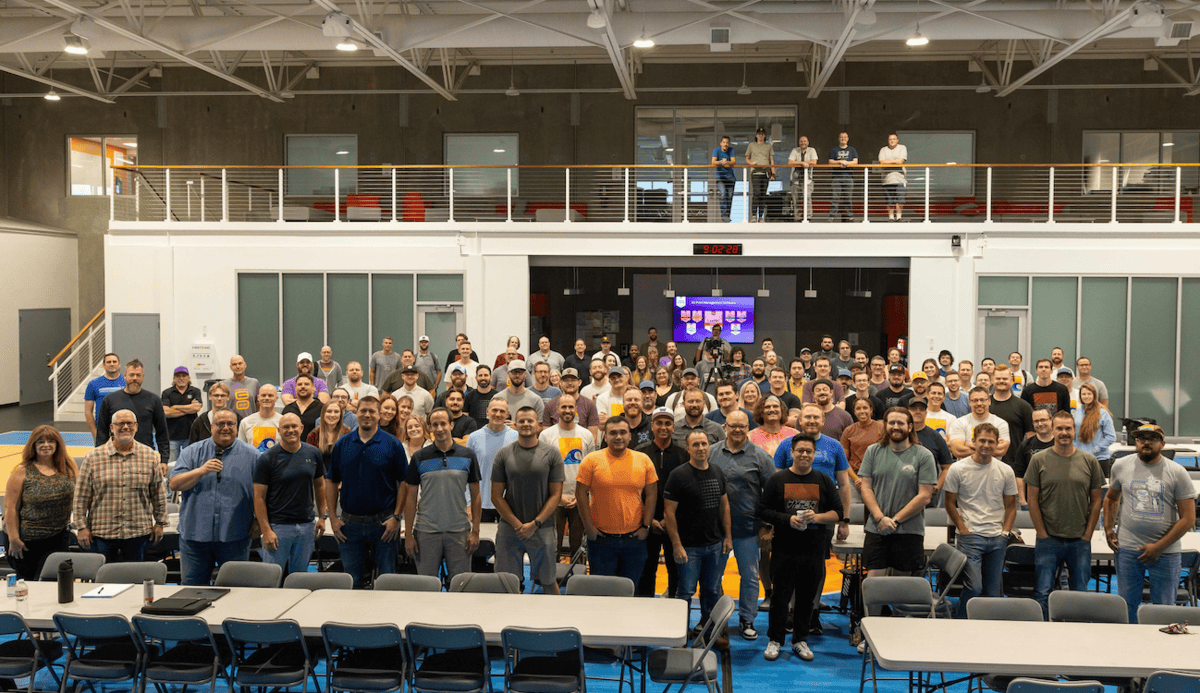
The company stayed. Wedig began recruiting experienced executives from elsewhere while drawing on people already in Southern Utah. By 2018, PrinterLogic was reported to have 160 employees. His argument for the city increasingly included the life someone could have around the job, as well as the job itself.
A recruiting problem became a property problem. Finding enough suitable office space was difficult. Wedig became involved in the idea of developing the old St. George airport site into Tech Ridge, working with the city and Mayor Jon Pike. A setting he had once treated as a constraint had become something he wanted to help build.
“Our people are our inventory.”
Ryan Wedig, 2018
The phrase sounds almost comically plain for a software company. It also makes his concern with place easier to understand. A building, a local employment network, and a convincing account of life outside work all matter when the business depends on people agreeing to come and then choosing to remain.
His reversal is more interesting than an uncomplicated declaration of hometown loyalty. He had a reason to doubt St. George. Experience gave him a reason to revise the judgment. Staying became an undertaking with consequences for recruiting, offices, and the opportunities available to people who already lived there.
A bigger company needs a different kind of attention
Wedig bootstrapped the early business before bringing in Mercato Partners as an investor in 2017. By October 2020, the operation served thousands of customers around the world. Growing beyond the founders meant creating a company that could function through other people’s decisions, rather than through the founders’ constant presence.
He has spoken about culture as something to examine deliberately as a team expands. The people required at one stage will not necessarily bring the same skills or personalities as those needed at the next. A founder can no longer assume that the habits of the first few hires will somehow transmit themselves to everyone who follows.
His discussions of performance take a similarly practical turn. Concentrating on the activities that produce a result gives leaders something to assess and improve. An achievement on a company history page records what happened. Managing the next stage requires attention to what people are doing now.
The company’s identity changed too. In 2021, PrinterLogic rebranded the business as Vasion, making room for an ambition that extended beyond printing. The printer had provided an entry into enterprise operations. Documents, approvals, signatures, and the movement of information offered many more places where work could become needlessly elaborate.
For Wedig, that wider ambition raises a demanding question. Solving one awkward task is useful. Adding another isolated application can leave the customer with more connections to maintain. The appeal of a broader platform depends on how well the parts work together and how much effort the customer can stop spending between them.
A letter from Ghana changes the scale
In December 2023, Wedig met Patricia Wilkins, founder of BASICS International, at AWS re:Invent. BASICS works to expand educational opportunity in Ghana. Their conversation led to a partnership that applied Vasion’s tools to the nonprofit’s processes. A year later, the work became the subject of a conference session with AWS.
Consider the journey of a sponsorship letter. Someone has to receive it, check its contents, prepare it for delivery, and make sure private information is handled appropriately. BASICS had relied on manual reviewing, editing, typing, and sending. Each act of correspondence brought administrative work along with it.
The partnership introduced digital processes and automated workflows for documents, photographs, and communications. AWS services helped review content and protect personal information. Here, the ambition to make technology accessible could be examined at the level of a specific task: what happens between a person writing a letter and another person receiving it?
Vasion employees also supported the relationship financially. In March 2025, their contributions were reported to have raised more than $100,000 to sponsor 75 children’s education. The participation connected the company’s purpose with choices made by people inside it.
75children’s education sponsored
$100k+raised through employee contributions
Those are specific commitments, with a date attached. They also give a different sense of proportion to enterprise software. A process that seems small in a product presentation may consume time an organization needs for its central work. A letter has a modest file size. The people on either end can give it considerable importance.
Back to the people who said no
By September 2026, Wedig was discussing partners as central to Vasion’s growth strategy. The early preference for a channel model had survived a period in which direct selling was necessary. As service providers’ businesses evolved, the case for working together changed.
There is a certain patience in that sequence. The founders could alter how they sold without abandoning the underlying problem. Years later, they could revisit a distribution approach under different conditions. A business plan begins with assumptions; running the business supplies a rather thorough editing service.
Wedig’s public teaching has broadened alongside the company. His Start School conversation, published in July 2026, covered founder equity, leadership transitions, and preparing for AI. The themes place the early partnership beside the decisions that follow it: who owns what, who should lead, and how a company adapts when the technology around it changes.
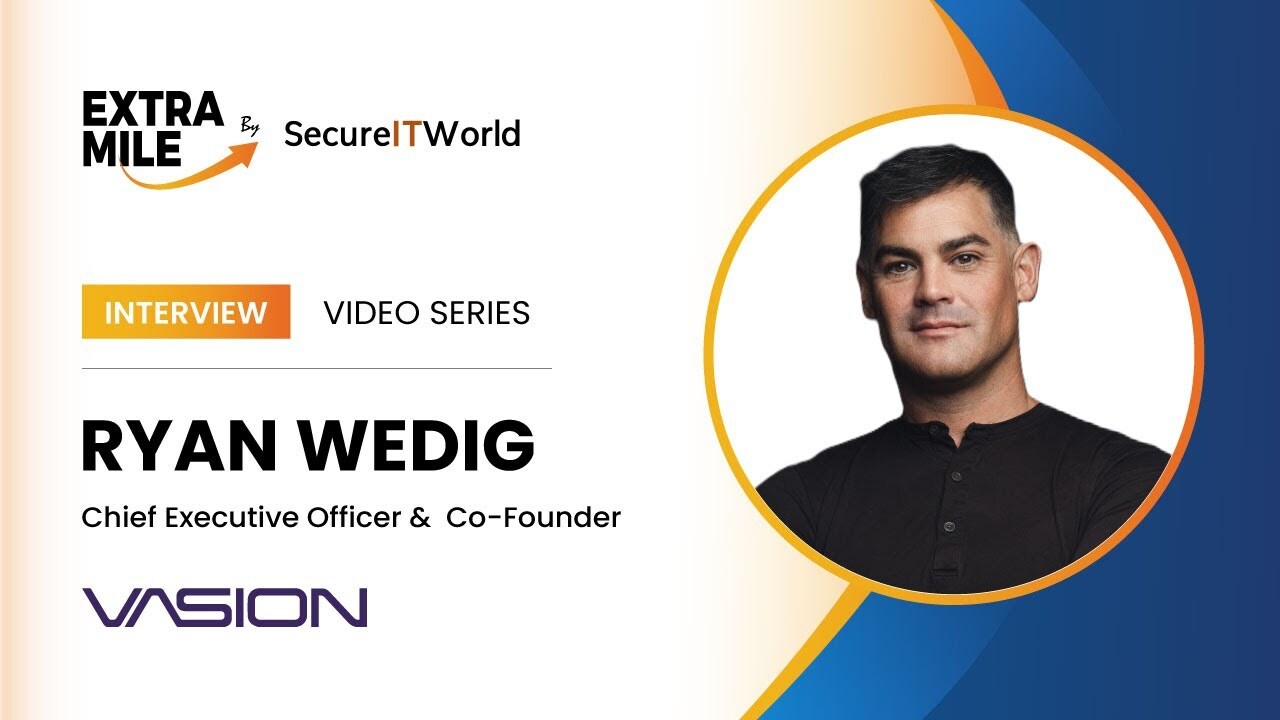
His advice to aspiring entrepreneurs has remained notably unceremonious. Understand the kind of work you are suited to. Be humble about the stage you have reached. In his words: “Be authentically where you’re at.” The sentiment is easier to take seriously from someone willing to remember the loading and unloading.
He has also described a recurring dream of jumping high and hovering in the air. Asked to choose a superpower, he chose the chance to do that in waking life. It is a cheerful departure from print infrastructure, although perhaps hovering would have helped with the trade-show equipment.
The work that can be verified is more earthbound: a partnership formed, customers won, a company kept in Southern Utah, and an expanding effort to remove unnecessary steps. Wedig’s career has grown around that practical pursuit. The old pickup is a reminder that making work simpler still involves doing quite a lot of it yourself.
Read, watch, follow
- Vasion’s website ↗
- Ryan Wedig on LinkedIn ↗
- ExtraMile: the interview and transcript ↗
- Tech Ridge and the decision to build in St. George ↗
- Remote Work Radio: a conversation with Wedig ↗
- Wedig on company culture and performance ↗
- The BASICS International partnership ↗
- Vasion’s automation work and employee contributions ↗
- Start School: founder decisions and the AI era ↗
- The September 2026 conversation about partners ↗