Ryan Marshall learned something about payroll beside Interstate 80. After college, and after discovering that public accounting bored him, he bought a gas station west of Salt Lake City. There was coffee to make, merchandise to arrange, theft to discourage and enough money to find at the end of the week. A business education can have rather unromantic opening hours.
He had managed a station while studying. Ownership supplied a different examination. Eventually he sold the business and went to Arizona State University for an MBA. The classroom came after the cash register. Years later, running PulteGroup, he would describe the two experiences as different versions of a business degree.
The detail is useful because Marshall’s current job can disappear behind the scale of the company. Homebuilding arrives in public conversation as mortgage rates, quarterly deliveries and acres of land. His earlier business brings the questions down to a size anyone can recognize: Will the customer buy? Can the work get done? When does the money arrive?
An education beside the interstate
Marshall grew up in Tooele, Utah, with a father who worked as the town veterinarian. For part of his childhood, the family lived farther out, running a beef cattle operation. His boyhood ambition was to become a cowboy. The eventual career required a different wardrobe, although a respect for practical work survived the change.
He studied accounting at the University of Utah. A family friend had encouraged his aptitude for numbers, presenting accounting as a way to understand how businesses function. It is an appealing promise for someone who likes solving problems: learn the language and the machinery becomes easier to inspect.
The adult Marshall has interests that would not fit neatly on a balance sheet. A 2022 leadership profile described a father of three who enjoys the outdoors and baking. There is no need to turn a hobby into a management theory. It is enough to know that the person discussing land strategy also has uses for a kitchen.
The long route through the business
He joined Pulte in 2001, after graduate school. The route to the chief executive’s office ran through the business’s less photogenic necessities. Financial reporting, land acquisition and assessing the opportunities and risks of local markets all appeared in the responsibilities he accumulated. Houses may look permanent; the calculations around them keep moving.
His operating assignments included running the Orlando and South Florida divisions, overseeing Florida and the Southeast, and serving as executive vice president of homebuilding operations. These are different vantage points on the same enterprise. A national policy eventually has to work on a particular piece of land, for a particular buyer, with a particular construction team.
In February 2016, Marshall became president, responsible for homebuilding operations, marketing and strategy. On September 8, the board named him chief executive and added him as a director. The appointment followed an evaluation of internal and external candidates. Richard Dugas, whom he succeeded, remained executive chairman through the following annual meeting.
The chronology matters. Marshall had spent about 15 years inside Pulte before taking the top job. He inherited an institution, including its habits and its obligations. His own authority rested partly on having done enough of its work to understand what a decision from headquarters would ask of people elsewhere.
The arithmetic of fewer choices
One revealing example concerns floor plans. In a 2024 conversation with Willy Walker, Marshall described PulteGroup’s reduction from roughly 3,500 layouts to about 500. A sprawling catalog can look like generosity. It can also give an organization thousands of opportunities to complicate its own day.
The company used prototype homes inside warehouses to gather customer reactions before building the finished product. That is a pleasantly literal way of walking through an idea. A room has to feel right when someone stands in it. The drawing’s elegance offers limited consolation if the daily experience proves awkward.
Less catalog. More repetition.
Marshall has placed return on invested capital at the center of the strategy. Land, pricing and design belong in that conversation together. For a builder, the number of homes sold cannot by itself explain how well the business has used the money entrusted to it.
Changing the process has also meant looking beyond the building site. In 2020, PulteGroup agreed to acquire Innovative Construction Group for $104 million. ICG brought off-site construction capabilities, including digital modeling and factory-produced components. The idea was to resolve more of a house’s problems before the pieces reached the job.
Marshall connected that step to years of work on execution and the company’s shared plan platform. The attraction is understandable: less rework, more predictability, fewer surprises passed along to the next trade. A construction schedule has enough ways to become interesting without volunteering additional ones.
A question with no comfortable answer
When interviewing a prospective colleague, Marshall has a question designed to get past the polished account of a career: “What would folks on your team say they don’t like about working for you?” It gives the candidate’s imaginary teammates a seat at the interview.
He looks for humility and self-awareness once the technical qualifications are established. Those qualities are easy to claim and harder to demonstrate. Naming a credible complaint requires an applicant to consider the daily experience of being managed by them. The answer may be more useful than another account of a successful project.
His description of leadership is similarly practical. Bring capable people together to work on problems, then remove obstacles. The boss has work to do in that formulation. Authority is measured partly by whether other people can proceed.
“I love interfacing with our team members, solving problems … that’s where I’m happiest.”
Ryan Marshall / 2022 leadership interview
There is also a willingness to revise an initial judgment. Reflecting in 2021 on an unexpectedly strong period of housing demand, Marshall acknowledged that some spending precautions had proved unnecessary. He described learning to communicate small details more deliberately with colleagues working remotely. An operating plan needs enough structure to guide people and enough room to accommodate events.
The city outside the spreadsheet
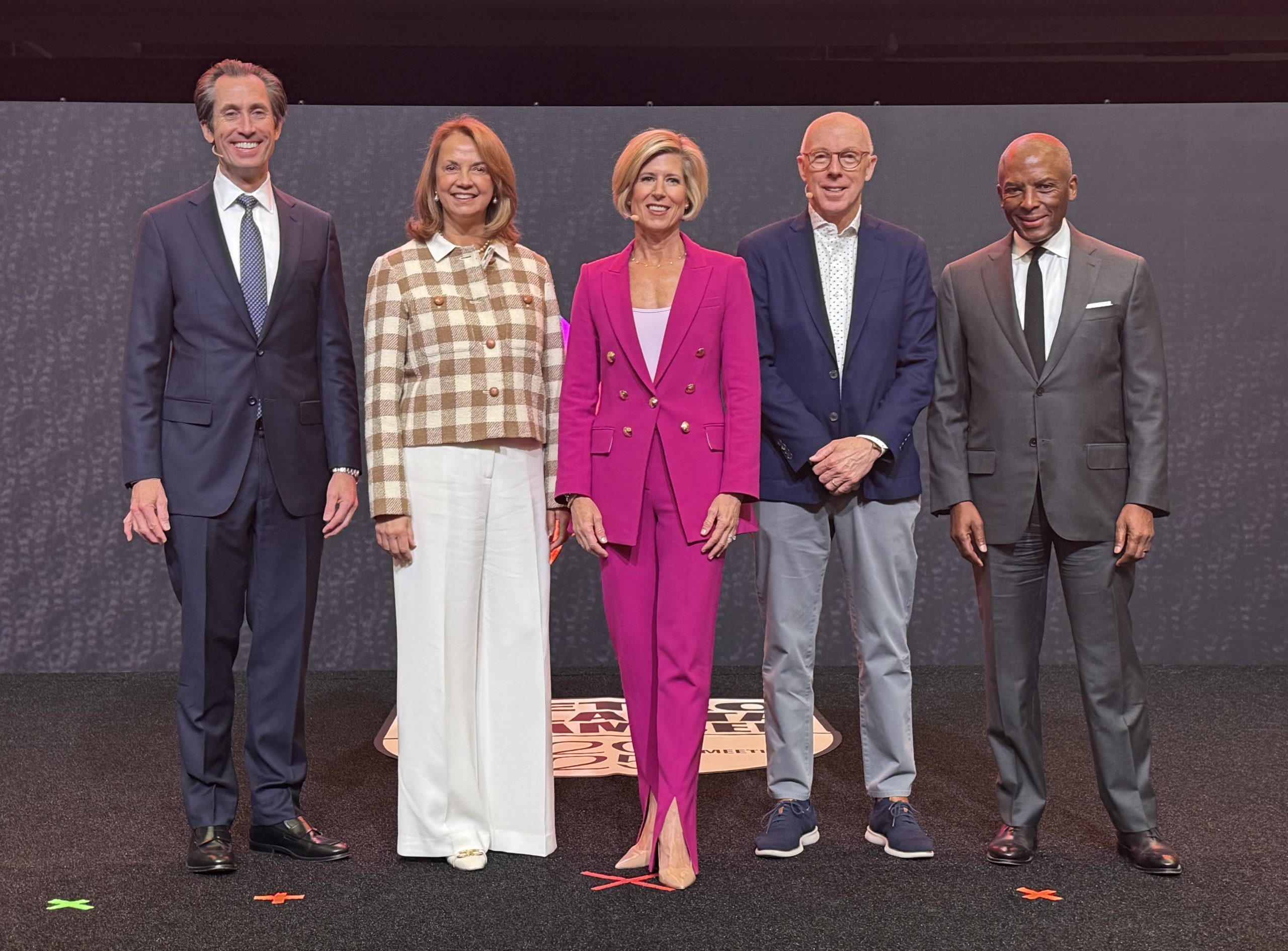
In 2025, Marshall took another assignment: chairing the Metro Atlanta Chamber’s board. The role moved his housing arguments into a broader discussion about the region’s economy. A homebuilder has an obvious interest in more building. The public question is what kind, where, and for whom.
His stated wish for Atlanta was a concerted response to the housing shortage. He called for varied options and greater attention to placing housing near jobs. That last detail gives an abstract supply debate a daily consequence. An address helps determine how a person gets to work and what remains of the day afterward.
He urged creative thinking and action at scale. Those are ambitions rather than completed outcomes, and they deserve to be read that way. They also widen the frame around his job. The region that attracts employers must accommodate the people those employers need.
He also joined Floor & Decor’s board in January 2021. Its 2025 proxy listed him on the compensation committee and identified his experience in finance, construction and strategic growth. The connection places him alongside another business serving the built environment, with a retailer’s view of products that eventually become somebody’s floors and walls.
An evening on Wall Street, a house elsewhere
In November 2023, Building Homes for Heroes honored Marshall at its annual gala at the New York Stock Exchange. The setting supplied the ceremony. The substance lay in a partnership with PulteGroup’s Built to Honor program, which provides mortgage-free homes to veteran families.
Built to Honor began in 2013, three years before Marshall became CEO. By the gala, it had awarded 80 homes across a decade. PulteGroup’s partnership with Building Homes for Heroes began in 2019; together, they had gifted 14 homes by the time of the announcement.
Marshall credited that continuing relationship and discussed plans for more homes. The distinction between an executive’s recognition and a company’s accumulated work matters. A donated house still requires land, materials, trades and coordination. Behind an evening’s honor sits a sequence of ordinary construction tasks, completed for a particular family.
Back in Utah, with a different set of plans
By October 2026, Marshall had passed ten years as CEO. The latest reported quarter offered a mixed assessment of the business beneath him. PulteGroup closed 6,997 homes in the second quarter and reported $3.8 billion in home sale revenue. Net new orders rose 6% from the previous year, while net income fell to $472 million from $608 million.
There is no reason to smooth those figures into a single congratulatory line. Demand, deliveries and earnings tell different parts of an operator’s story. Marshall emphasized the company’s return-focused model and its spread across markets and buyer groups. The numbers remain the test of the proposition.
On October 8, PulteGroup announced an Explore by Del Webb community at Jordanelle Ridge near Park City, Utah. Approximately 900 homes are planned, with models and a sales center expected in late 2027. For Marshall, the location carried a personal connection to the state where he grew up.
The plans include trails and shared amenities alongside the homes themselves. Years after a boy in Tooele imagined becoming a cowboy, his work now involves deciding how other people might spend their days. The gas station is long sold. The questions about customers, money and making the work happen have stayed remarkably employable.