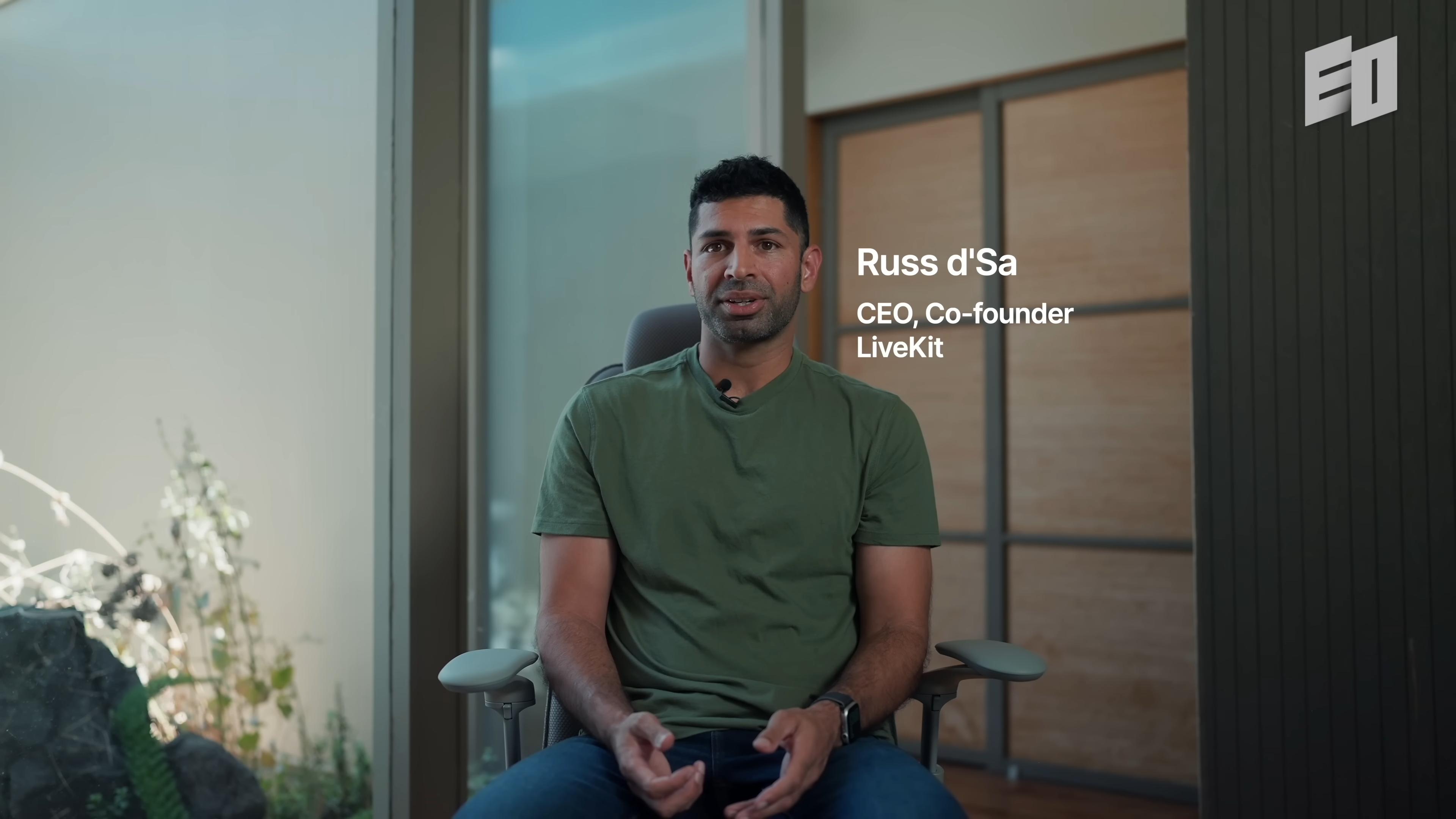
Russ d'Sa had a prospective customer, a side project and a rather inconvenient question. Pinterest wanted 500 seats of Watercooler, his app for casual workplace conversations. Then came the vendor security checklist. Where, exactly, did the audio go? A promising sale had acquired the personality of a plumbing inspection.
He had built Watercooler while running product at Medium in 2020. Colleagues were working from home, and the accidental conversations of office life had disappeared. Clubhouse suggested a possible replacement: audio rooms people could wander into. He made a version for companies, then found himself searching for infrastructure that met a customer's requirements without overwhelming a side project's budget.
David Zhao, his longtime collaborator, joined the search. The two began building their own underlying system. Eventually they put Watercooler aside. D'Sa could imagine spending years on communications infrastructure; corporate culture software held less appeal. The abandoned app had given them their next job.
By January 2026, LiveKit, the company that grew out of that work, had announced a $100 million funding round at a $1 billion valuation. It is an unusually expensive reminder that the useful part of an idea may be somewhere underneath it.
A childhood with a backstage pass
D'Sa grew up in Canada before his family moved to Silicon Valley. His father was an electrical engineer whose career crossed successive waves of technology. The younger d'Sa encountered startups as places where people actually worked, rather than distant institutions whose founders appeared on magazine covers. He went to technology trade shows and saw the business of making things up close.
In a later account of his journey, he recalled watching a documentary about John Carmack and John Romero, the creators behind id Software. The image that stayed with him was wonderfully concrete: programmers hauling their employers' computers home to work on games at night, then bringing them back. The equipment was borrowed; the possibilities seemed their own.
He studied computer science at the University of California, Davis, completing bachelor's and master's studies. His first Y Combinator company joined the summer 2007 batch. The project, Meetyu, used cameras and microphones to connect people online. Nearly two decades before voice AI became his business, he was already trying to make the computer a place where people could meet.
That early venture did not endure. His subsequent career would move repeatedly between founding a company and working inside someone else's, accumulating different answers to the same question: what makes a useful digital interaction feel easy?
The link preview, and the nearly empty phone
After Meetyu, d'Sa worked as an engineer at 23andMe, then joined Twitter in 2009. Twitter offered a particularly immediate form of feedback. Ship something, and the people using it could tell you what they thought on the very service you were building. He remembers the work as absorbing, and takes particular pride in embedded media he began developing in his own time.
The Twitter Cards platform is a tangible piece of that history. A link could carry a richer preview into the conversation, reducing the distance between a tweet and the material behind it.
His personal phone offered a smaller demonstration of the same preference. In 2017, while building Evie Launcher for Android, he described a home screen with one page and a single row of frequently used apps. Everything else was reached through search. He hid the labels, too. A phone already contained plenty of information; it did not need to display all of its drawers.
He used a Google Pixel, skipped the protective case and passed older devices to his parents. He also said he tried to stay off his phone during evenings and weekends. These were his habits at the time, rather than rules for everybody else. Still, they make a pleasing companion to his product choices: spend considerable effort making the device easier to use, then occasionally put it down.
Six years of changing the question
The company that became Evie Labs took a winding route. After leaving Twitter, d'Sa and his co-founder explored several ideas. They considered business software and experimented with streaming mobile apps from servers to phones. That last idea treated an app more like a website: something you could reach immediately, without first waiting for an installation.
A Verizon relationship changed the product again. App access on the screen to the left of the Android home screen created an audience, and that audience wanted news. The team built a recommendation engine. In d'Sa's telling, the eventual product emerged through roughly six years of building and changing direction. The elegant founder biography tends to omit the number of times the furniture moved.
Medium acquired Evie in 2019. D'Sa moved into product leadership, while Zhao led engineering. The sale brought the collaborators into an established publishing company, and brought d'Sa back into the orbit of Ev Williams, whom he knew from Twitter.
His own writing from Medium shows what occupied him there. In May 2020, he introduced a redesigned responses experience that kept discussion beside the story instead of sending readers to a separate page. Replies gained context. Readers could join a conversation and return to the article with less fuss. It was a modest interface change, addressing a familiar irritation.
- 2007Meetyu / YC
- 2009Twitter
- 2019Medium
- 2021LiveKit
- 2023ChatGPT voice
Before the AI moment, there was an open project
LiveKit launched publicly in 2021 as open infrastructure for real-time audio and video. Its early public language belonged to that year's conversations about virtual worlds. In December, d'Sa wrote about open infrastructure for the metaverse, imagining people maintaining their presence and relationships across devices. The requirement to move live media between people remained.
He reported that the project had reached 2,000 GitHub stars and attracted hundreds of community members. Contributors fixed bugs, improved screen sharing and speaker detection, and helped create tools for additional platforms. The early team had grown from three people to 15, and the company had raised $7 million in seed funding. It was becoming a shared piece of software with an organization behind it.
There were practical frictions to remove. In 2022, the team released a Unity WebGL SDK, letting developers integrate live audio and video into browser-based Unity applications. D'Sa described the awkward bridges between game code and browser code that developers had been managing. LiveKit's work made those connections easier to handle from the environment where they were already building.
The same practical logic supported a cloud business. Open software gave builders control; a hosted service could take deployment and scaling off their hands. Those preferences could coexist. The company could charge for running the system while keeping the underlying project available to people who wanted to run it themselves.
When the other participant was a model
OpenAI gave the infrastructure a different kind of conversational partner. In September 2023, LiveKit and OpenAI unveiled ChatGPT Voice Mode, and LiveKit released its Agents framework for other developers. A system built to connect people could also connect a person with a model. Suddenly the other end of the conversation did not need a face, an office or a calendar invitation.
D'Sa has described OpenAI discovering the company through a demonstration and initially trying its cloud service through a personal account. The opening was quieter than the eventual product launch. An engineer using a tool can be more consequential than a roomful of people admiring a presentation.
In an April 2025 conversation, he demonstrated a ChatGPT exchange about lightning before explaining the infrastructure behind it. The demonstration made the point without a grand diagram: a person asks something aloud, gets an answer, then continues. Underneath that ordinary rhythm sits a network carrying live media between the user and the model.
His technical explanation is straightforward. Voice applications continuously exchange audio, while much familiar web development centers on requests and responses. Developers must handle the complications of real-time communication as well as the application's purpose. LiveKit packages that complexity into tools they can use without mastering every underlying protocol.
By April 2025, the company reported more than 100,000 developers and over three billion calls per year. D'Sa announced a $45 million Series B, bringing total capital raised to $83 million.
April 2025
April 2025
Fame becomes a less interesting requirement
D'Sa's account of his changing motivation is unusually direct. In his twenties, he wanted the fame associated with the founders he admired. In his thirties, his priorities shifted. By his forties, he said, he understood that useful work did not require celebrity or excessive wealth. LiveKit was his fifth company, and experience had revised the job description.
The revision extended to how he thought about his day. He spoke about becoming a parent and weighing time spent at work against time with family. He also identified focus as a current challenge: there were many attractive directions available, but he wanted to do a few things well.
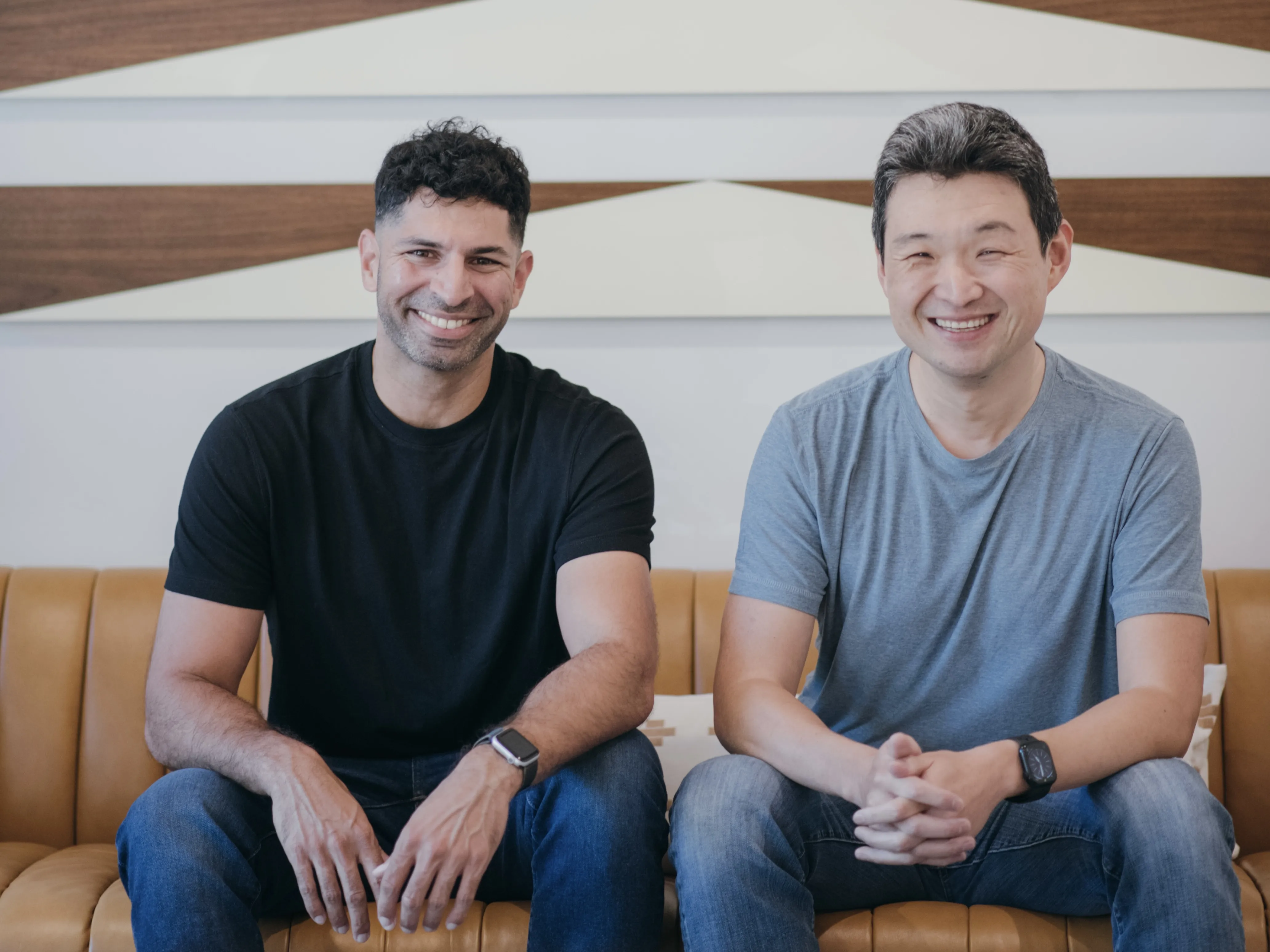
His partnership with Zhao provides continuity through those changing priorities. The two met while working on separate companies in Y Combinator in 2007, then built together across subsequent ventures. Their shared history includes pivots, an acquisition and another beginning. The relationship had already survived several versions of what they thought they ought to make.
Index investor Sahir Azam describes complementary roles: d'Sa's product instincts alongside Zhao's technical architecture. That division is visible in the ambition of LiveKit itself. The product promise is simplicity for developers. Delivering it requires considerable complexity somewhere else. Someone has to decide which complications the customer should see, and someone has to make the hidden machinery work.
“My biggest challenge recently has been maintaining focus.”
Russ d'Sa, September 2024
A voice also needs someone to protect it
The January 2026 Series C gave LiveKit more resources to pursue a broader development stack for voice agents. Index Ventures led the round, joined by Salesforce Ventures, Hanabi Capital, Altimeter and Redpoint. D'Sa's stated goal was to make building and scaling voice AI as straightforward as building and scaling on the web.
The work now spans creating an agent, testing it, deploying it and understanding what happened in a conversation. His bet is that speaking to software will become familiar enough to feel ordinary.
In August 2026, d'Sa made another public commitment: LiveKit would never sell customer data, and would never train on it without explicit permission. He presented privacy as a default part of the service. For a business transporting people's voices, what happens to those voices is part of the product, even when the network performs perfectly.
The promise fits the question that began the detour. Where does the audio go? Years after a prospective customer asked him to account for his side project's infrastructure, d'Sa is responsible for a company whose job includes answering that question for other builders.
There is a satisfying lack of ceremony in the route. A founder who wanted to make an app discovered an obstacle, recruited a familiar collaborator and kept working on the obstacle. The visible product fell away. The work underneath became the business. For somebody who once wanted to be known like his heroes, there are worse outcomes than helping an unfamiliar developer's next conversation simply happen.