By September 2026, Rui Jing Jiang had acquired a new job at a familiar competition: judge. Nine years earlier, she and two fellow Penn students had won the Y-Prize. Now the co-founder, CEO, and director of Avisi Technologies was returning to evaluate another generation's proposals. A competition entry had become a company, and the entrant had become someone students could ask for advice. The university calendar had kept turning. Her project had kept going.
There is a satisfying symmetry here, although symmetry leaves out most of the work. Between those two appearances sit the less photogenic parts of founding: finding teammates, getting space, assembling advisers, learning how to make decisions with incomplete information. Jiang's public story gives those activities unusual weight. The people she met at school continued to matter after school. So did the habit of seeking out people who knew things she did not.
The appeal of her return is its ordinariness. A former student comes back with experience to share. Yet for the student across the table, that experience can change the scale of a question. Starting a company becomes something a person within reach has actually done. The distance between an idea and a business remains considerable. At least someone can now describe the route.
A summer acquaintance becomes a co-founder
Jiang's interest in entrepreneurship began before college. An entrepreneurship camp at Stanford, attended before her sophomore year of high school, helped turn starting a company into an ambition. By the end of high school, she had started a peer-to-peer consulting business with a friend. The instinct to try something was already getting exercise.
Penn supplied another consequential encounter. At the Management & Technology Summer Institute in 2013, she met Brandon Kao. The program introduced high school students to prototyping and commercialization. Years later, that acquaintance became a founding relationship. There is no need to imagine an instant declaration of destiny. A summer program had put two future collaborators in the same place.
Adarsh Battu entered the picture through a different door: Management 223, Business Strategy. He and Jiang discovered a shared interest in technology and in entering the Y-Prize. With Kao, they formed a team whose experience covered business, startup work, and materials engineering. The roster made practical sense. Each person brought something the others could use. Friendship and coursework had quietly done a little recruiting.
The competition asked a business question
The Y-Prize asked students to find commercial applications for technologies developed at Penn. This is a peculiar assignment in the best academic tradition: the invention arrives before the business. The students must decide what to do with it, who might want it, and how an application could become an enterprise. Jiang's team won in 2017. Avisi was founded that year through the program.
Her finance and strategic management studies gave her tools for the task. She later explained that strategy classes had taught her to examine a competitive landscape and think about company strategy. Those lessons went into the team's presentations and competitive analysis. A classroom exercise had found an audience with questions and a prize at stake.
That connection between coursework and execution deserves attention. A market analysis can look elegant on paper while leaving the central commercial question untouched. A competition forces a team to expose its reasoning to people outside the group. For Jiang, school offered both the analytical vocabulary and an occasion to use it. The grade, one might say, came with a rather longer assignment attached.
- 2013Summer program
- 2017Y-Prize & Avisi
- 2018Graduation
- 2026Back as judge
The shelves filled before the office did
Jiang graduated from Wharton in May 2018. That year, the founding team received Penn's President's Innovation Prize, an award that provided resources for graduating seniors pursuing commercial ventures. By July, Jiang and Kao were working on Avisi full time. Their base was the Pennovation Center, where they had dedicated working space and access to shared laboratories.
Their garage contained tall shelves that doubled as a trophy case. Awards accumulated there, including the President's Innovation Prize honor and Wharton Startup Challenge awards. It is a pleasingly economical arrangement: storage furniture gets promoted to ceremonial furniture. For a young company, every surface has possibilities.
Jiang also won first place at a Mid-Atlantic Bioangels pitch contest. Recognition brought another audience and another opportunity to explain the venture. Around the founders grew a network of advisers and part-time contributors. They were making the transition that a prize ceremony cannot perform for anyone: from a team with a proposal to people responsible for a company. The shelves could hold the awards. The founders still had to carry the decisions.
“Every day is a tremendous learning opportunity.”Rui Jing Jiang, 2018
The garage had unusually good neighbors
Ask Jiang about Pennovation and she remembers what passed the garage door. Drones were being tested. Robotic dogs went by. Puppies from Penn's Working Dog Center appeared too. On a pleasant day, the door stayed open. It is difficult to improve on that office amenity list without installing a pastry chef.
The setting mattered for more than the view. She valued being close to other innovators and engineers, then working alongside others in shared laboratory space. In a later reflection, she described the early full-time operation growing from herself and a co-founder to eight full-time team members, with contractors expanding the group further. Avisi had also moved its headquarters to Redwood City, California, while retaining a Philadelphia presence.
That move did not erase her attachment to the city where the venture began. Philadelphia remained part of the company's identity. For a founder, geography can be a record of working relationships: where a problem was first discussed, where advice was available, where the team learned to operate. Jiang's account gives shared space a place in that record. An open door was useful architecture.
Before the board meeting, pick up the phone
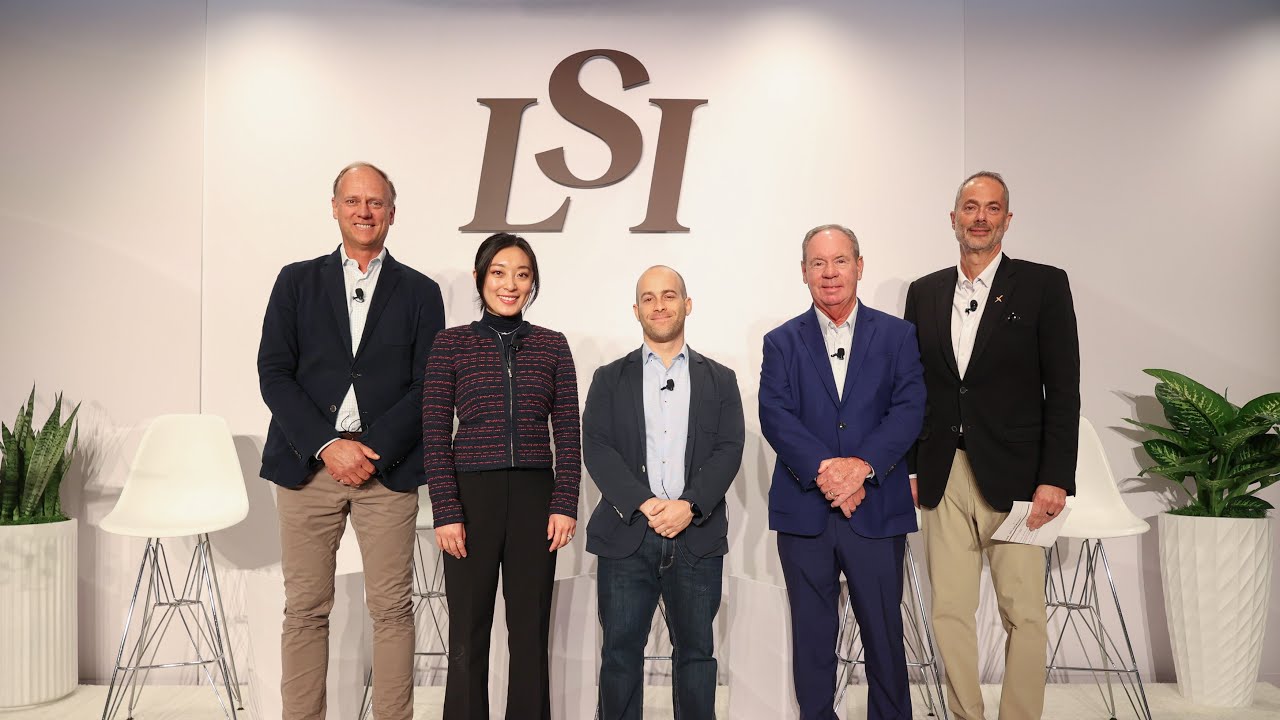
By 2025, Jiang was discussing board management on a conference panel. She described bringing Gary Pruden onto Avisi's board early, when grants had supported the company and outside financing was not yet the immediate requirement. His experience helped the first-time founders anticipate challenges and attract their first financing. An independent director could contribute before an investor required the seat.
Her preparation method is refreshingly plain: call each board member, provide an update, and discuss the topics and challenges ahead. Those conversations help shape the meeting materials. She also brings functional leads into relevant meetings so directors can hear directly from the people doing the work.
The method suggests a CEO who values a useful conversation. A director can offer more when the context arrives before the decision. A colleague can explain more when allowed into the room. There is a modest discipline beneath this approach: prepare people to contribute. The presentation becomes part of a conversation already underway. Even a beautifully formatted slide cannot answer a question that nobody has had time to consider.
Experience becomes something to pass around
Jiang's work beyond Avisi includes serving as a panel reviewer for the National Science Foundation's Small Business Innovation Research program. She is also part of the Nano Entrepreneurship Network associated with the US National Nanotechnology Initiative. Her Venture Lab biography records membership in AdvaMed and recognition among Philadelphia's Inno Under 25.
These roles extend the picture beyond the founder at a pitch podium. Reviewing proposals means encountering other people's assumptions. A network gives those people somewhere to compare experience. Recognition identifies a young founder at a particular stage; participation gives her work to do afterward. The sequence is worth keeping in view when awards threaten to become the whole biography.
She has appeared in other practical business conversations, including a Carta event about startup equity administration. The topics are a reminder of the range a CEO must learn to cover. A company has technical work, people, capital, and administrative machinery. None waits politely for a founder to finish learning the others. Jiang's career increasingly includes sharing experience about that machinery, alongside running the enterprise that supplied the lessons.
The students still ask the familiar questions
At Venture Lab, Jiang has returned as an entrepreneur in residence. She remembers the intimidation of building a business from scratch and the questions that came with it: choosing customer markets, launching a pilot, finding funding. That memory makes her advice specific to the people now sitting where she once sat.
She encourages students to begin without letting age or limited work experience disqualify them. The message is grounded in a career that began inside the student community. She can point to teammates found through programs and classes, advisers approached early, and a venture that continued after graduation. The invitation has an accompanying example.
Her return as a Y-Prize judge adds another way to help. In one setting she advises; in another she evaluates. Both ask her to take a student's proposal seriously enough to question it. That is a useful form of encouragement. A young founder deserves interest, but also the chance to discover which parts of an idea survive examination. Jiang once sought that attention. Now she can offer it.
“I remember so clearly being in their shoes.”Rui Jing Jiang on mentoring student founders
An education with no commencement date
Avisi announced $10.7 million in new financing in February 2026, with the round led by MedVenture Partners. It is a different order of resources from the early competitions. Yet the person assembling them is still the founder who began at Penn. Capital, team size, and responsibility have changed together over the years.
The story's continuity lies in a habit more modest than a grand founder philosophy: ask, listen, prepare, return. Jiang sought collaborators while still a student. She valued neighbors in a shared workspace. She prepares directors through conversation and makes room for team members to speak. She returns to students who are trying to work out how to start. These are recurring choices visible across her career.
A degree marked the end of one scheduled education in 2018. Running Avisi supplied another, with a less accommodating timetable. There are now people to brief, colleagues to hear, and new entrants to the Y-Prize awaiting judgment. Jiang has come back to the table with more experience. The questions continue. This time, she can help someone else begin answering them.