The first Ruder Finn office was not really an office. It was a linen closet inside the Lombardy Hotel in Manhattan, the sort of room designed for towels rather than corporate reputations. David Finn and Bill Ruder set up there in 1948 with an idea that sounds modest until you consider the business it produced: communication could help people understand institutions, and institutions move.
The room is useful because it explains the company better than a polished origin myth would. Ruder Finn has spent 78 years making a product that cannot be stocked on a shelf. It sells judgment, attention, and the choreography of other people's opinions. Today that means media relations and crisis counsel, but also predictive analytics, influencer mapping, digital twins, generative-engine optimization, employee communications, and AI-made films. The towels have left the building.
The product is organized attention
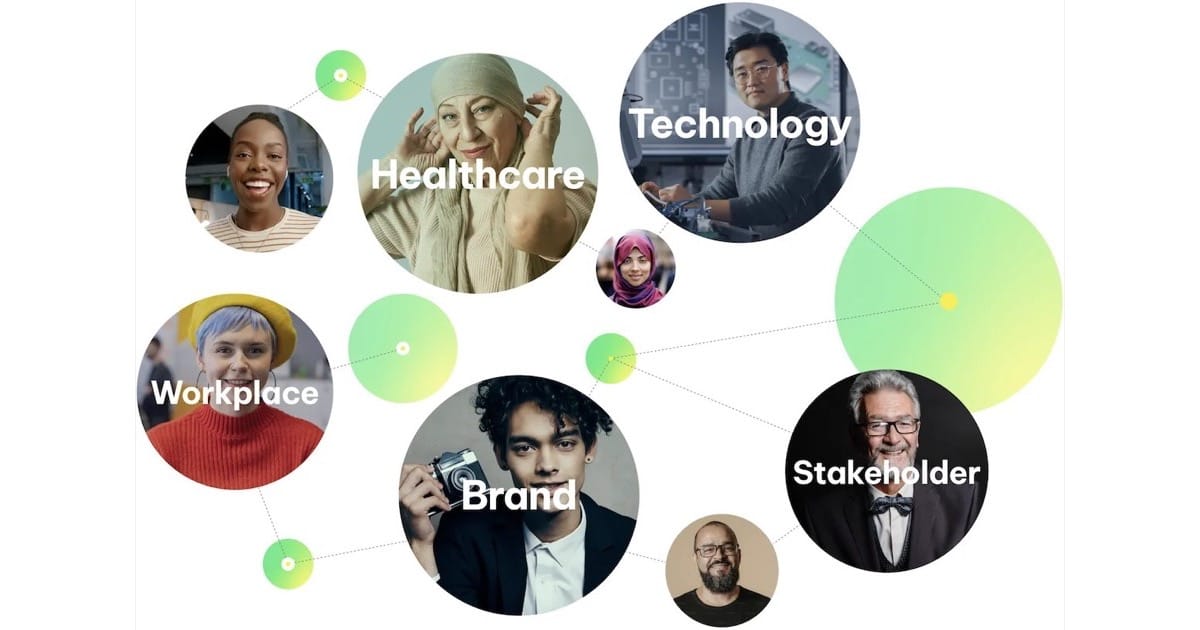
A client comes to Ruder Finn when the world is not seeing it correctly, or not seeing it at all. A pharmaceutical company needs clinical science made understandable. A technology company needs credibility beyond a launch. A consumer brand needs cultural relevance. A chief executive needs a position before a crisis supplies one. Employees need to know why another transformation is happening to them.
The agency's answer is an unusually broad service stack: strategy, corporate and executive communications, earned media, public affairs, issues and crisis work, internal communications, creative production, performance marketing, influencer programs, events, search, and research. Its public client record ranges from Pfizer, GSK, Microsoft, Porsche, Visa, and L'Oréal to AMD, ImmunityBio, Wendy's, J.P. Morgan Payments, Snowflake, and F5. These are organizations with many audiences and expensive misunderstandings.
Ruder Finn earns money like a professional-services firm, through tailored retainers and projects. There is no menu with a price beside “repair trust.” Acquisition prices and client fees are usually private. The supplied company estimate puts annual revenue near $319.1 million, but Ruder Finn does not publish audited revenue. What is visible is the shape of the bill: specialist teams, senior counsel, production, media work, data, and increasingly software-like tools wrapped inside an agency engagement.
What failed first was not the model. It was the scatter
Ruder Finn did not wake up in 2026 and discover artificial intelligence. Its rf.TechLab incubator dates to 2020. A dedicated creative unit, rf.Studio53, arrived in 2023. By late 2025, rf.StoryLab was offering synthetic audio and video, digital twins, custom GPTs, and personalized content. For AMD, the studio produced an AI-generated science-fiction film called Void Run. For ImmunityBio, it created an experience in which people could converse with digital patient personas derived from anonymized clinical-trial data.
Then came the useful admission. CTO Tejas Totade said growing adoption had exposed “the limitations of fragmented, ad-hoc use cases.” Experiments were happening, but an experiment that lives in one clever team is not an operating model. The failure was fragmentation: isolated tools, uneven habits, and no consistent path from prototype to production.
Access to AI stopped being scarce. The ability to turn it into repeatable, governed work became the product.Ruder Finn's strategic turn, in plain English
The AI Accelerator, launched in February 2026, was the correction. It established a pipeline for testing and governing internal inventions, then converting the useful ones into reusable client services. The list is less theatrical than a robot copywriter and more consequential: retrieval systems, semantic search, agentic workflows, domain-specific copilots, decision support, micro-influencer mapping, and tools for how brands appear in AI answers.
The repeatability loop
By the launch, Ruder Finn said custom AI already touched 88 percent of core US account work, with 95 percent targeted by the third quarter. The percentage is self-reported, and “integrates” can cover a wide range of use. Still, the ambition is precise. AI is not meant to be a specialty ordered from the clever table in the corner. It is meant to sit inside the work.
Independence is not a mood. It is operating permission
Against Edelman, Weber Shandwick, FleishmanHillard, Burson, APCO, and specialist shops, Ruder Finn's most durable distinction is ownership. It remains private and independent. That does not automatically make its work better. It does let management invest without negotiating through a giant advertising parent, preserve a longer time horizon, and buy capabilities that fit a specific map.
That map has filled in quickly. Big Sky Communications added more than 40 customer-marketing and advocacy specialists in 2025. Era Communications added 90 people and direct operations in Thailand, Vietnam, Cambodia, Laos, and Myanmar. London-based Missouri Creative brought packaging, retail, animation, 2D and 3D design in early 2026. The Equity Group added investor relations two months later. Each deal closes a gap between what a company says, where people encounter it, and who is trusted to repeat it.
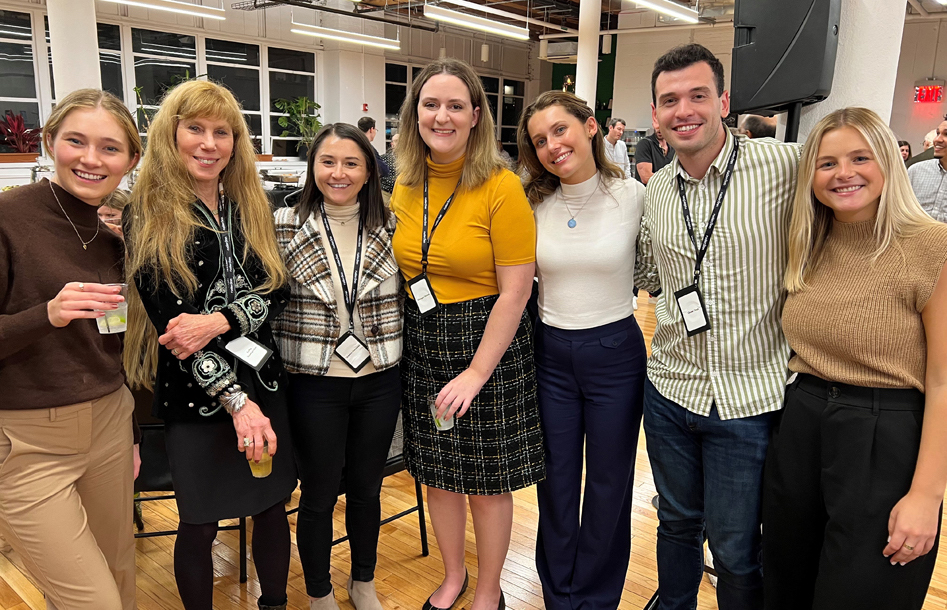
The global footprint matters in the same practical way. A campaign translated from New York is not a Southeast Asian campaign. Ruder Finn Asia says it has more than 800 people in the region; its Era network emphasizes teams on the ground across ASEAN. For clients, the promise is global coordination without pretending that culture can be centralized.
What does the transformation cost?
Ruder Finn has not disclosed acquisition prices, product development spend, or a public rate card. The visible commitment is organizational: a 20-plus-person engineering and technology group, acquisitions across three continents, new trainee tracks, and an agency-wide target. The bill is measured in payroll, integration time, governance, and the opportunity cost of tools that never graduate from trial.
The bit worth stealing
The copyable part is not rf.StoryLab's name, or a custom GPT with a handsome interface. It is the sequence. Begin with a repeated and expensive problem. Put technologists beside practitioners who understand the work. Test on live assignments where usefulness is visible. Kill the novelty projects. Standardize what survives. Train the next class of employees on the workflow rather than asking everyone to improvise.
A four-step playbook for less glamorous AI
- Choose a recurring bottleneck, not a fashionable capability.
- Measure the decision improved, not the content produced.
- Give one team responsibility for governance and reuse.
- Scale only after people trust the output enough to change a habit.
There are conditions. The model is strongest when work repeats across accounts, useful data exists, risk can be reviewed, and clients will pay for better speed or insight. It weakens when training data is thin, permission is ambiguous, local nuance resists standardization, or synthetic production creates more reputational risk than value. A digital twin is impressive right up to the moment a person feels misrepresented by it.
Ruder Finn's culture language - individuality, listening, experimentation, a preference for excellence over seniority - helps explain why the firm keeps making new internal organs. Its paid Executive Training Program began in 1978, and several senior leaders started there. That is a small but telling trick: preserve an entry door while rebuilding the rooms behind it.
The linen closet survives as more than company folklore. It is a reminder that agencies do not begin with scale. They begin by noticing a gap between what somebody means and what the world hears. Ruder Finn's bet is that AI can narrow that gap, provided the machine is treated less like a magician and more like a colleague who needs a job description, supervision, and a reason to be in the meeting.