Roy Wan once discovered that a friend of his mother thought he ran a detective agency. He was helping people recover goods; she had supplied the trench coat. It is an understandable mistake. His business deals in things that have gone astray, disappointed their buyers or become somebody else’s administrative headache. The explanation is less cinematic than the misunderstanding, although the paperwork may be equally elaborate.
“I help people get their stuff back,” is Wan’s description of the job. As co-founder and CEO of Return Helper, he works on the journey that begins when an online purchase goes into reverse. A shopper wants a refund. Somewhere, a seller still owns an object. Between them sit delivery companies, warehouses, software and a decision about whether that object is worth sending across the world again.
Wan’s career has been an education in that space between a transaction and its consequences. He came to it through selling, account management and logistics systems. The returned parcel kept appearing. Eventually, he made it his business.
A seller before he was a founder
Before the company, there was a student selling online part-time. Wan has described that experience as part of his early exposure to cross-border commerce. He knew the business from the seller’s side before he began helping other merchants manage it. That matters in a field where an apparently tidy digital transaction can leave an untidy physical problem several countries away.
He studied at City University of Hong Kong between 2006 and 2009, earning a business administration degree in Information Systems. After graduation, he joined eBay. His work there involved key accounts and sellers trading internationally from Hong Kong and Greater China. A marketplace made distant customers accessible; account work put him close to the merchants trying to serve them.
In 2013, he moved to ChannelAdvisor, establishing its first Asian office. The company provided another view of ecommerce: the systems through which merchants managed their presence across sales channels. His subsequent work at Continental Global Service involved global logistics networks and ecommerce warehouse systems. By the time he started a company, he had worked around the storefront, the software and the place where the boxes actually sat.
That sequence helps explain his choice of problem. A return crosses all three. The customer needs a way to request it. The merchant needs a record. The warehouse needs instructions that make sense when someone opens the carton. A useful system has to survive that entire journey, including the decidedly analogue moment when a person checks what is inside.
Two schoolmates, one expensive round trip
Wan’s co-founder, Paco Wong, was someone he knew from high school. Wong studied computer engineering at the University of Hong Kong and became Return Helper’s technology co-founder. They put about HK$500,000 into the venture, founded in late 2018. Its commercial service launched in June 2019.
The proposition had a pleasingly practical starting point: receive returned goods near the customer. A product bought overseas need not automatically retrace its international route. If it is in suitable condition, it can be redirected or sold again in the destination market. Other items may need different treatment. Inspection comes before the next decision.
Shipping every return home makes an expensive assumption about geography. The seller’s address is familiar, but familiarity does not pay the freight. Wan had seen smaller merchants struggle with the cost of return transport and the work surrounding it. A local receiving point offered a way to separate getting the customer’s purchase back from sending it all the way back to its origin.
A simplified view of Return Helper’s local returns workflow. Routing depends on the product and the merchant’s instructions.
The launch depended on other people’s infrastructure. Wan approached overseas logistics companies and third-party warehouses, building a service from connections between businesses. Within three months of launch, Return Helper had become an official eBay service provider. A familiar marketplace from his earlier career had become part of the young company’s route to merchants.
The parcel was easier to move than the doubt
There is an awkward circularity in starting a logistics business. Volume helps secure attractive terms from partners. Attractive terms help attract the customers who create the volume. The founder has to persuade somebody to move first. Experience can open a conversation; it cannot, by itself, make a young company look established.
Wan’s early financing experience was slower than he expected. He said a fundraising process he had imagined taking six months took eighteen. In a later account of the company’s beginnings, he wrote that he went without a salary for three years, keeping resources in the business and improving conditions for early employees.
Discussions with Cornerstone Ventures began in January 2021. A term sheet followed in October. Wan’s explanation of that investment concentrates on credibility: the team gained confidence, customers and partners had another reason to trust the company, and reporting became more disciplined. Money helped keep the business moving. The investor’s backing also changed how other people judged its chances of staying around.
“Numbers don’t lie.”
Roy Wan, on advice that helped him through early rejections
That short piece of advice came from an investor. Wan has said growth in the numbers helped him think about the rejections that greeted his idea. It is an appropriately unsentimental comfort for a business built around counting, recording and finding value in goods that have already disappointed someone.
His approach to finding customers was similarly concrete. He described prioritising content marketing and search, with nearly 70% of leads coming through organic channels at the time of an early interview. That was a snapshot of the young business, rather than a permanent ratio. It also suggests a patient route to sales: explain a problem clearly enough that the people searching for help can find you.
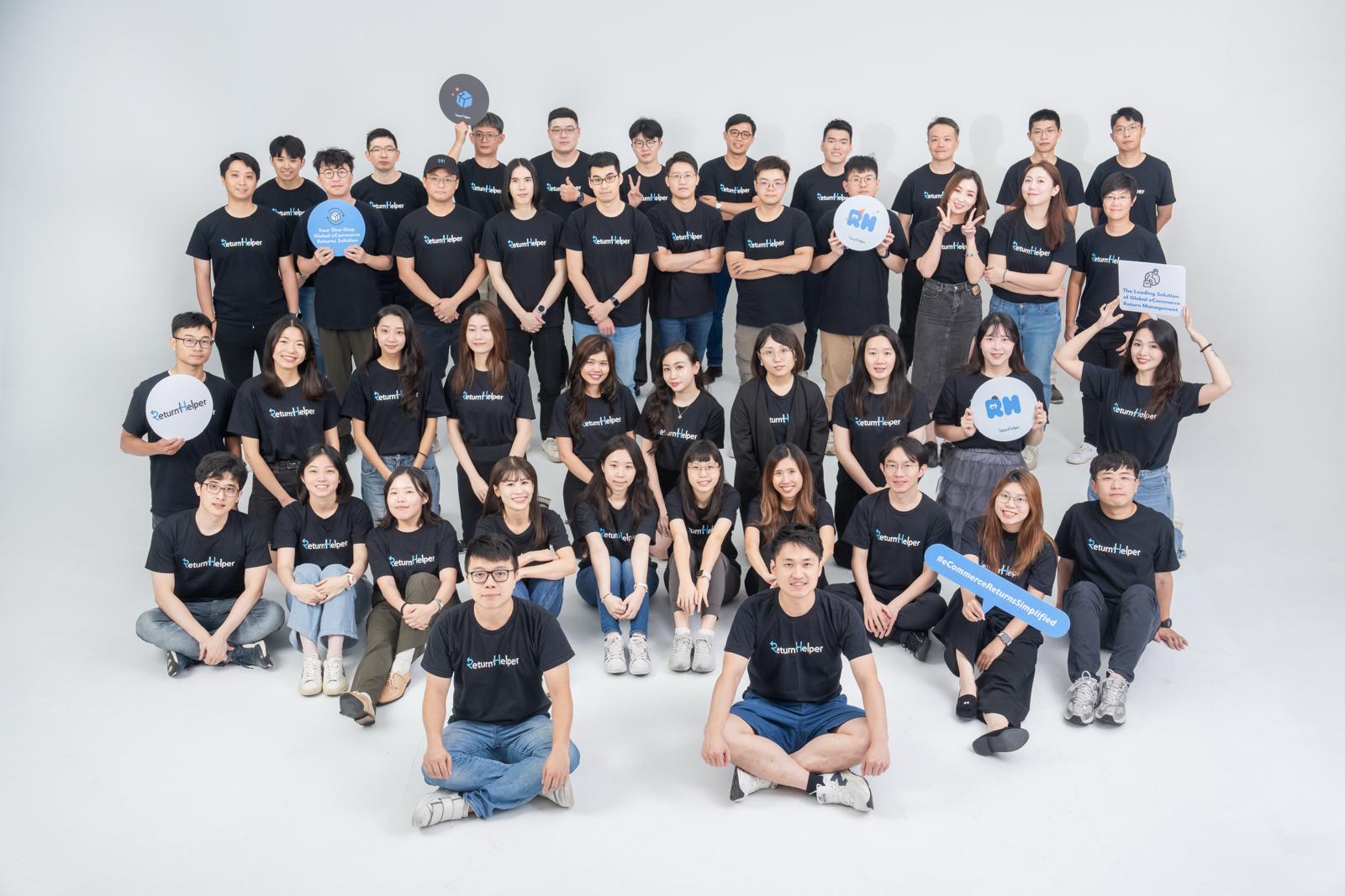
A global map needs people on the ground
Wan’s advice about entering another country starts with the people who already understand it. He recommends beginning on a manageable scale and finding local help, whether an adviser, a partner or an early customer. It is advice fitted to a business whose software must eventually connect with a particular warehouse in a particular place.
Japan has become an especially visible part of that work. Return Helper established a Japanese operation, and its Japanese business introduced FlexForward, an international shipping service, in 2025. The company was extending its work beyond the original return journey. In his public updates, Wan has described Japan as personally familiar as well as commercially important, with meetings involving customers, partners and investors.
Those relationships also extend into industry organisations. In November 2024, the Hong Kong E-Commerce Logistics Association announced him as its Vice President for Global Reverse Logistics. The appointment connected his company-building work with a wider group of businesses confronting the same operating questions.
His public comments remain close to merchants’ immediate concerns. When US tariff changes were unsettling cross-border sellers in 2025, he described previously quiet prospects getting back in touch. In his account, a changing cost environment made the value of returned merchandise harder to ignore. The observation was about customer behaviour: an unresolved problem can become urgent when the surrounding economics change.
A WorldFirst interview brought him back to that seller’s perspective. The discussion covered local returns, checking goods and finding routes to resale. These are modest-sounding tasks. For a merchant with inventory abroad, they are also the difference between knowing what can happen next and simply hoping the loss stays manageable.
What comes back next
On 1 June 2026, Return Helper announced a US$4 million Series A. New investors included Cathay Venture, Mitsubishi Logistics Corporation and Jun Yue Investment, alongside returning investor Colopl Next. The company set out plans for international expansion, AI agents for returns operations and a larger recommerce business.
June 2026
August 2026
August 2026
The business reported revenue growth of more than 60% in 2025 and profitability in the second half of that year. European revenue grew 215%, it said. These are the company’s figures, and they describe a particular period. They give a sense of what Wan was building towards without turning an expansion plan into a result already achieved.
In August, Return Helper appeared on Forbes Asia’s 100 to Watch. The company described a network of 22 warehouses in 17 countries and processing of about 150,000 returns a month. For Wan and Wong, a business begun with a shared investment had acquired a much wider set of places in which a returned product could land.
Wan’s stated interest in AI belongs inside that operating picture. His ambition is to improve efficiency across the organisation and make the chain of return decisions work more reliably. The practical question remains familiar: what is this item, where is it, and what should happen to it now? Better decisions depend on keeping those answers connected.
There is a certain charm to building a company around second thoughts. The buyer has reconsidered. The seller needs another option. Wan has spent years arranging the next steps, one partnership and one recorded inspection at a time. His mother’s friend supplied the detective story. He has kept working on the case of the returned parcel.